
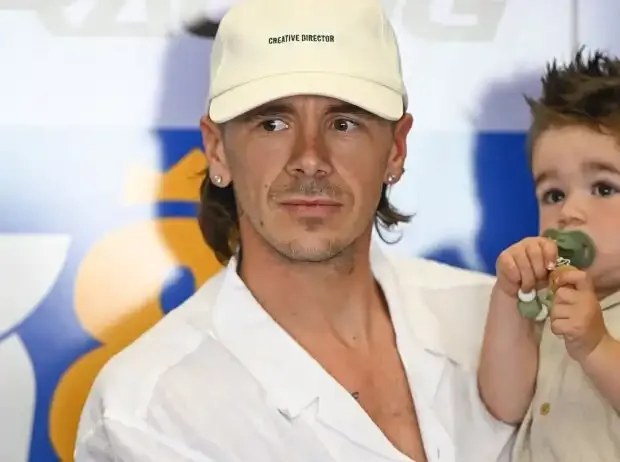
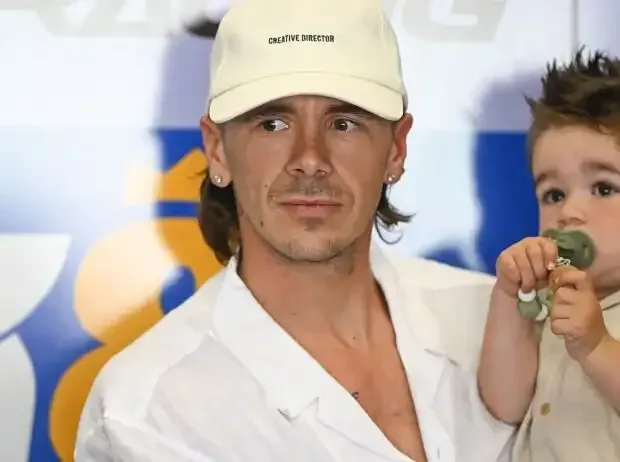
– Scott Redding and Marc Marquez once stood on the podium on the same day, yet their careers could hardly have taken more different paths.
Read more MotoGP team change confirmed: Fermin Aldeguer will be a VR46 rider
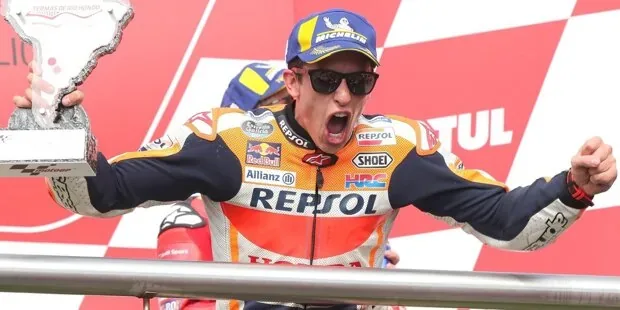
At the 2008 British Grand Prix at Donington Park, Redding won at the age of just 15 years and 170 days. Marquez finished third, celebrating his first Grand Prix podium. At that time, Redding was the youngest Grand Prix winner in history until Can Öncü took that record ten years later.
What followed is well known: Marquez rose to become a nine-time world champion, while Redding had a remarkable career but was never able to establish himself permanently at the top in MotoGP and later switched to the Superbike World Championship.
In an interview with the podcast Scruff Bags by HMY, the now 33-year-old explained why he does not solely blame himself for this.
For Redding, it is mainly about the conditions under which a rider builds his career. “It wasn’t just the bike,” says the Brit, looking back thoughtfully: “It was like he had mentors and people looking after him, while I was just the wild kid doing all the things he probably shouldn’t have done.”
The difference began behind the scenes
Redding does not primarily see Marquez’s advantage in the Spaniard having better equipment from the start. Rather, it was crucial that a powerful structure stood behind Marquez early on. Sponsors, staff, and long-term planning enabled him to focus on racing.
“That was just the beginning,” explains Redding looking at Marquez’s early years in motorcycle racing. The Spaniard was able to rely on support from Repsol and later had his own team and crew in Moto2. The same people then moved with him into MotoGP.
From Redding’s perspective, this created a complete package that went far beyond the pure quality of a motorcycle. “He could draw on a lot of funding and always had the best equipment,” he sums up Marquez’s starting position.
Photo gallery: The career highlights of Marc Marquez
Redding himself also attracted attention early on. After his sensational win at Donington, he established himself in Moto2, won three races there, and became runner-up in 2013 behind Pol Espargaro. Only a difficult final phase including injury cost him the chance at the title.
In 2014, the Brit moved up to MotoGP. But while Marquez took the direct path into a factory team, Redding had to work his way up step by step.
For young riders at that time, the path to MotoGP was associated with additional hurdles. “Rookies had to spend two years in a satellite team before they could move to a factory team,” Redding recalls.
However, this rule was abolished precisely at the time Marquez made his step up: “He could go straight to the Honda factory team.” Redding emphasizes that he does not take this as a personal accusation against Marquez. The Spaniard simply took the opportunity offered. “I’m not complaining. It is what it is. But these are possibly the differences.”
The contrast became significant as their careers progressed. Marquez won the title already in his rookie season in 2013 and then developed into the dominant rider of his generation. Between 2014 and 2018, Redding achieved two podiums in the premier class, in Misano 2015 and Assen 2016.
“I had to perform miracles with the rest”
It is precisely this discrepancy that preoccupies Redding in retrospect. In his opinion, British riders often faced the expectation to deliver performances with limited means that realistically would have only been possible with a top package.
He expresses his criticism of the sponsorship landscape particularly clearly. Marquez received early support from major brands, while a British talent like himself could not rely on comparable industrial partners.
“Marquez had Repsol and Red Bull. In the end, you get what’s left over, and then they expect you to perform miracles with it,” says Redding with audible frustration. “That doesn’t work. I managed it for a while, but eventually my energy was used up.”
With this, Redding raises a fundamental question: How much can a rider actually compensate when he permanently lacks resources compared to the competition?
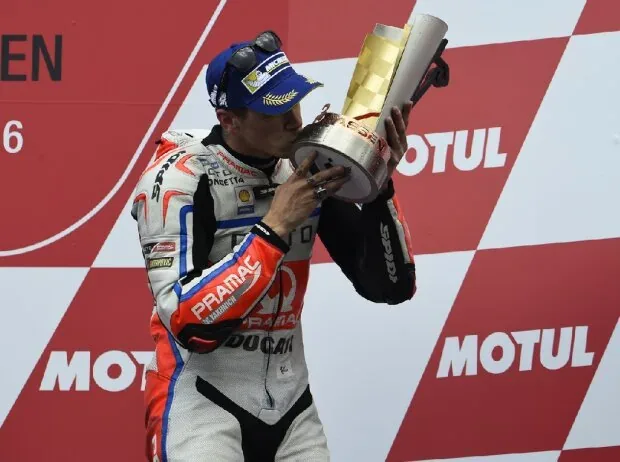
His own MotoGP record provides an ambivalent example. Redding rode for Gresini-Honda, Marc-VDS-Honda, Pramac-Ducati, and Aprilia. In the 2015 and 2016 seasons, he reached the podium once each as third, while his best world championship position in the premier class was twelfth.
Photo gallery: Scott Redding strips after last MotoGP race!
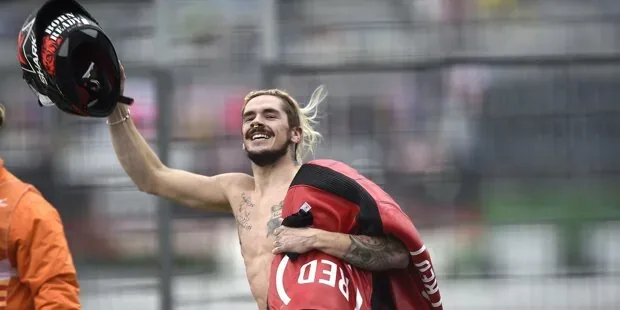
That his potential was greater became clear at the latest after his MotoGP departure. In 2019, Redding switched to the British Superbike Championship and immediately won the title. In his first season, he achieved eleven wins and 20 podiums.
Read more McLaren team principal Stella praises: Lando Norris is now driving at world champion level
Redding describes the situation after his MotoGP podium in Assen 2016 particularly impressively. At that time, he rode a Ducati from Pramac and fought his way to third place under difficult conditions. For him, this success should actually have been a breakthrough signal. “When I stood on the podium in Assen, I thought: This is my moment,” Redding recounts. Instead, the pressure increased.
The Brit describes this phase as an attempt to force performance with a package that was not on par. Riders like Valentino Rossi, Jorge Lorenzo, and Andrea Dovizioso sat on factory machines. Redding, on the other hand, had to try to close the gap with a satellite bike.
“My bike really shouldn’t have been up there, and yet they pushed me to get it as close as possible to the best,” says the 33-year-old.
His conclusion is correspondingly clear: “You can ride as aggressively as you want, but if you go over the limit, you crash.” This also happened at the Sachsenring race immediately after Redding’s podium success in Assen.
Redding: The passport is only part of the problem
However, Redding does not want his career to be understood as a simple story of the disadvantaged British rider versus the favored Spaniard. Although he believes nationality did play a role. “The British passport is part of the problem, but it doesn’t explain everything,” he says.
His real criticism is directed at the lack of support from British companies. Redding wonders why a rider who wins his home race and already proves his extraordinary potential as a teenager does not automatically get an environment that enables him to take the next career step.
“No big British company ever thought: We have one of the best British riders in the world. He won the British Grand Prix, he has a great future ahead, let’s put him on a factory bike from Ajo.”
With this, Redding describes a problem that goes beyond his very personal story: Talent alone is rarely enough in international motorcycle racing.
Especially at the junior levels, financial support decides which team a rider joins, which technicians accompany him, and what equipment is available to him, and thus also what chances of success he has.
Perhaps the most interesting passage of his statements is therefore also the most speculative. Asked whether his career would have been different with a sponsor of the caliber of Repsol or Red Bull, Redding answers without much hesitation: yes.
He believes that not only the bike would have made a difference. Marquez had an environment for years that deliberately accompanied his development. Redding himself was more left to his own devices. At the same time, he admits that his personality also played a role.
He describes himself as the “wild kid” and looks back on his youth with a certain self-irony. Maybe he should have adapted more to open other doors, he ponders. But that might also have meant losing part of what made him a rider.
Nevertheless, it remains to be noted: After the end of his MotoGP time, Redding certainly got the chance to prove himself again in a competitive environment.
In 2019, he dominated the British Superbikes and won the title with Ducati. He then moved to World Superbike and raced there in 2020 and 2021 for the Ducati factory team. In his first season, he was runner-up and won five races; in 2021, he followed with seven wins and third place in the world championship.
His success after MotoGP shows that he had considerable riding potential. At the same time, it cannot be concluded from this that he would necessarily have had a similar MotoGP career to Marquez under better conditions.
But Redding does not claim that either. Rather, it is about the fact that, from his point of view, he lacked opportunities that other riders received early on. His criticism also addresses the situation of British junior riders today.
- DTMDifferential controversy around Glock: Were the ramp angles swapped on Ben Dörr?
- Formula 1Mercedes emphasizes: Zandvoort team orders were meant to help George Russell
- MotoGPLuca Marini moves to Tech3: Italian receives MotoGP contract for two years
- Formula 1Qatar Grand Prix in Imola: Why this scenario is becoming increasingly likely
“That’s the problem we still have with young British riders,” emphasizes Redding. “If I had stayed here, I would never have gotten where I am now. And that’s exactly why there are so few British riders who make it to MotoGP.” His own story is just one example.
Read more Differential vortices around Glock: Were the ramp angles swapped on Ben Dörr?