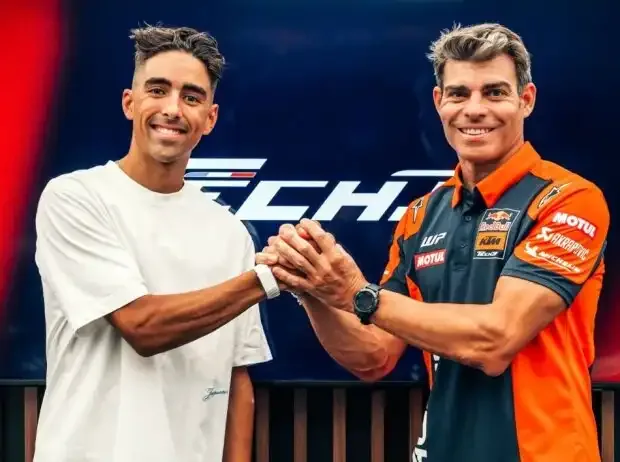
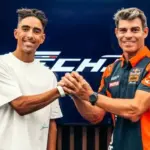
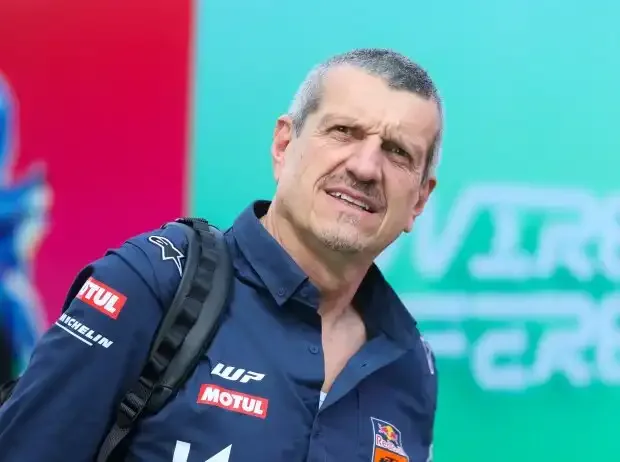
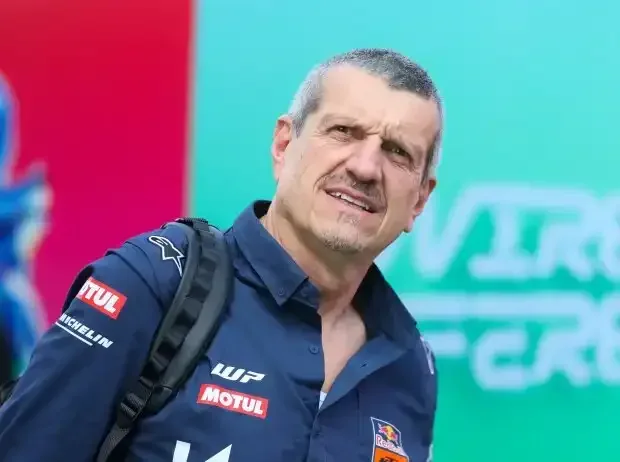
– Günther Steiner knows the mechanisms of modern motorsport. After many years in Formula 1, including as team principal of Haas, the South Tyrolean has now taken on a new role in the MotoGP paddock at Tech3.
Read more IndyCar Portland 2026 FT1: Mick Schumacher in Top 20 without testing
He follows the takeover of the commercial rights to MotoGP by Liberty Media with interest and sees it primarily as an opportunity for the premier class on two wheels.
In the talks between Liberty Media and the MotoGP teams, which led to a framework agreement for the next five years, Steiner says he was involved but not part of the negotiations at the level of the entire championship.
“Of course, I am only involved with the independent teams. I was not part of any talks beyond that,” Steiner explains.
The Tech3 boss believes Liberty is making great efforts to further develop the series. “The championship is obviously growing, and they want to keep growing it. It’s about the sport, and some people might be a bit surprised by some things, but I think they are doing a good job.”
Politics is part of every motorsport
According to Steiner, the political processes within MotoGP are not fundamentally different from those in Formula 1. Although the two racing series are different, the basic mechanisms remain the same.
“Politics exists everywhere, here just as in Formula 1,” Steiner knows. “Everyone tries to get the best for their company or their team. That’s normal.”
Steiner therefore does not consider ongoing discussions about the future direction of MotoGP unusual or problematic. This also includes the fact that in the end no one is completely satisfied. “You have to find a middle ground that works for both sides. In the end, both have to be a little unhappy, then it’s a good deal,” the 59-year-old looks back on the new agreement.
Steiner knows: change takes time
Steiner generally considers greater involvement of the teams in decision-making processes to be sensible. At the same time, he warns against expecting immediate changes from Liberty. The structures of MotoGP have grown over many years.
“I think all teams contribute to the sport and should therefore also be heard. But Rome wasn’t built in a day either. You must never forget that,” he warns.
If Bezzecchi wants to become WORLD CHAMPION, THIS must finally stop!
Steiner also refers to his own past in Formula 1. When he was active there in the early 2000s, the series still worked quite differently. “I was in Formula 1 in the 2000s when Bernie Ecclestone still had control. Everything has changed over time,” he recalls.
The change under Liberty was also not a process completed overnight. “You can’t expect Liberty to come and change everything from one day to the next. That’s not how life works,” Steiner explains.
Read more Bugatti Destrier: Exclusive W16 One-Off Based on the Bolide
Existing contracts and structures would also prevent a rapid revolution. “There are technical contracts and agreements that exist. You can’t just say: We’re doing everything differently now and tear up old contracts. You have to wait for the next cycle,” the experienced team principal knows.
Nevertheless, Steiner believes in the experience of the new owner. “Liberty knows how to do something like this. They proved it in Formula 1. It was Liberty that changed Formula 1, no one else. It’s the same people.”
MotoGP does not have to copy Formula 1
When evaluating MotoGP, Steiner does not want to draw a direct comparison to Formula 1. The motorcycle world championship must find its own way.
“I don’t compare it to Formula 1 because it doesn’t need that,” Steiner says. “It can write its own story.” The greatest strength of MotoGP, the South Tyrolean sees anyway in the sporting core. “What is very strong here is the sport itself and the people who put the show together. There are very good people here who race and make this sport possible.”
At the same time, Steiner recognizes a challenge within the environment itself: “The weakness of these people may be that they love the sport so much that sometimes they don’t see the possibilities of where it can go.”
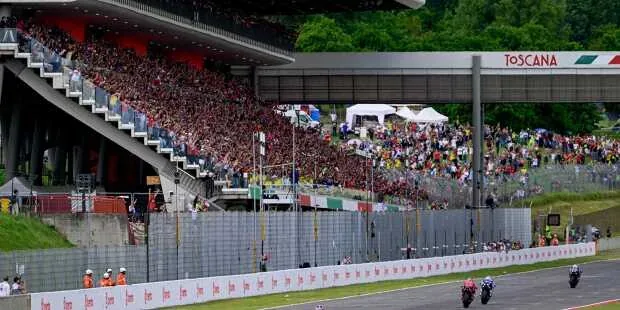
Photo gallery: The contract durations of the current MotoGP tracks
That means: The great passion of those involved can sometimes prevent recognizing the full potential. “I’m not saying they can’t, but you have to recognize what opportunities this sport has in the future,” says Steiner.
It is not about artificially measuring MotoGP against Formula 1. “No one cares whether it becomes as big as Formula 1. That’s not the point. It’s about what vision this sport can have for itself.”
Next step: more commercial strength
The races themselves are already at a high level. “There is a lot of action, there are many good people, and the execution also works very efficiently,” praises Steiner. He sees the biggest lever in the area of marketing the sport.
“It’s about making the commercial side stronger because there has never been enough investment there before.” This is exactly where great potential lies through Liberty’s entry.
The previous responsible parties have successfully built up MotoGP, now additional support is coming: “The regulators have done a very good job and brought the sport to where it is today. But now there is someone in the background with Liberty who can help take the next step.”
- Nürburgring Endurance SeriesAugust 4, 2001: The fatal VLN accident of Ulli Richter
- IndyCarIndyCar Portland 2026 FT1: Mick Schumacher in Top 20 without testing
- MotoGPMotoGP Paddock Inside: Why Aprilia is so strong in Silverstone
- MotoGPMotoGP Live Ticker Silverstone: Bezzecchi with record on Friday
For the Tech3 boss, the question is therefore not whether MotoGP can eventually surpass Formula 1. Rather, it is crucial to exploit the existing potential. “It is a very cool sport with great people. We just have to take it to the next level together.”
Read more Kevin Estre penalized by IMSA: Fault for collision with Aitken