
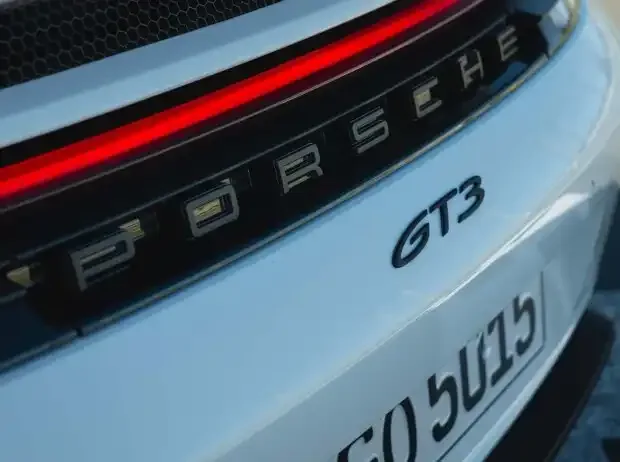
(Motorsport-Total.com/Motor1) – Naturally aspirated engines are a dying breed, especially here in Europe – and this is not necessarily because manufacturers wanted it that way. The ongoing pressure from the EU towards vehicles with lower consumption and reduced CO2 emissions directly affects the availability of production models with naturally aspirated engines.
Read more Goodwood Revival 2026: Jenson Button meets Jacques Villeneuve
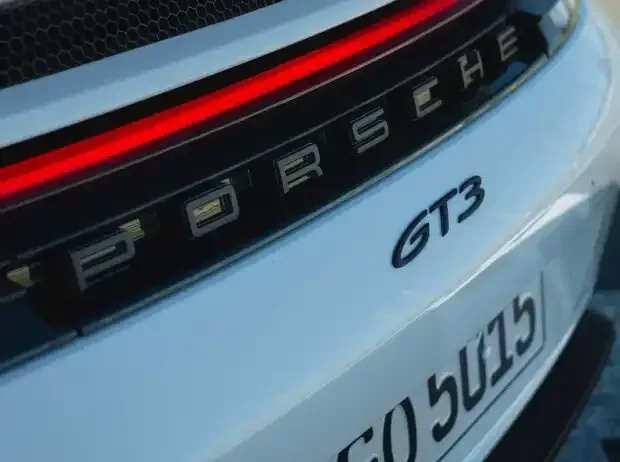
Only a handful of cars still forgo forced induction – and with further tightened legislation, this list will become even shorter.
It’s not just about the upcoming introduction of the Euro 7 standard. Manufacturers active in Europe must reduce their fleet emissions by 90 percent compared to 2021 levels by 2035. An interim target applies already in 2030: then automakers must reduce fleet emissions by 55 percent compared to 2021. If the target is exceeded in one year, companies may offset this in another year – provided the requirement is met overall in the period 2030 to 2032.
These stricter rules put Porsche under pressure. In Zuffenhausen, they are among the few remaining brands still offering naturally aspirated engines. Car and Driver spoke with GT boss Andreas Preuninger about what the future might hold for the track-oriented vehicles. When asked if the 911 GT3 could switch to turbocharging, Preuninger did not rule it out: “It could be.”
He explained that the 4.0-liter boxer six-cylinder is playing for time in Europe – there it can “probably only run for a few more years without significant changes.” But this issue is already having effects today.
You may recall: with the switch from the 992.1 GT3 to the 992.2 GT3, for the first time in the more than 25-year history of the car, there was no power increase. Despite tremendous efforts by the engineers, the improvements are barely noticeable anymore. The cult sports car seems exhausted. Porsche is struggling to explain the hefty price increase even to the most loyal fans. The result is buyer hesitation. A novelty for the GT3.
Photo gallery: Porsche 911 GT3 S/C (2026)
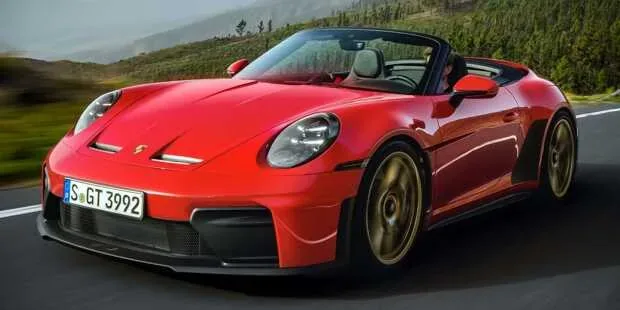
At least in the USA, the situation looks different: there, less strict regulations allow Porsche to keep the naturally aspirated engine “for some time” longer.
Read more Boycott at the dinner: Manufacturers expose MotoGP promoter in Jerez
While the 992.2 911 GT3 could remain in the US program longer than in Europe, the situation beyond the current generation is unclear. Realistically, it is hardly feasible for Porsche to develop separate GT3 versions for different regions – this would require significantly higher investments.
In Zuffenhausen, a lot is already in progress anyway: the 718 models with six-cylinder engines will return, although originally it was planned to replace Boxster and Cayman with electric cars. Additionally, Porsche is investing money in another model that was not initially planned: the direct successor to the first Macan generation with an internal combustion engine. Furthermore, they are developing an SUV flagship with three rows of seats. The budget of the currently strained sports car manufacturer is likely quite stretched.
Motor1 thinks: Regardless of what happens to the GT3: Porsche has made it clear that the 911 is to go down in history as the brand’s last model with an internal combustion engine. Although hybrid variants are already in the portfolio, a fully electric 911 is not expected this decade. Even higher-volume models like the Panamera and Cayenne are expected to continue with combustion technology “well into the next decade.”
Since the new compact crossover and the SUV flagship are to launch in the coming years, both are likely to remain in the program for most of the 2030s. The 911 will outlast them all – but not without adjustments to meet the EU’s increasingly strict requirements.
Sooner or later, the legendary naturally aspirated engine in the 911 GT3 will also fall victim to these rules. Effort and return are no longer in proportion. But if any manufacturer can manage to make a turbo engine GT3-worthy, it is Porsche and especially their GT division.
This is also happening right now in Zuffenhausen
Porsche Cayenne Coupé Electric: Does this SUV coupe finally make sense?
Porsche 911 GT3 S/C (2026): Open GT3 with manual transmission
Read more Indy-500-Practice (Day 2): Schumacher Scrapes Top 10 — Collet with Best Test Time
- MotoGPBoycott at the dinner: Manufacturers expose MotoGP promoter in Jerez
- IndyCarIndy-500 pretest (Day 2): Schumacher scrapes Top 10 – Collet with best test time
- DTMDTM 2026: What’s behind the mysterious U-part on the roof?
- Formula 1Berger on Roland Ratzenberger: “More difficult than my own accident”
Source: Car and Driver