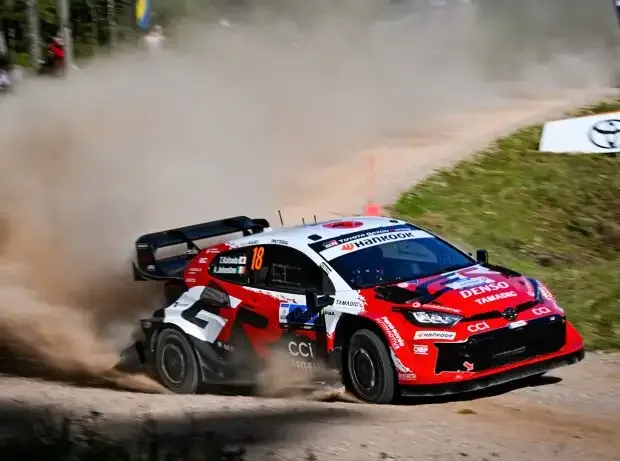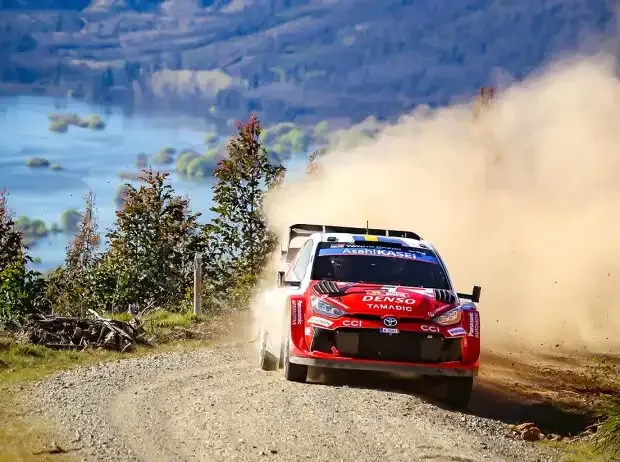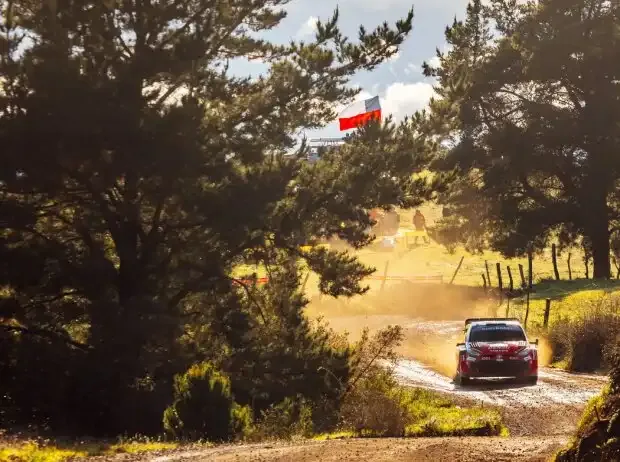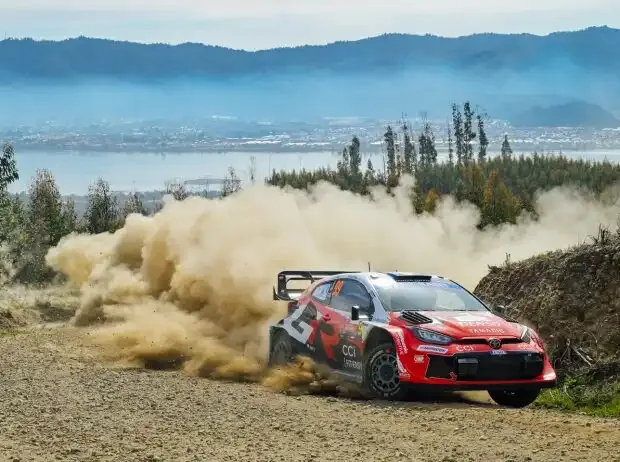


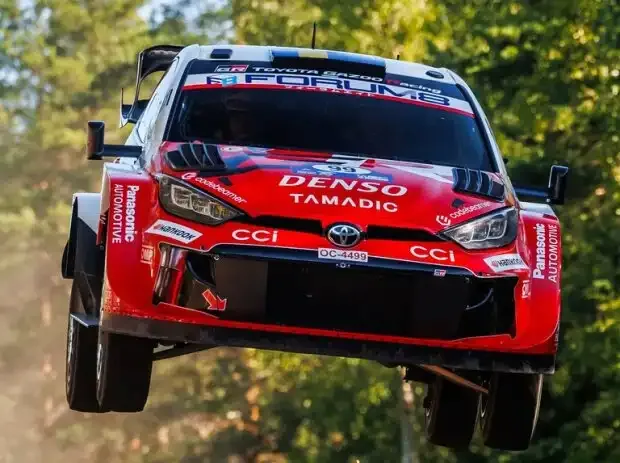
– Although Oliver Solberg still considered intervention in the WRC title fight almost impossible before his South America trip with a 45-point deficit, the situation has fundamentally changed. Thanks to a flawless performance and the triumph at Rally Chile, the Swede has impressively made a comeback and is once again fully involved in the fight for the world championship.
Read more MotoGP Winter Tests 2027: All Dates for the New MotoGP Era
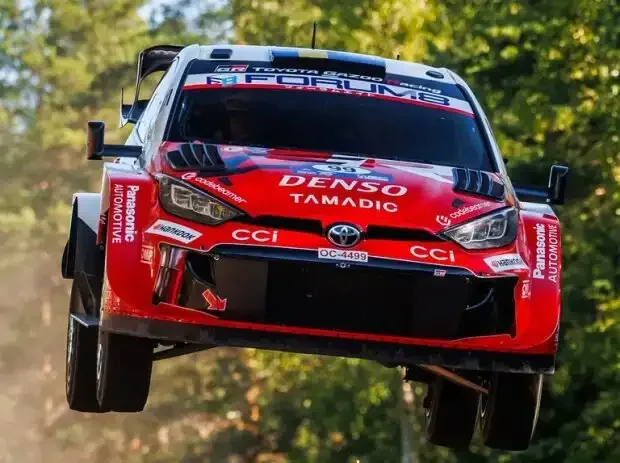
Chile could still prove to be one of the decisive turning points in a title battle that has already had plenty of twists this year. But that is exactly what makes the fascination of the WRC: unpredictability around literally every corner.
Before the penultimate special stage, Solberg was already on a safe course towards victory. Meanwhile, in the championship, leader Elfyn Evans seemed on the verge of making a huge step towards his first WRC title – before this scenario vanished in a fraction of a second.
Solberg now in the middle of the title fight
In second place and leading the Super-Sunday standings, Evans had all the cards in hand to extend his lead over the in-form Toyota teammate Sami Pajari from 20 to up to 35 points with two rounds remaining in the season. But after a frustrating tire damage on the penultimate stage, the lead shrank to 17 points. The title fight is wide open again, especially since Chile winner Solberg has more than halved his deficit.
“I knew it would be difficult, but when I came to South America, the plan was to win both rounds [in Paraguay and Chile],” said Solberg after his third WRC round win. “I think in Paraguay we had the chance, but here everything just fit and we could take many points, which was extremely important. The others didn’t have quite as strong a weekend and had a bit of bad luck. Sometimes you just need that, and I’ve already had my bad luck. Now I’m not far away anymore, and that’s a good feeling.”
Solberg’s co-driver Elliott Edmondson summed up the turnaround: “With two rounds left in the championship, this definitely heated things up again. We were a bit behind, but now we have turned the tables. I think we are definitely in the race.”
Apart from the constantly changing situation in the overall standings, Solberg’s long-awaited second win of the season after the furious season opener at Rally Monte-Carlo had already been announced: In Finland, he unfortunately caught the heaviest rain, while in Paraguay, leading, a faulty starter slowed him down.
There was never any doubt about the pure basic speed of the Swede in the 2026 season anyway. This is underlined by a look at the statistics: With 58 fastest stage times, he leads this ranking comfortably – ten more than his closest pursuer Sebastien Ogier.
Solberg puts painful lessons into practice
So far, Solberg often failed to convert this speed into tangible results – the accidents in Croatia, the Canaries, Japan, and Greece from promising positions spoke volumes. Finding the right balance between full attack and calculated restraint was the last remaining construction site in his driving repertoire.
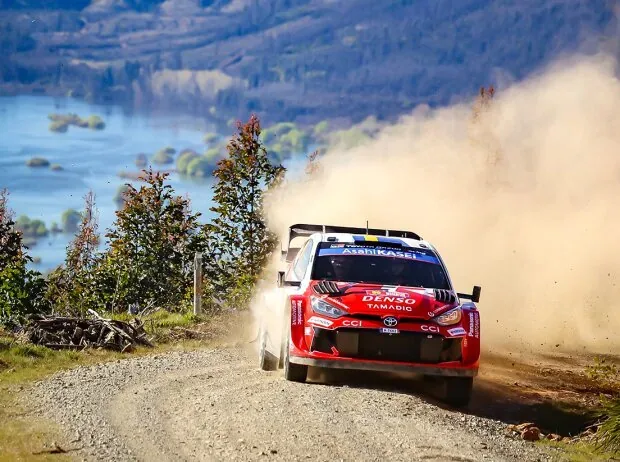
However, he successfully corrected this tendency in the second half of the season and, as he himself says, “rebuilt.” The numbers speak for themselves: Since Greece, Solberg has scored 106 points more than any other driver – Pajari follows with 97, while Evans has 68 points.
“I know I can win rallies, and I have often proven that I can compete at the front,” Solberg explained already in Estonia. That’s where his streak began, which included two second places and 28 of 30 possible Super-Sunday points. “But I think it’s also extremely important to find exactly this balance when fighting for a championship.”
The reward for hard work
Solberg’s triumph in Chile may not have been marked by the absolute dominance he showed in his previous successes in Monte-Carlo and Estonia, but in many ways, last weekend’s performance was possibly his most mature to date. He proved that the 24-year-old has learned to control a rally under enormous pressure from the competition.
This success was by no means a walk in the park. On paper, the Swede led 15 of the 16 special stages, but that only inadequately reflects the actual course. The foundation for the victory was laid on Friday when rain at night unexpectedly played into the hands of the front runners in the starting order – including Evans, Pajari, and Solberg – who had actually feared the massive disadvantage of the “road sweeper.”
Solberg and Evans optimally used the muddy and slippery conditions to break away early from the chasing field on Friday morning. Pajari, on the other hand, struggled to convert the advantage of his starting position into tangible times.
The road to the top
The Finn was recently considered the WRC sensation par excellence: after several podiums, he became the first driver in history to win his first three WRC victories in a row. But in the wet, Pajari found no rhythm, and this problem persisted – the Toyota driver could not precisely locate the deficit in basic speed either in the wet or dry.
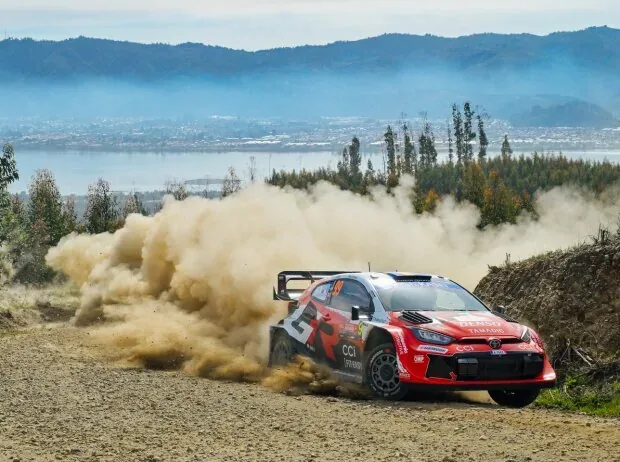
Toyota’s second youngster, Solberg, took the best time on the opening stage before Evans overtook him by 0.4 seconds after a win on SS 2. Nevertheless, it was Solberg who rolled into the midday service with a 2.3-second lead over Evans. By the end of Friday, he had extended this cushion to 10.1 seconds, while Hyundai’s Adrien Fourmaux held third place with a 1.7-second lead over Ogier.
Before the dry Saturday stages, teams were mainly afraid of tire damage, but the leading group largely survived the six stages unscathed. The Rally1 crews benefited from the FIA granting them an additional allocation of eight tires and a tire change zone to fit two fresh tires during the loop, minimizing the risk of tire damage.
The tire as a factor
“Saturday is a completely different kind of rally, and it’s important to be smart,” said Solberg. “I tried to learn a bit about the car today. Today was important to be prepared for tomorrow. That will be the most important day.”
“The gap isn’t huge, but it’s good to have a buffer. If it gets tough on the tires, we don’t have to take the very last risk. But anything can happen to anyone, especially if it gets hot and dry. With the tires we have, you never know.”
“It’s still a long way to go, and we expect a lot to happen tomorrow [Saturday]. The tires will suffer significantly more. We could see some problems, and hopefully, we stay out of trouble,” warned Ogier.
M-Sport Ford driver Josh McErlean, who would end the event in seventh place after a wall contact on Sunday, added: “The character of the roads is completely different. The stages are extremely long and demanding, and tire wear will be crucial. I’d be surprised if everyone gets through cleanly tomorrow.”
Small mistakes with massive consequences
The big tire damage lottery did not occur on Saturday – only McErlean was hit – but the Chilean stages still showed their teeth. Hyundai’s Thierry Neuville already knew from 2019 how brutal the Chilean gravel can be when he survived a serious accident there.
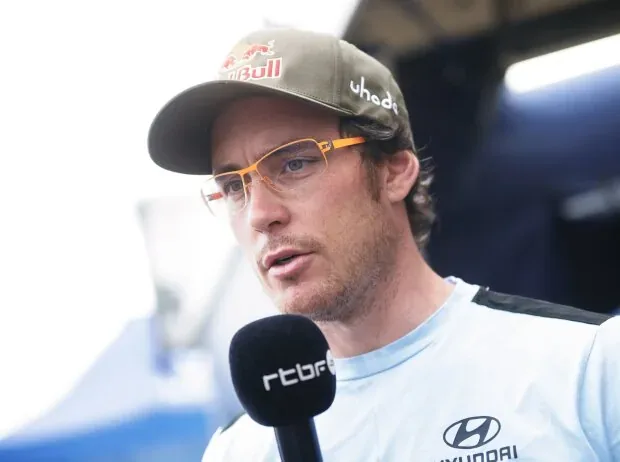
Seven years later, Neuville’s i20 N flipped several times again after he misjudged a high-speed section on SS7 (Pelun) slightly. Fortunately, the Belgian and his co-driver Martijn Wydaeghe were uninjured, but the rally was over.
“Basically, I went a bit too fast into a compression, got thrown off the line, and we rolled over,” explained Neuville, who was in sixth place at the time. “Luckily, Martijn and I are fine. We tried to attack this morning to gain a few places – that was our goal and we had nothing to lose. We tried, but obviously, we were a bit too fast.”
Katsuta continues with bad luck
Soon after, M-Sport Ford driver Jon Armstrong was also punished for a small mistake on the eighth stage (Lota). The Northerner had wished for a clean rally, but a slightly too optimistic pace note caused his Ford Puma to tip onto its side and retire.
“The car understeered, we went wide, hit a bank, and rolled onto the side,” said a visibly dejected Armstrong. “I don’t know what to do anymore because I try to be careful, and still problems occur. It’s extremely difficult at the moment.”
These two accidents followed the retirement of Toyota driver Takamoto Katsuta, who had to retire on the first special stage – the second time in a row. This time James Fulton sat in the co-driver’s seat, replacing regular co-driver Aaron Johnston, who broke his collarbone in a rollover in Paraguay. Six kilometers after the start of the Turquia stage, the duo climbed out of the stranded GR Yaris after Katsuta lost control of the rear in the mud.
Read more Loek Hartog calls on the motorsport community for brainstorming
“Unfortunately, one of the corners, a kind of downhill section, was quite muddy, and I just couldn’t slow down enough,” Katsuta described. “The speed wasn’t really that high, but we slid out wide, hit the bank, and got stuck. It’s very tough and unfortunate. I’m going through a difficult phase right now; it’s not easy. I will try to focus and come back stronger.”
Solberg controls thrilling four-way battle
At the front, the pace remained murderous: Solberg and Evans drove exactly the same total time over the entire loop on Saturday morning, with Solberg defending his 10.1-second lead from Friday. Over a distance of 69.6 kilometers, the top four in the standings were an incredible 0.3 seconds apart.
Behind them, the fight for third place raged: Fourmaux and Ogier swapped positions three times during the day. A tire gamble with soft rubber paid off for Fourmaux in the morning, but he couldn’t repeat this feat in the afternoon.
With a best time on SS 9, Solberg extended his lead over Evans to 19.1 seconds, while Evans had to fend off the charging Ogier. Four best times on six stages played into Ogier’s hands and put Evans under considerable pressure: by the end of Saturday, the gap between the two had shrunk to 1.3 seconds. Fourmaux went into the remaining four Sunday stages 13.7 seconds behind the lead and 10.7 seconds behind third-placed Ogier.
Although his lead might have seemed comfortable given the tiny time gaps at the top, Solberg held back – even though he is usually considered a point scorer for the WRC on Super-Sunday.
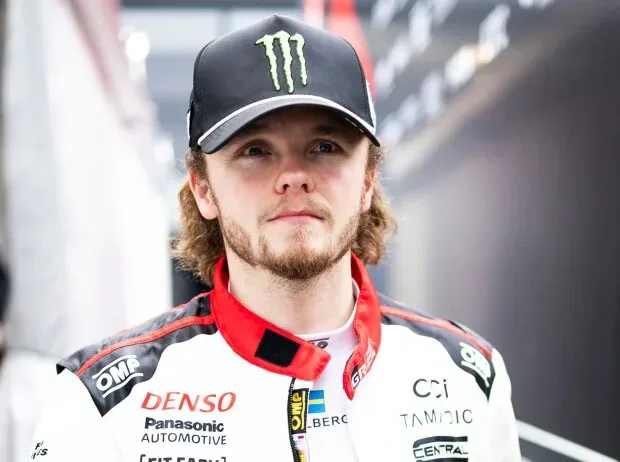
“On Sundays, I usually do my own thing, but now it’s a different situation in the rally. I think it’s possible [to get all ten points], but I won’t go over the limit for that,” Solberg made clear. “I don’t think anyone will do that tomorrow because it will be extremely tricky. Let’s wait and see. The first stage tomorrow will be the decisive one.”
Costly setback for Evans
Solberg was right: the final four special stages on Sunday proved tricky and put massive strain on the Hankook tires. Fourmaux suffered tire damage on the new mammoth stage Carampangue (SS 13), followed by another on the subsequent stage BioBio.
Solberg himself had luck in misfortune: his tire damage occurred only shortly before the end of the BioBio stage and immediately before the tire change zone, preventing a larger time loss.
At the front, Evans initially set the tone with the best time on SS 13: he took the lead in the Super-Sunday standings, gained 5.4 seconds on the charging Ogier, and reduced the gap to leader Solberg to 13.2 seconds.
Evans’ tire damage
But on the second run of the Carampangue stage, the severe setback for Evans’ title ambitions followed: a tire damage forced the Welshman to change the wheel on the open road, dropping the Toyota driver from second to fifth place.
“Until then, everything went perfectly today and exactly according to plan. I felt comfortable in the car, and then out of nowhere, I felt something give way on the front left,” reported Evans, who ultimately had to settle for fifth place overall behind Pajari and still saved four points on the Powerstage.
“Normally, we have the TPMS [tire pressure monitoring system], but in this corner, it detected the spare tire. We got no warning, and then there was some doubt, but it was clearly a flat tire again – and I have no idea where it happened.”
One has bad luck, the other good
“It feels pretty bitter at the moment. Others also had tire damage, but in luckier places, just one kilometer before the end of the second stage, so the time loss was minimal. That’s how it goes sometimes. Today actually looked quite good, but sometimes luck isn’t on your side. We’re still in a decent position and will keep fighting.”
Although you obviously don’t want to benefit from a teammate’s bad luck, the tire drama gave Pajari an unexpected points gain – after he actually threatened to lose ground in the title fight following an unusually pale performance.
“It was a difficult rally for us. It wasn’t the result we hoped for, and the pace wasn’t where we wanted it,” admitted Pajari. “But today we tried to get the maximum out and could make up some important points. In the end, we lost nothing because Elfyn had bad luck today. The fight for the championship will get really interesting because Oliver did a strong job here and scored many points.”
Solberg can fight for wins
For Solberg, the calculation paid off fully: controlled tire management in the afternoon gave him the perfect starting position to shine on the final Powerstage in his usual manner and leave Chile with the overall victory and a hefty 34 points in his pocket. It was also the crowning achievement for Toyota, as the Japanese brand equaled the record with its tenth manufacturers’ title in the WRC.
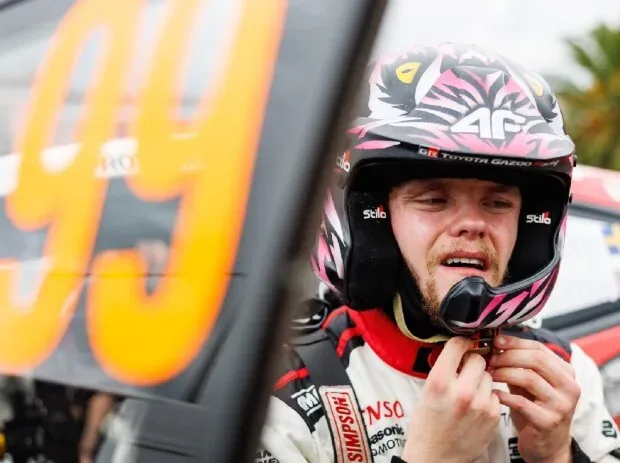
“In the past rallies, I always felt I could fight for wins, but small lapses and bad luck prevented that. But this time, everything just went smoothly – with the car, with myself, with everything. I could fully concentrate on my task and just drive,” beamed Solberg, who reached the finish with a 16.6-second lead over Ogier.
“It was an incredible weekend. From start to finish, I was satisfied with the consistency and the feeling of when to push and when not to. It wasn’t an easy weekend, but an absolutely fantastic one.”
The manufacturers’ title
In the duel of the Frenchmen, current world champion Ogier prevailed over Fourmaux – setting another milestone: it was Ogier’s 120th WRC podium, equaling record holder Sebastien Loeb.
Moreover, Ogier has been involved in an impressive 13 manufacturers’ titles during his career with Citroen, Volkswagen, M-Sport Ford, and Toyota.
“Congratulations to the entire Toyota team: we are world champions again together!” cheered Ogier. “Hats off to everyone at the factory and every single team member because winning so many years in a row is a very special achievement and never a given. No one on the team takes anything for granted, and we constantly try to improve. That’s exactly the mentality I have always pursued in my career, and it was a huge pleasure to drive this car.”
“After the time loss on the first stage, it was a tough fight this weekend to work our way back up. It wasn’t quite enough for the win – congratulations to Oliver and Elliott, who did a fantastic job – but it’s still a podium, and we have every reason to be happy.”
For Fourmaux, the wait for his first WRC win continues, but with every round, he knocks louder on the winner’s circle door.
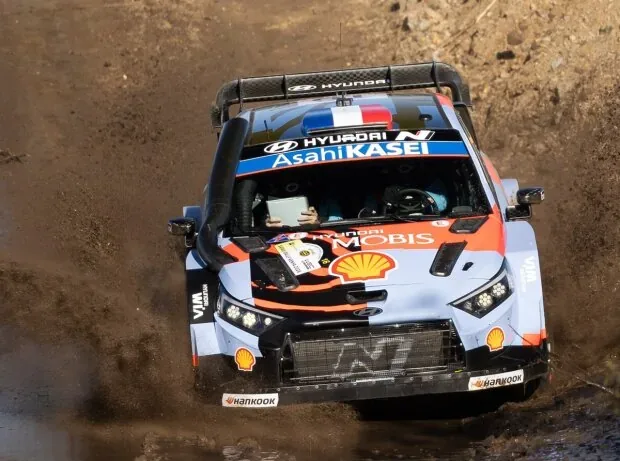
“Honestly, we have nothing to regret this weekend,” Fourmaux summed up after his fourth podium of the season. “We tried everything to make the most of the tire package. It didn’t quite pay off, which is a shame because I felt I could push much more on the stages – but the tires just didn’t allow it.”
- MotoGPBagnaia remains baffled in Misano: “I feel humiliated”
- Nürburgring Endurance SeriesLoek Hartog calls on motorsport community for brainstorming
- Formula 1Even the worst races would be enough: Antonelli’s crazy championship calculation
- DTMWho slept worst last night: Mercedes-AMG
“Friday was the turning point, and the first stage set the tone for the entire weekend. It was a three-day battle, and it was fantastic fun to drive this car.”
Read more Red Bull waits for Hadjar — and thus puts Lawson in a tricky situation