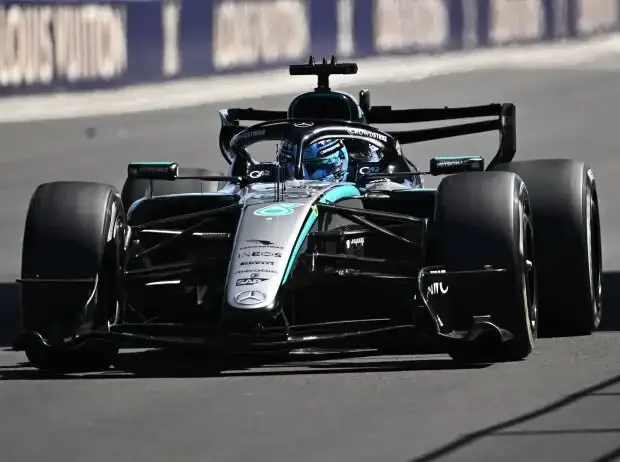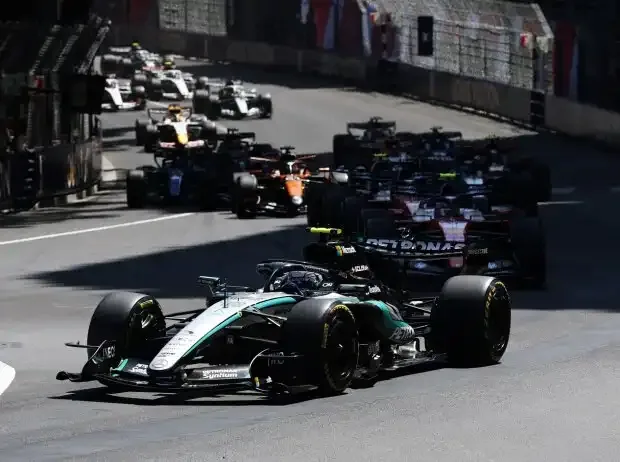





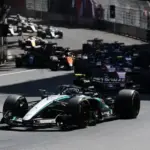
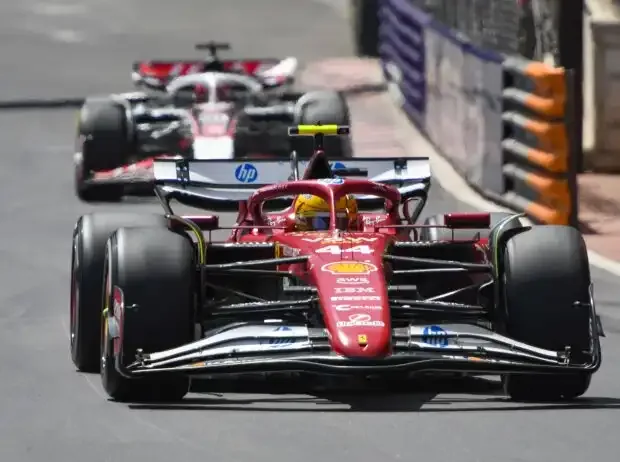
– Monaco presents Formula 1 drivers with very special challenges year after year. The narrow guardrails, slow corners, and minimal margin for error make the street circuit a unique task. In 2026, however, another factor will be added that has played almost no role for a long time: turbo lag.
Read more IndyCar St. Louis 2026 with Mick Schumacher: Schedule, TV, all info
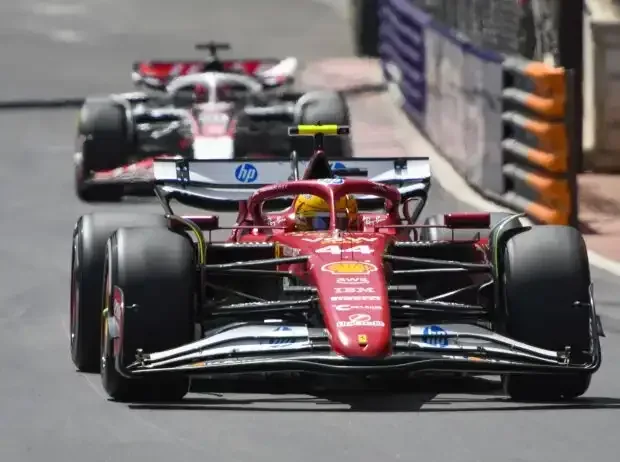
Due to the abolition of the MGU-H in the current engine regulations, drivers must actively ensure for the first time in many years that the turbocharger is kept alive throughout a lap. Especially in Monaco, this could become a decisive performance factor.
Because on hardly any other track do braking and acceleration phases alternate as frequently as in the Principality.
Why Turbo Lag Occurs at All
The basic functioning of a turbocharger is simple. The engine’s exhaust gases drive a turbine, which in turn drives a compressor. This forces additional air into the engine, ensuring that more oxygen is available for combustion.
The result: more power and, above all, more torque. However, the system has a crucial disadvantage. As soon as the driver lifts off the throttle, the exhaust gas flow decreases. This slows down the turbine, the boost pressure drops, and the turbocharger loses speed.
When accelerating again, the system needs time to reach its maximum speed. During this phase, full engine power is not available. This phenomenon is precisely what is known as turbo lag.

On tracks with long corners and few heavy braking zones, this effect is hardly noticeable. In Monaco, however, drivers have to completely close and reopen the throttle dozens of times almost every lap. Every lost moment during acceleration immediately costs time there.
Monaco Already a Turbo Nightmare in the 80s
In fact, the problem is by no means new. Already during the turbo era of the 1980s, Monaco was considered one of the most difficult tracks for turbocharged engines. At that time, turbochargers were significantly larger and slower than today’s systems.
Especially after slow corners, it sometimes took several seconds for full power to be available again. Naturally aspirated engines therefore often had advantages. V12 and Flat-12 concepts, in particular, could develop their torque much earlier and were often superior during acceleration.
Ferrari was one of the teams that suffered particularly badly from turbo lag back then. Before the 1981 Monaco Grand Prix, the Scuderia reacted with a targeted overhaul of its engine to generate more torque at low revs.
Success was not long in coming. Gilles Villeneuve qualified in second place, less than a tenth of a second behind pole-sitter Nelson Piquet. In the race, the Canadian ultimately secured one of the most famous victories of his career.
MGU-H Made Problems Practically Invisible
When turbo-hybrid engines were introduced in 2014, the issue of turbo lag almost completely disappeared from Formula 1. The reason for this was the MGU-H. The complex hybrid system could electrically drive the turbocharger and keep it at speed even when no exhaust gases were available.
Read more Audi unveils Nuvolari: Is the brand’s GT3 comeback happening now after all?
As soon as the driver stepped on the throttle, full boost pressure was practically immediately available. For years, drivers therefore hardly had to worry about how to keep the turbo alive. With the abolition of the MGU-H, that has changed.
Suddenly, the behavior of the turbocharger plays a significantly greater role again – especially on a track like Monaco.
Ferrari Could Benefit
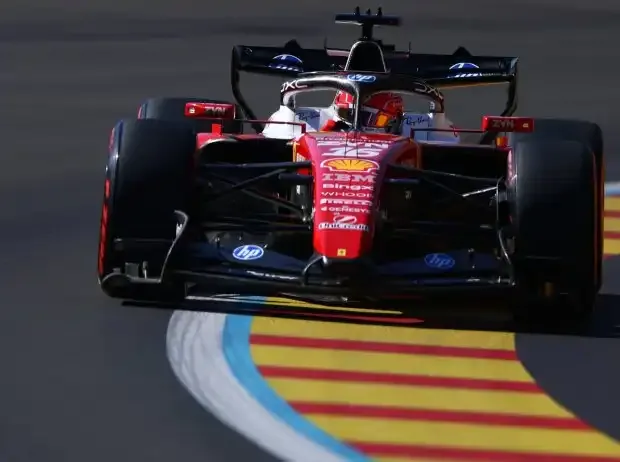
It is already being speculated in the paddock that Ferrari could benefit from the new situation. The Italian manufacturer apparently relies on a comparatively smaller turbocharger. Such systems generally build up boost pressure faster and react more directly to throttle commands.
McLaren driver Oscar Piastri sees a potential advantage for the Scuderia in this. “These turbos take an incredibly long time to spool up,” explains the Australian. While some concepts react faster than others, the problem fundamentally remains for all teams.
What do the data tell us in Canada, Kevin Hermann? I Data analysis LIVE F1 Montreal 2026

It becomes particularly critical when boost pressure is lost. “If you lose boost pressure, you lack the power of the internal combustion engine, and as a result, you lose a lot of power. That is definitely one of Ferrari’s strengths.”
In his assessment, the Scuderia would have to pay less attention to turbocharger management because the power losses with decreasing boost pressure were smaller.
The Solution Lies in the Gearbox
However, the drivers themselves can actively influence the turbo’s behavior. The key lies in gear selection. The higher the engine speed remains, the more exhaust gases flow through the system. As a result, the turbocharger loses less speed and can build up maximum boost pressure faster again.
Already during testing in Bahrain, several drivers therefore experimented with significantly shorter gear ratios and lower gears in slow corners. Especially in Turn 1 and the tight Turn 10, first gear was used surprisingly often.
This could now also become standard in Monaco. In recent years, first gear on the street circuit was used practically exclusively in the famous Fairmont Hairpin. The Nouvelle Chicane and Rascasse, however, were usually taken in second gear.
Exactly that is likely to change in 2026. It is expected in the paddock that drivers will increasingly downshift to first gear in these two corners as well, in order to keep engine speeds and thus boost pressure as high as possible.
A similar approach could also be chosen for Mirabeau and the second part of the Swimming Pool complex. The effect may seem small at first glance. Over a complete lap, however, the tenths of a second gained could be decisive.
Read more Hope for Aston Martin? Alonso on Chances in Monaco