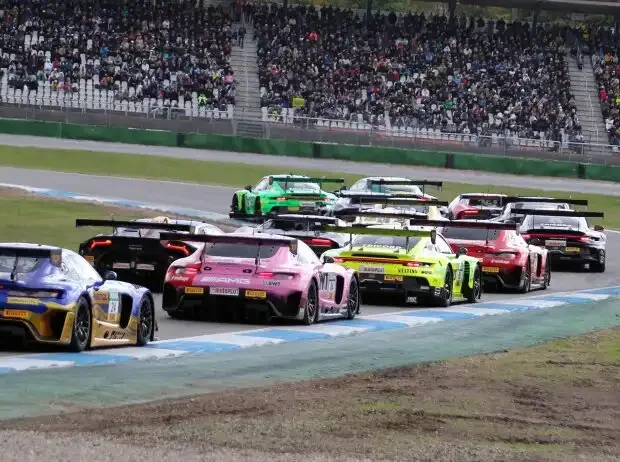






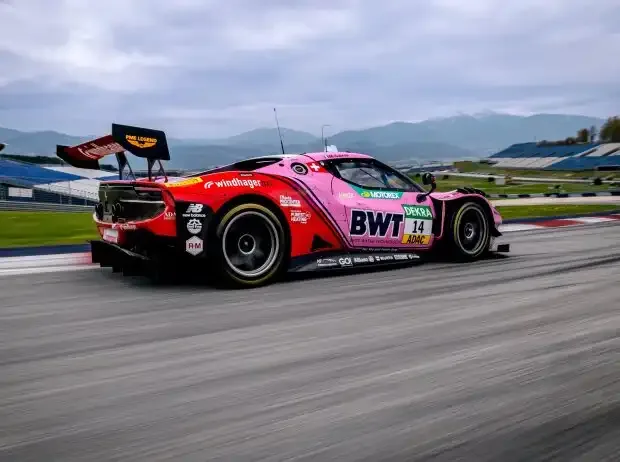
– A few days before the season opener in Spielberg, which takes place this weekend (all info on TV times, stream etc.), the DTM has published the final regulations for the 2026 season. The central innovation of the season is the exclusive DTM special tire, which, in addition to better lap times and more degradation, is primarily intended to enable better control of DTM test restrictions, as the tires are used exclusively in the DTM and must be returned by the teams to Pirelli.
Read more Are the F1 changes coming too late for Max Verstappen?
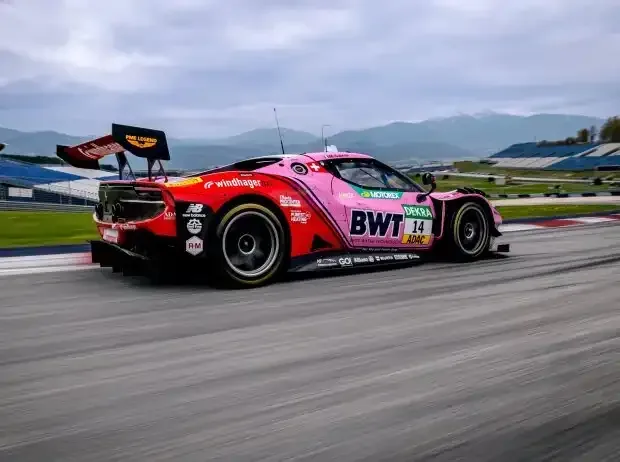
While it was originally even discussed that teams would receive, for example, 50 sets of tires per vehicle for the entire season and then be completely free to decide when to use them, the officials have now opted for a two-pot system.
Regarding the race day pot, the regulation remains essentially unchanged: As before, teams will receive four sets of new tires for the two race days for the season opener, which takes place this year in Austria, the season finale in Hockenheim, and the tire-killing tracks Zandvoort and Sachsenring.
New tire account for limited tests and Fridays
At Lausitzring, Norisring, Oschersleben and Nürburgring, it’s three. The rule that there is one mandatory pit stop on Saturday and two on Sunday also remains in 2026 (SPONSORED LINK: Secure your tickets for the DTM season 2026 now!).
There are major changes to the tire pot for limited DTM tests and free practice sessions: These sets are not simply distributed per weekend, but are managed on a running account. One set of new tires is credited to the car if it participates in a DTM weekend. Tires for the four official test days and the one private test day are always received, regardless of whether one actually drives or not.
Photo gallery: DTM driver lineup 2026: These 21 drivers are at the start

If tires are used, they are deducted from the account. The account must never go into deficit. This forces DTM teams to think strategically: whoever uses many new tires early in the season will have fewer available later.
Three new tire sets allowed in a free practice session
For this, it is theoretically possible this season to even use three new sets of tires in a free practice session. Because there are upper limits on how many new sets of tires may be used at all: In free practice, it is a maximum of three new sets, on an official test day it is six new ones, on a private test day four new ones. So even if you theoretically still have many tires in your account, you are not allowed to use them indefinitely.
Per race weekend, a maximum of three sets of tires may be driven in the two free practice sessions. Teams may also use older tires – so-called carry-over sets from previous race weekends or tests.
Read more FIA confirms: Formula 1 regulations will be adjusted immediately
After each test day and race weekend, a clear upper limit applies: A maximum of five sets of tires per vehicle may remain in the team’s possession. Anything beyond that must be returned to Pirelli – and is thus definitively out of play. These tires are removed from the allocation and may no longer be used later.
How the DTM wants to prevent a tire black market
There is only one exception for the officially approved private test day: For this, up to four additional new sets of tires per car may be taken from the existing allocation. The catch: These additional tires must be returned before the next use.
With this, the DTM wants to prevent the new DTM tire from being sold on the black market and teams from having the opportunity for unauthorized tests at all. Private tests on DTM tracks are also only allowed with the previous Pirelli P Zero DHG within the strictly limited five test days per car.
Tests on tracks that are not part of the DTM calendar in 2026, however, are also allowed for DTM participants with the new special tire. However, one would have to use the tire contingent received during the season.
“Lex Rene Rast”: Regulatory loophole closed
Apart from that, a regulatory loophole from the previous year was also closed and a kind of “Lex Rene Rast” was introduced: Because the Schubert team used a loophole in the regulations last year during the victory of the BMW driver, who retired at the end of 2025, at the Nürburgring, when they took an additional tire from Friday into the contingent due to a damaged rim before the restart.
Because Schubert later replaced the damaged rim on the other wheel with an intact one, they had one more tire available than their rivals. This advantage would no longer be possible now, because in 2026 the discarded wheel would have to be removed from the tire contingent.
Read more Criticism of Formula 1: What does “artificial overtaking” actually mean?