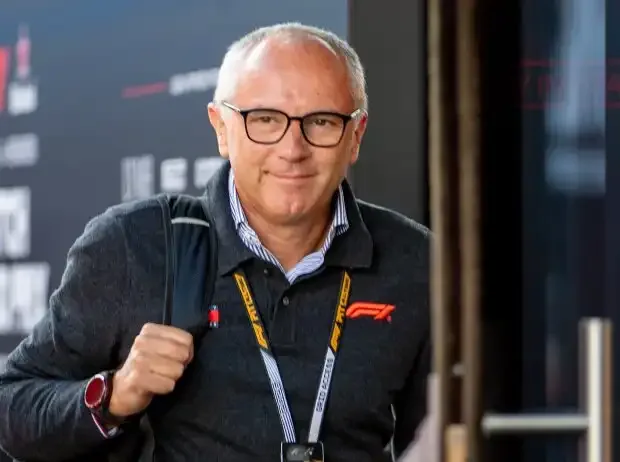
– Formula 1 does not want to be content with admiring the impressive numbers of an exceptionally successful phase. Stefano Domenicali wants to emphasize this message once again ahead of his home Grand Prix in Monza, Italy. He talks about the technical future of the World Championship as well as the further development of the calendar, the relationship with manufacturers, the sprints, and the necessity to reach an increasingly younger audience.
Read more Carlos Sainz sees no strengths: Nothing speaks for a good Monza result
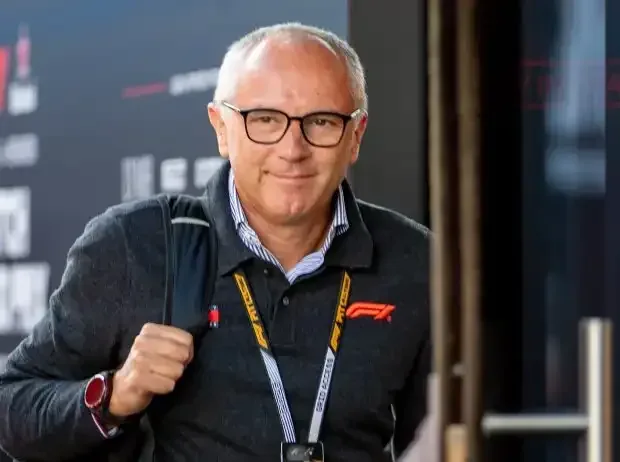
“The danger is that we only focus on ourselves,” explains the Formula 1 CEO. “We must not be satisfied with the success we have today. We must continue to understand why we have grown so big, while keeping both feet on the ground. Because we know there are still many areas where we can grow.”
One of the central topics is the future of the regulations. Formula 1 and the FIA will soon deal with the characteristics of the next generations of power units and vehicles. This happens against the backdrop of an automotive industry that has changed since the current rules were established.
Domenicali: Electric is no longer the future?
“When the rule change we are experiencing today was approached, it seemed as if the future would be determined by electrification. Today, that is no longer the case,” emphasizes Domenicali. “It is up to us to understand how to respond to this and interpret this change correctly.”
It is crucial to find a balance between the needs of the major manufacturers and the necessity not to make Formula 1 completely dependent on their industrial strategies: “On one hand, we must ensure the presence of manufacturers. On the other hand, we must understand how we can be independent if they have other priorities. If manufacturers decided to withdraw today, we would have a big problem.”
This leads to the possibility of turning to technically less complex solutions in the future: “A less complex concept helps to be independent – of course while meeting cost and performance targets.”
Domenicali also mentions two points he considers crucial: “I firmly believe in placing sustainable fuels at the center of the technological concept and working towards a lighter car. Because we want to see drivers who can really push a vehicle to the limit, which must be in their hands.”
Shortening the race distance could come soon
The sporting product itself is also under review. Among the ideas discussed in recent months is a slight shortening of the Grand Prix distance from the current minimum of 305 to a future minimum of 290 kilometers.
Domenicali does not rule out this possibility: “My position is very simple and initially based on a technical consideration. If we are talking, as it seems, about a few laps, then for me this also points to the fact that young people are increasingly less inclined to follow long things. I do not believe it would have negative effects if we talk about shortening by two or three laps. If it were a significantly bigger change, that would be a different discussion. But from this perspective, I am not against it.”
Photo gallery: Formula 1 fails: These rule changes were a flop
The same philosophy was also behind the introduction of the sprints, which initially even Domenicali viewed with some doubts: “I was the first to have doubts as a Formula 1 dinosaur when we proposed this idea. But the data cannot be denied: promoters, media, and fans have overwhelmingly accepted the format and find it dynamic.”
Read more Geely E5 (2026) in the test report: This is how the new electric SUV performs
The sprints will therefore remain part of Formula 1 in the future. However, Domenicali rules out a scenario like in MotoGP, with a short race every weekend: “It will be less than half” of the events, he clarifies.
“Young people increasingly appreciate a weekend where something that counts already happens on Friday. For long-time fans – and I count myself among them – a practice session can also be interesting. But for the broad audience, qualifying on Friday means there is more relevant content.”
Domenicali directly links this development to the changing audience: “Today, around 40 percent of the people who follow us are female, and the average age has dropped from about 57 to 34 years.”
Domenicali excited about the hype around Antonelli
The Kimi Antonelli effect also contributes to this change in Italy: “I have to tell the truth: the numbers surprise me because they are growing strongly. Kimi has not only brought competitiveness to the track but also a wave of people who previously did not follow Formula 1. He is a boy who carries enormous responsibility with a lightness typical of young people. He possesses a naturalness and freshness in which people his age can recognize themselves.”
Domenicali emphasizes, however, that such peaks in attention must be converted into lasting engagement: “We must prevent it from being just a growth spurt that then disappears again. The big challenge is to find out how we can bind those who come to us for the first time. There are communities that do not know us yet, and we have the obligation to build a Formula 1 culture.”
Formula 1 wants to continue global expansion
This also fits the geographical expansion of the championship. Domenicali names China, South America, the Far East, and Africa as regions with significant growth potential: “Africa is sending important signals, to which we hopefully can communicate something significant very soon.”
Finally, the immediate question of the 2026 race calendar remains. Qatar and Abu Dhabi are still confirmed, but the situation is being monitored: “The calendar is currently the one you know. We are watching the situation because if safety and feasibility are not fully guaranteed, we will have to make other decisions. The teams are fully informed, and we are in constant communication with them.”
Even in a phase of growth, Domenicali therefore sees the ability to react quickly to changes as the most important protection against future risks: “Things change so fast that you lose a lot of time in a very short period if you are not able to react. The risk we must not take is to stop looking for competent people, fresh ideas, and new perspectives. If you keep fishing in the same pond, you will always catch the same fish.”
Read more Teams informed: In 2027, all F1 races will probably be shorter