


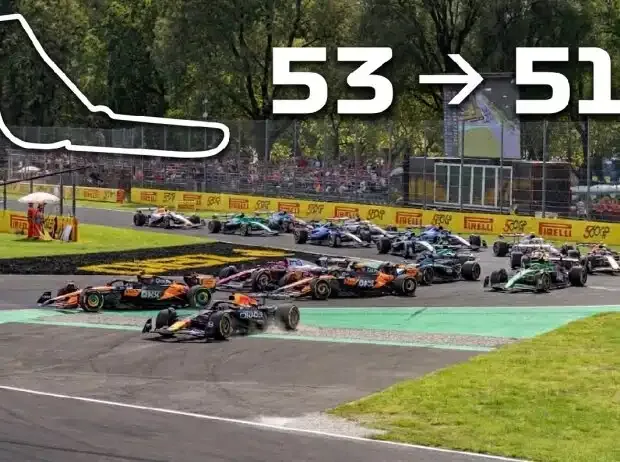
– Formula 1 races are set to become shorter next year to allow teams to account for the changed balance between electric power and the combustion engine’s strength. This option has been on the table since the beginning of this season when the parties discussed adjustments to the technical regulations.
Read more Antonelli announces: Drafting for Russell in Monza qualifying
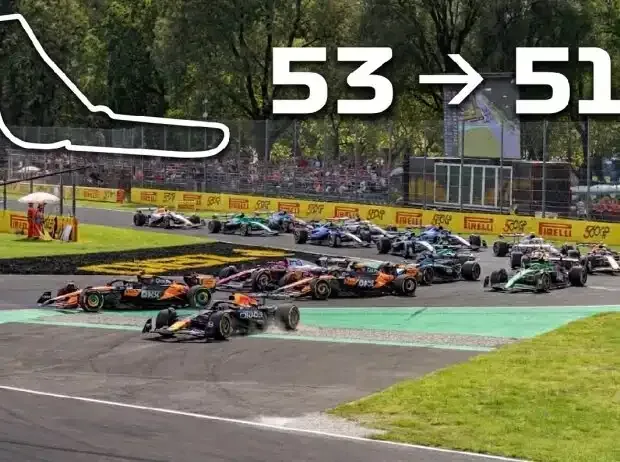
At that time, it was assumed that only a few races would be affected. Instead, it has now been agreed to reduce the maximum distance of all Grands Prix from 305 km to 290 km. The Monaco Grand Prix, which is currently limited to 260 km due to its special track layout, is also likely to be shortened.
According to Motorsport-Total.com, this proposal was presented to the teams by email last week and received broad approval. However, ratification by the Motorsport World Council WMSC is still pending.
The background is widespread dissatisfaction with the current technical regulations, where the electric and combustion engines each contribute half of the total power. Since this concept was agreed upon without sufficient prior scrutiny, its implementation is overshadowed by unforeseen side effects.
Drivers dislike the unnatural driving style forced by the constant recovery and deployment of electric energy; likewise, the “jo-jo racing” caused by fluctuating battery charge levels is not well received by those involved.
Enlarged tank poses problems
Although the officials have agreed to move to a 60:40 ratio in favor of the combustion engine with increased flow volume for 2028, there will be an intermediate step of 58:42 in the coming season.
The reason: At the time of the decision, at least half of the teams planned to carry over their 2026 chassis, which would have made enlarging the fuel tank impractical.
Photo gallery: Formula 1 fails: These rule changes were a flop
This argument dissolved when the teams realized that changes to the aerodynamic regulations would require new chassis designs anyway to remain competitive.
Read more Hamilton emotional: Monza win with Ferrari would be a «first time» again
Nevertheless, there are other reasons against significantly increasing tank volumes: Weight remains an issue in Formula 1, even though the current generation of cars is already 30 kilograms lighter than the previous one.
Due to the shifted power distribution, a higher fuel flow was necessary to demand more power from the combustion engine. However, those who consume more fuel must either carry more of it or shorten the races.
Why all races are now to be shortened
Initial proposals focused on shortening only those races that are particularly fuel-critical, as well as limiting the number of laps cars may complete before lining up on the grid.
However, it is said that a uniform shortening of all races was seen as the lesser evil. In particular, the rights holder has reacted very sensitively to criticism of the new regulations in the past.
Why ADUO divides the Formula 1 world
Shortening individual races would have inevitably brought the necessity of this measure into the spotlight on the respective weekends. This would have only given more room to the widespread view that the regulations are not practical.
- Formula 1Why Antonelli’s grid penalty is actually a stroke of luck
- DTMStaff cuts at Porsche: Head of GT3 department now replaced after all
- AutoElectric dwarf for the city: First details on the Dacia Hipster
- MotoGPMarini leaves Honda without major successes: “I know what I have achieved”
Some purists may be appalled by the shortening of Grands Prix, but this concept is by no means new: As early as 1958, as part of a comprehensive package of rules that also included a ban on alcohol-based fuels, race distances were reduced from 500 kilometers or three hours to 300 kilometers and two hours.
Read more After Maluka’s Outburst: Chevrolet Explains Problem During Restart