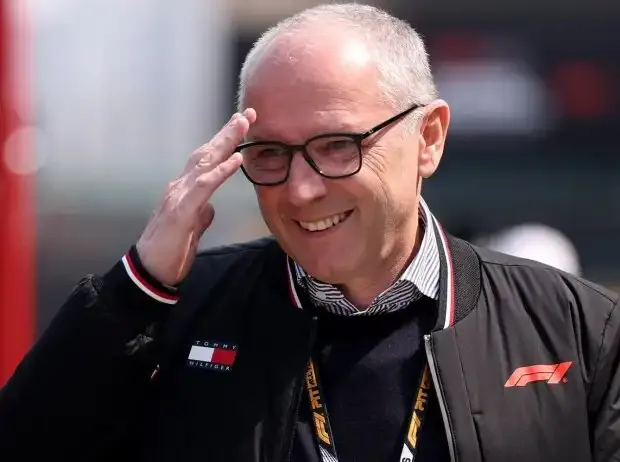
– Last Monday, a group of journalists from Motorsport Network met with Formula 1 boss Stefano Domenicali in London to discuss the new regulations, driver feedback on the start of the 2026 season, and the future of the series in the coming years.
Read more RTL takeover of Sky approved: What does that mean for Formula 1?
Here is the course of the conversation.
On the 2026 Regulations: “Fan reaction was very positive”
Stuart Codling: “Stuart, thank you for your time. We are currently in a kind of interim stage, an unexpected break in the season – an April without races. This has given us time to reflect. Could you tell us a bit more about how Formula 1 assesses the success of the 2026 regulations so far? What were the challenges and were there any unexpected results from the first three races?”
Stefano Domenicali: “Well, first let me say, before I go into the specifics of your question, that I want to take this opportunity to thank you for all that you do to provide core fans with information about our world.”
“We are experiencing a moment where the popularity of the sport continues to grow. Therefore, we must ensure that, on the one hand, we attract new fans and, on the other hand, in a way, teach or explain to them what is happening in our ecosystem. It’s getting more complicated and complex, so I wanted to say that first.”
“The status of the World Championship, the status of Formula 1 – and here I have to think big – is fantastic, it’s great. We have never been in such an incredible position.”
“And the reason I say that is: Without this strong foundation, the current situation we are facing would be perceived completely differently – with big question marks and doubts that are not up for debate today.”
“Of course, we have to manage the political situation, but we are doing it the right way: without panic, on a solid foundation, and ready for different options, depending on how the world develops. In doing so, we know that the entire ecosystem trusts the decisions we make. That’s great and not to be taken for granted at any level.”
Is Racing in Formula 1 a Problem? F1 Boss Domenicali Says This! #Autosport #Racing #F1
“On the other hand, I think it is very, very important to remember, before discussing the reasons or comments on the new regulations, why we changed the regulations as an ecosystem together in the first place.”
“We must not forget that the leadership of our sport does not lie with just one side – it’s the FIA, us, the teams, and so on. The current regulations exist because five years ago – it feels like 50 years ago – manufacturers thought the only way for continued involvement in motorsport was a 50/50 split, meaning going electric or finding the right balance between internal combustion engine and electrification. That was the starting point.”
“That’s why today we are discussing rules and technical details that definitely need to be improved – as always when something is completely new. And it is absolutely new, because the development step has never been so big. But that was the reason for this step. We must not forget that.”
“Now, if you look at what is happening in the context of the automotive industry, the picture is completely different. The industry is returning more to hybrid engines, to internal combustion engines with sustainable fuel – things we said from the beginning were crucial for the future. Therefore, I expect that the discussion about the new power unit, which will be the FIA’s task to coordinate and decide, will definitely proceed differently.”
“But to come back to your question: I see an incredible result in terms of the positive response from the broad fan base regarding the impact of the new rules on racing.”
“I definitely also take seriously the criticism of certain situations that we have to manage – mainly regarding qualifying. I would say, for us racing purists, qualifying has always been the place where the driver has to push as hard as possible to see where the physical limits of the car and the driver truly lie.”
“This is an area we are working on in these weeks – together with the drivers and the teams, coordinated by the FIA, of course – to see what the right adjustments could be, without losing the direction we have taken for the reasons mentioned at the outset.”
“Generally, when we talk about something, it’s always good because it generates constructive discussion. What I don’t like are people who love to criticize – I don’t know why, by the way – who criticize for the sake of criticizing. That helps no one and really has zero effect.”
“I think that the discussions that have been ongoing for many months with the FIA, the teams, and now increasingly with the drivers, are moving in the right direction. Meetings are taking place now, this week and next week before Miami, to see what can be done to improve or adjust the situation.”
“Because if I look at the surveys worldwide – we are a global sport after all – the result among new fans following Formula 1 is great. Everyone says: ‘Wow, what’s going on?’ Lots of action. And one must not forget: that’s what people want to see.”
Codling: “It almost seems as if the regulations have been subjected to a beta test in these first three races, in the public eye, right? How did you react immediately to the audience’s feedback, especially around Australia and China?”
“It all seemed quite polarized, didn’t it? On one side, people who love it and want to see a lot of overtaking, on the other side, those who loudly hate it. How exactly do you analyze your market research to understand how much of it is just negative sentiment because people can?”
“We often find in our reader feedback on our content that those who are most negative are usually also the loudest.”
Domenicali: “You’re right. And polarizing is a good description. But the dimension of polarization looks like this: these are the ones who complain, and these are the ones who love it. The dimension is clearly such that the larger part of the polarization is on the side of positive comments.”
“But as always – you know me – I listen carefully, and I think it’s valuable to bring together all the constructive criticism that we need to implement. And that at all levels.”
“Some people say overtaking is artificial. What is artificial? Overtaking is overtaking. And people have short memories, because in the turbo era of the 80s – I followed Formula 1 very closely back then – lift and coast already existed, different turbo stages and speeds were used. You had to manage fuel in the race, otherwise the fuel tank was too small – you wouldn’t have made it to the end.”
Perhaps some of the critics have short memories. Look back to the 80s, the turbo era, these things were present. That’s part of the game.”
Photo gallery: Crashingly failed: These Formula 1 major projects were never successful
“As always, the blanket is too short, you can’t cover everything at once. So you have to pull it right. As I said before: Globally, there was a very positive reaction from the fans, which has now been interrupted by the month without races. I look forward to returning to Miami with the adjustments we need to make together and seeing what the result will be.”
“But the intensity and attention to what we do is fantastic. Three sold-out events, viewership is increasing, and attention to our sport has never been better. As I said: You take everything in, but you have to maintain a clear line for what you want to achieve in the future.”
Codling: “To come back to the 2026 regulations, the current rulebook for the upcoming seasons: There was a certain discrepancy in the response, not only from the audience but also from the drivers. What kind of conversations have you had with the drivers?”
“Because obviously, part of the audience really enjoys the many overtaking maneuvers. Even some races – the first few I attended, Australia, China – looked entertaining. We were in the media center, then went to the mixed zone and actually felt well entertained, and then a lot of negativity came from the drivers. What were your conversations with them like?”
Domenicali: “Well, first of all, your customers are the ones who had fun. But seriously: I think our exchange – my exchange with them – is definitely very open, and they know that their opinion is important to me. I want them to be involved.”
“But of course, sometimes there’s also a kind of tactical banter. When you talk to the drivers at the top, they are always very happy because they win. The others can be frustrated, also because they love a different kind of racing, which I respect very much.”
“But I told them: ‘Listen, guys, don’t forget that we only achieved all this because we did the right thing together. So be respectful of a sport that has given all of us the incredible opportunity to grow, earn a lot of money, and develop a global personality, which would not be possible in other sports you might prefer.'”
“I told them that, and I think it was acknowledged. And I think racing is very, very good. The more we talk to each other, the better it is for the sport, because the drivers are the jewel of our sport. We must protect this jewel. Just as they must protect the ecosystem in which they find themselves.”
Hadjar on par: Is the Verstappen myth broken? I Data analysis F1 2026 LIVE
“Many people believe – I don’t know if you say that in England, but in Italy we say: ‘The grass is always greener on the other side.’ And then when you’re on the other side, you realize: ‘Oh my God, that’s not true at all.'”
“So one should be respectful of what we have achieved together, but at the same time also listen and be very open to any kind of comments that we have worked out together. Without this tactical banter that some are sometimes tempted to engage in.”
On Verstappen: “I really, really hope he stays”
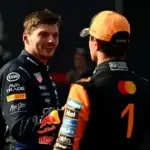
Codling: “However, how do you solve a ‘problem’ like Max Verstappen? He seems to be one of the few drivers who takes the attitude of preferring to pee against the tent from the outside – to put it that way – by talking about sabbaticals or racing GT3 instead. And GT3 sport is actually a ‘Balance of Performance’ formula…”
Domenicali: “Don’t ask me about ‘Balance of Performance’, because you have someone here who has to respect other championships! But seriously: I think we have spoken with Max many, many times since the beginning.”
“We understand – I understand – his comments, and he understands the bigger picture. Even today there was a meeting where he was very keen to make suggestions. I don’t want to fall into the trap of constructing an antagonism here, because that’s not my nature. That’s not how we want to see it.”
“And as always in life: if you are constructive, it doesn’t work negatively against you. So we will stick together. He is the best driver, he is a world champion, a multiple world champion. And of course, his voice must be heard.”
“He also knows, of course, that his voice carries a certain weight. And he must respect that this weight can sometimes be misinterpreted by some people. That is something we must not allow.”
Ronald Vording: “Max is perhaps the biggest purist you can find. How important would it be to find common ground with him? And in this context: Are there any fears? I know you said in Bahrain that he wouldn’t quit, but what’s your current assessment of that?”
Domenicali: “I’m not changing my mind. As I said, you know me: I respect Max very much. I talk to him a lot, and of course, he is very opinionated in this regard, which – as I said – is done in the right way.”
“I mentioned it at the beginning: We must remember the reason why we have these regulations in the first place. Otherwise, we miss the starting point – and if you start a race in the middle, you miss the start. That’s how it is, and I think certain points are valid, and that’s why we are here to clarify them all together.”
“But as I said, I respect him very much. I think he will naturally understand that there is a bigger overall picture. Certain things I may like more or less, but in a way, everyone, as I said, must understand certain reasons.”
Ralf Schumacher: Why Verstappen’s crash plays into Hamilton’s hands
“And it’s good that he pushes things forward. We have said: If something is to be pushed forward, we can do it in the right way, in the right forum, because that is the nature of our sport.”
“I will never be confrontational, that’s not my style, and at the end of the day, it doesn’t add value to anyone. The sport is bigger than any of us, any individual. And that’s something everyone needs to remember.”
“Everyone means everyone, no one excluded. The sport is in its 76th year of this era. I have seen people come and go – managers, drivers, fantastic engineers, prima donnas, everyone. But the sport is solid, it looks forward. And that’s what I’m saying.”
“We have over 800 million fans. Therefore, we must keep in mind that our dimension is enormous. As I said, I take all comments seriously. But I remind you that the leadership of Formula 1, as I said, is not a one-man show. It is a system that must be agreed upon together, discussed together. And that is where we are.”
“Therefore, I want to officially say: Please do not try to take a negative, confrontational approach, because that does not help the sport. It brings no added value to me.”
“I mean, if people like to see this ‘gossip’ – that’s exactly what we don’t need, because it’s not good for the sport. And I never do anything to the detriment of the sport, because I think with my experience I know how to avoid these traps. These traps are great for reporting, but not good for medium and long-term goals.”
Read more Bovensiepen Zagato (2026): What the new model from Buchloe costs
“As I said at the beginning: Max is a four-time world champion. He is an incredible driver and certainly one of the best, perhaps the best. I personally really, really hope he can stay. Because I am sure that the adrenaline you find in Formula 1 is unique. That’s why I really, really hope he stays. I can’t say more than that.”
Photo gallery: The most successful constructors in Formula 1
“And that’s why I say: Try to be constructive, even if people in certain situations can sometimes be drawn into emotional dimensions that are not what we need for our sport.”
Vording: “How difficult is this balancing act in general – finding the balance to keep both younger and new fans as well as the die-hard fans engaged and happy?”
Domenicali: “I’ll tell you one thing… and that’s exactly why I bring up the example of the turbo era, because I’m old enough to remember many things. Today people say: Lift and Coast. But Lift and Coast has always existed. It’s a question of what you highlight at a particular moment.”
“Lift and Coast existed even last year for fuel saving, but people never perceived it. Last year we talked about tires. This year, tires have hardly been mentioned so far. Maybe the topic will come up again.”
“And when DRS was introduced, everyone said: ‘Ah, what is that!?’ The purists said it was artificial. What I mean to say is: I’ve seen so many things come and go – and before jumping to a hasty conclusion, you have to wait a little.”
“We are in a new era of regulations. Now it’s about maximizing this product as much as possible. We are trying to make it the most attractive package we can put together.”
“Because the cars are now more nervous to drive, drivers have to explore their limits in a different way. Previously, with cars that had full downforce, it was basically a purely physical limit. Therefore, there are other things in the regulations that need to be adjusted, that have been developed and now need to be understood.”
“If you look at what happened from the first to the third race: the way drivers handle this new technology has definitely changed.”
“We simply had to allow everyone a certain learning curve. As I said, this is a brand new package, and the simulator cannot cover everything. You have to go to the track and understand how to really get everything out of it. That’s what it’s about. It’s different.”

“The incredible thing is – and it’s always good to remember, if you know how to research: Look and listen to what was said back then. And after a few months or a few races, listen or look at it again.”
“That’s why caution is always valuable, especially when there’s such a massive upheaval in our sport. Therefore, I say: It’s not about being a purist or not a purist. You will see that the cars will be faster in a different way by the end of the year.”
“The drivers are the differentiating element of this sport, and that will always remain so. For me as a purist – at least in terms of age (laughs; editor’s note) – I would love to see the drivers at the absolute limit in qualifying, because that is a fantastic dimension of the sport.”
“As for the races, there will be adjustments, but racing itself is not bad at all after three races. It is definitely different, but by no means bad.”
On future rules: “We don’t have to mix mobility and racing”
Vording: “You said that if you go back five years, you have to understand the political landscape among manufacturers at the time – everything was heading towards electrification, the 50/50 split, and so on. How have you witnessed this political landscape among manufacturers change since then?”
“If you look at Ford, for example: They first told me they wanted to stop production of pure internal combustion road cars – and have now somewhat reversed that decision. We have European Union rulings that favor internal combustion engines more than ever. So what does that mean for the next cycle from 2030?”
Domenicali: “I think, first of all, we are in a moment, a unique moment, where we don’t have to mix mobility and racing. But of course, racing is run by teams and manufacturers.”
“And that’s why it’s impressive, what I already said: If you look at how quickly the landscape of manufacturers changed after ‘Dieselgate’ – and I was at Audi at that time.”
“So if I connect these two elements, which should actually remain separate, then it’s true that back then there was this clear statement from all manufacturers: Either we go in this direction – or we have no interest in motorsport.”
“And I could be even more direct: If we had had an independent manufacturer, we could have said: ‘You know what, okay, let’s offer the teams who want to race a white-label F1/FIA engine, let’s go.’ But we didn’t have that. There was no one back then who would have produced an independent engine like Ford-Cosworth used to. So that was the situation five years ago.”
“Now it is clear that the focus has shifted from electrification to hybridization. And everyone understands: If sustainable fuel is available in sufficient quantities and at a reasonable price for the consumer, this could be the way to realistically address the emissions problem.”
F1 expert reveals: THIS bothers me about Formula 1 2026!
“Today we have about 1.6 billion cars, plus commercial vehicles and trucks. Anyone who believes that we can switch all these vehicles to electric cars overnight – that’s impossible. That’s why – and I say this with full responsibility – certain politicians at the European level did not understand this and created problems for the European industry that are almost irreparable or difficult to repair. But that concerns the automotive industry.”
“Manufacturers are a vital part of what we do. We must thank them every day and every night, because without them it would be impossible. But we must no longer be cornered where manufacturers can dictate the pace to the sport.”
“That is a learned lesson that, together with the FIA as the ultimate authority for the regulations, will enable us to find the right package that allows both worlds to coexist. Because we want the manufacturers to be involved, without a doubt. But we must not let ourselves be put in a ‘do or die’ situation. That is the task for the next few years.”
“I personally definitely see – but it is, of course, up to the FIA to propose this – a formula with sustainable fuel certainly at the center of future rules, without discussion, with a different weighting of future electrification in favor of a strong internal combustion engine. Because that is motorsport. This will allow us to save many kilograms and offer pure racing – with lighter, smaller cars that you can really push as hard as possible.”
“That, I believe – and I am not the only one, that is my opinion – would go in a direction that purists should be happier with. But that is my conviction, taking into account all the elements we have to weigh.”
“It would be wrong not to learn from what has happened. Even if racing itself, as I said, with some adjustments, is great on track. Don’t get me wrong. But the car is still very heavy. The battery has brought many factors to consider in the design of the car. These are the things we need to process and react to.”
Vording: “A quick follow-up on that before we move on – because I think there are two questions in the room. The first is what the next formula would look like, and you’ve shared your personal opinion on that.”
“The second is the timeframe. In the paddock, there’s a lot of chatter, of course, about possibly bringing forward the new cycle, if that’s possible. But how difficult is that also from a commercial perspective? After all, manufacturers have invested heavily in the current regulations.”
Domenicali: “… which we must respect. Because having a manufacturer invest in Formula 1 in this day and age is incredible and deserves our full respect. In this context, it should not be taken for granted. Let the FIA coordinate with its vision what the right regulations could be that can be proposed to the manufacturers and teams.”
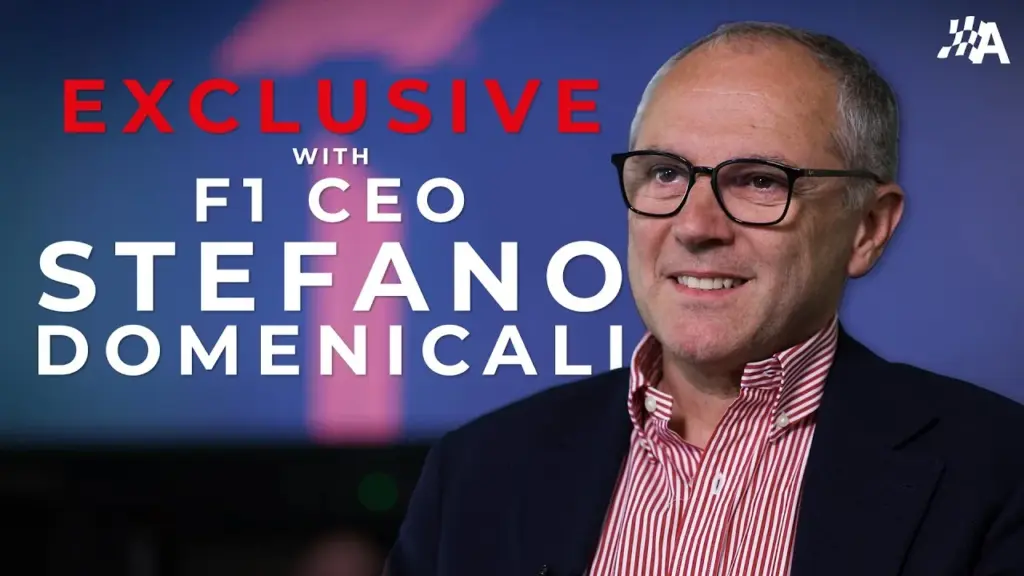
“Of course, we will discuss this together with the FIA. This year we have to decide what the next set of regulations could look like. One can, of course, say that the regulations regarding governance expire at the end of 2030. The agreements are part of that.”
“After that, the FIA has the option to create a set of regulations along the lines of: ‘Take it or leave it, this is what it looks like.’ We will certainly work together with the FIA on that. And after that, it’s about understanding whether there’s a possibility to bring it forward or not. That will be part of the discussions we will have now.”
On the FIA: “The sport needs a strong federation”
Filip Cleeren: “To come back to your earlier point: It seems as if you and the FIA, meaning FOM and FIA, are more closely aligned than was certainly the case 24 months ago. Do you feel that you need to pull together and deliver these regulations?”
Domenicali: “I think what I can say is that the relationship with the President of the FIA and with the FIA itself is very strong, very, very strong. We know that we complement each other in the sport. We will never take on the role of the FIA, just as the FIA will never take on the role of the commercial rights holder responsible for marketing the sport and so on.”
“So there are many good things we have learned and are working on together, while trying to do what’s best for this sport. The advantage we have in this is that we don’t pursue direct self-interests.”
“We do what we believe is best for the right direction of the sport. That’s a really good sign, a good thing, because it’s a matter of trust. It’s about being clear about the direction we want to take this sport. And I think we prove it with facts: Ultimately, Formula 1 has never been so strong. That means the decisions so far have been correct. We just need to stay focused.”
“Our sport has grown so strong in such a short time that our main focus is on ensuring that the table legs are stable enough to support this growth. This concerns our organization, it concerns the organization of the entire ecosystem: the promoters, the broadcasters, the partners, the teams, the FIA – all of us.”
“Due to the success, we are in a situation where we are either solid enough to continue driving this growth, or we will pay the price for it – which will not happen, as we are focused on what we have to do.”
Cleeren: “Why has the relationship changed? What was the turning point?”
Domenicali: “I think it’s a matter of understanding. It’s about understanding each other better. As I said, that’s a kind of learning curve that has been gone through. I said at the beginning: You don’t have to be confrontational. Therefore, I think it’s a matter of understanding each other better and better. Today we are in a situation where the line is very clear. The trust is definitely there. Therefore, it’s good for the sport. At least I am convinced of that.”
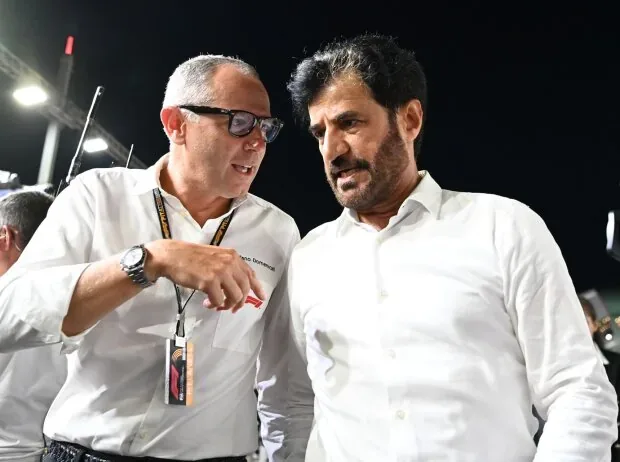
Cleeren: “And of course, you have signed a new Concorde Agreement on governance. This comes with certain expectations, such as the professionalization of officials and so on. The FIA has just published a report on the value it brings, which certainly has its own reasons.”
Domenicali: “I think the expectation is that we need a strong federation. The sport needs a strong federation. The sport needs a strong president who sets the direction for the federation to manage the part of the sport they are responsible for.”
“You know, don’t forget – I’ll start with something that’s not obvious but clear: Without the volunteers who come to the track, a multi-billion-dollar sport would not be possible. I mean, without the marshals, without all the people working in the system, we wouldn’t be here.”
“Therefore, we must ensure that there is enormous respect for this. And we must give them everything necessary to maintain this commitment in the right way, give them the right respect and visibility. That is very, very important.”
“And beyond that, of course: the more you grow, the more you need a strong referee. If you have a World Cup final in football, you need the best referee. We have a World Cup final every weekend, so we need the best referees who give confidence to the entire system, the drivers, and everyone involved. That gives strength to what we do.”
“And I think wherever investments are needed, we are there to help and support, because we know that this is an element without which the credibility of the sport would disappear.”
“Therefore, they (the FIA; editor’s note) must be the ones who set the regulations with their expertise. If they need support, we are there. And then they let us work on the commercial side, on business development, on the growth of the sport. That is our job.”
- Formula 1RTL takeover of Sky approved: What does that mean for Formula 1?
- MotoGPFrancesco Bagnaia: Is Cristian Gabarrini also moving to Aprilia?
- DTM“It was a disaster”: Does the conversion of his DTM McLaren help Timo Glock?
- Formula 1Helmut Marko: Why Vettel & Verstappen convinced him
“I would say, now the direction, the path, and the mutual understanding are very clear, which allows me to say that we have never been so strong in taking the lead for the future. Because as I said: Everyone around us has other interests. For us, the only interest is to ensure that this sport grows.”
Read more Before Miami: Film day at Red Bull and Ferrari, several TPC tests