
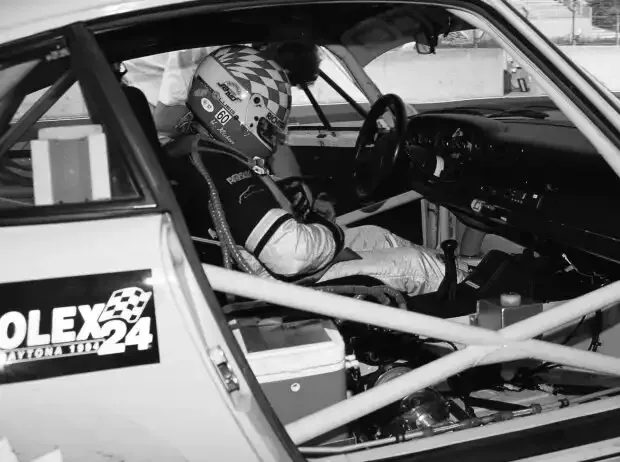
– August 4, 2001, 5:15 PM: The 6-hour race is coming to an end. It is a pleasant summer day with a little over 20 degrees – ideal conditions for the race. Due to an earlier interruption, it will not last the full six hours. But then everything changes suddenly.
Read more MotoGP Live Ticker Silverstone: Bezzecchi sets record on Friday
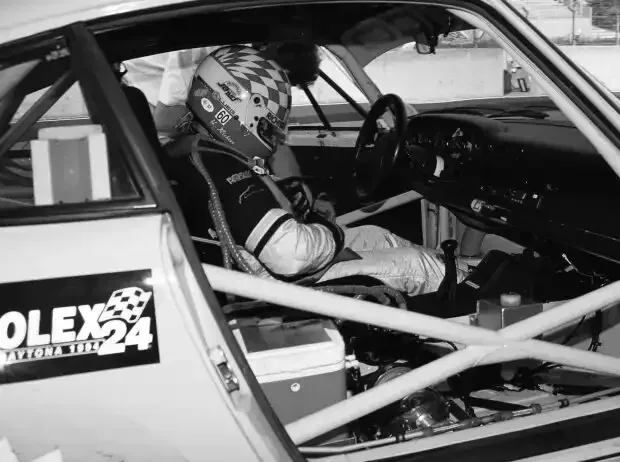
At 280 km/h, Ulrich “Ulli” Richter in the Porsche 996 GT3 MR laps a Renault Megane. The Renault hits him at the rear. Both vehicles first crash into the guardrail on the right and then again on the left. The impact is tremendous. The Renault catches fire, but the driver escapes uninjured. Unlike Ulli Richter. His death at only 44 years old is a shock for the entire endurance racing community.
Richter was the flagship of the VLN. Someone who exactly represented what the series embodied: racing with friends in front of friends for joy, as his motto went. Open and approachable, down-to-earth, and blessed with great driving talent.
VLN Season Review 1992: 1st Year of Mercedes

Richter was a successful media entrepreneur, passionate racer, and a welcome guest in the paddock. The success, with 26 overall wins he was at that time the most successful VLN driver, never went to his head. And that, although he significantly shaped an entire VLN era that is still unforgettable today.
Unforgettable: The Mercedes #300
His name is almost inseparably linked with Olaf Manthey. “He was one of my best friends. We did so much together,” Manthey recalls in an interview with Motorsport-Total.com.
They met at the racetrack in 1989. Richter quickly offered him to ride along in his Faltz-BMW M3. The duo was successful and delivered thrilling duels in the last races of the season with BMW Nordschleife icon Franz Dufter.
Their sporting paths initially parted again, but they did not lose sight of each other. Manthey won the first season of the Porsche Carrera Cup Germany and was also involved in the DTM with Mercedes. This led to a connection that would shape the VLN for years from 1992 onwards.
VLN Season Review 1993: 2nd Year of Mercedes

“I received an inquiry from Norbert Haug asking if we would be interested in running a Mercedes 190E Evo II on the Nürburgring Nordschleife,” says Manthey. The decision was highly controversial within Mercedes. Would a car radically tuned for 100-kilometer touring car races hold up for up to six hours on the Nürburgring Nordschleife?
But Haug and Manthey prevailed. The Mercedes was rebuilt at AMG in Affalterbach and adapted to the conditions of endurance racing. Because the DTM still raced on the Nordschleife at that time, there were experience values for the setup. The technology enthusiast Olaf Manthey added his part.
The legendary #300 in Dekra design was born. There were some teething problems, especially with the rear axle, but the 190 quickly became reliable. The result is extraordinary to this day: From 1992 to 1995, Richter – in most but not all cases with Manthey – achieved 22 overall wins. An overall win rate of over 50 percent over four years.
VLN1 1994: Here the #300 had some bad luck

In one fell swoop, chassis number 31, an ex-DTM car from Kurt Thiim, made a whole generation of Porsche vehicles, some almost 20 years old, that had dominated the VLN in previous years, hopeless. Such dominance over so many years has not been seen before or since.
The absolute masterpiece was Richter’s solo victory at the 24th Adenauer ADAC Rundstrecken Trophy on May 15, 1993: In the early phase, he suffered a tire damage and lost almost a full lap. But he worked his way through the field from behind and, although aided by a race interruption, but at that time both halves of the race were still added together – took the overall victory with more than 90 seconds lead.
Despite all the dominance, it was a modest arrangement, as Manthey explains: “We prepared the Mercedes together in Essen in a small workshop, in a small underground garage at his place, always with his friends and two or three friends of mine, brought it to the Nürburgring and raced it.” The central hub: the Lueg car dealership in Essen.
VLN Season Review 1995: 4th Year of Mercedes
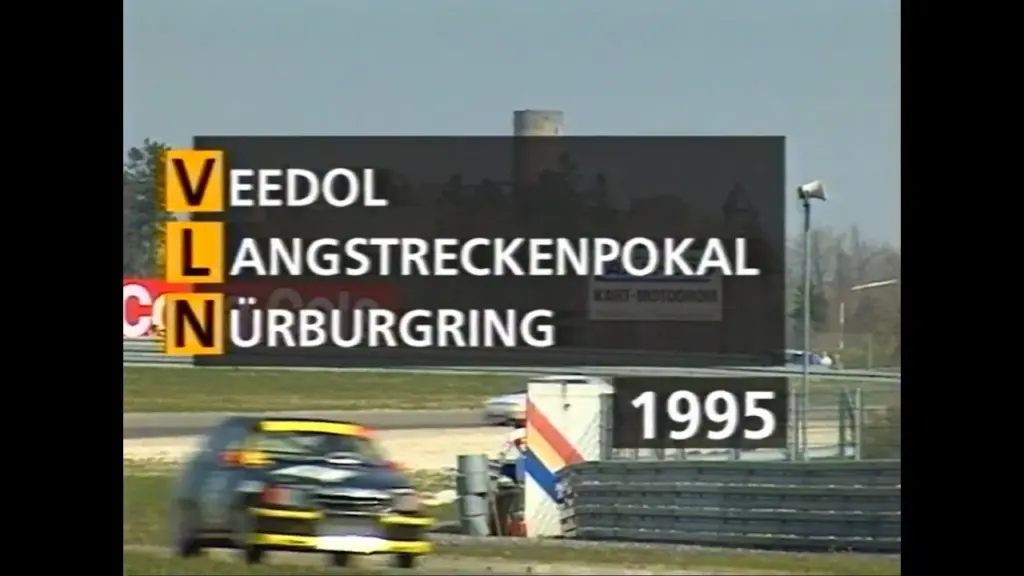
At the end of 1995, the series ended when Mercedes stopped supporting the program. Chassis number 31 rolled into the museum with Nordschleife history in its luggage. And how: In 1995, the #300 won six of ten races again, as many as never before. The story could probably have been continued for years. For example, Zakspeed and Schall still celebrated VLN wins with Mercedes-Benz 190E in 1998.
Read more Radical Briatore demand: Formula 1 needs 24 sprint races
Back to Porsche
Richter then oriented himself internationally. Since 1993, he had started at the 24 Hours of Le Mans. It remained sporadic appearances on some spectacular tracks like Suzuka or Laguna Seca. Meanwhile, Manthey built his own company with initial help from Harald “Nippel” Grohs and returned to Porsche.
From 1998, both competed again on the Nordschleife, but now as opponents: Manthey together with Ulrich Gallade in his still young team, Richter at Jürgen Alzen in the now museum-worthy Porsche 935 DP, with which both still achieved overall wins. Richter extended his record to 26 overall wins and was thus the record holder.
From 2000, Richter, now over 40 years old, reduced his motorsport activities. Nevertheless, his friend Olaf Manthey managed to win him for some races in 2001 alongside Ulrich Gallade in his Porsche 996 GT3 MR.
Mourning instead of pleasure
At the 6-hour race, all three sit together in the car. The 25th anniversary season of the VLN celebrates its festive highlight with the 6h-ADAC-Ruhr-Pokal race in the best weather. There is a festive atmosphere.
Already in the early phase, the race has to be interrupted because an accident blocks the track. The involved drivers remain uninjured except for minor bruises. Olaf Manthey takes the lead in the Porsche, but then falls back to fourth place. Final driver Richter takes over and moves back up to second place. He would not catch the Porsche of Jürgen Alzen and Arno Klasen, who had a two-minute lead. Then the bang.
Olaf Manthey receives the news at the pit. “I got the message about an accident involving my car at Antoniusbuche,” he recalls the fateful day. Manthey knows that an accident at this spot can mean nothing good.
He acts immediately: “I immediately got into the car and drove over the federal road to the accident site. And when I arrived, the engine of our car was lying in the middle of the federal road!” The force of the impact had thrown the unit over all the bushes.
Manthey climbs over the then still quite low fence to check on Richter. Richter appears uninjured except for a small wound through his characteristic glasses above the eye and is even still responsive. Nevertheless, he is at risk of bleeding to death. Why?
Richter was naturally born with relatively thin veins. In the accident, the belt apparently severed his aorta. Four doctors fight for Richter’s life, a rescue helicopter lands on site in a very short time. But despite all efforts, Ulrich Richter succumbs to his injury to the main artery at the accident site.
It was a shock for the entire scene. “I was about to quit driving,” Manthey recalls. “But then I said it has to go on, because Ulli probably wouldn’t have wanted it otherwise. Every time I passed the accident site, my right foot trembled. And that lasted at least half a year until it was somewhat back in order.”
Ulli Richter left behind his wife Gaby and his six-year-old son Dennis. Dennis Richter is now 30 years old. He also raced, especially in the ADAC GT4 Germany, and runs the wrapping company Speed Monkeys. He inherited the entrepreneurial and motorsport spirit of his father directly from birth.
- MotoGPMotoGP live ticker Silverstone: Bezzecchi with record on Friday
- GT-World-ChallengeRatel: “We need to rethink GT3, just like the WEC hypercars for 2030”
- MotoGPMotoGP training Silverstone 2026: Bezzecchi sets new lap record
- DTMHRT pit stops suddenly top: turnaround thanks to ex-engineer of Schumacher?
Note in our own matter: This article was actually planned for August 4, but could only be produced now due to the current sports-political dispute at the Nürburgring and the associated extensive research.
Read more «Something else expected»: Expert doubts Bottas’ motivation