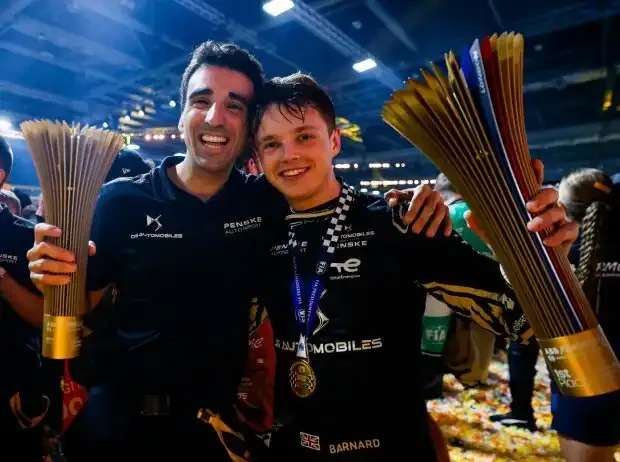

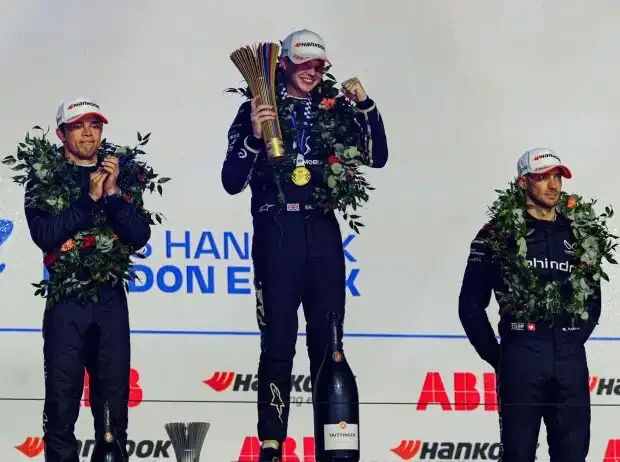
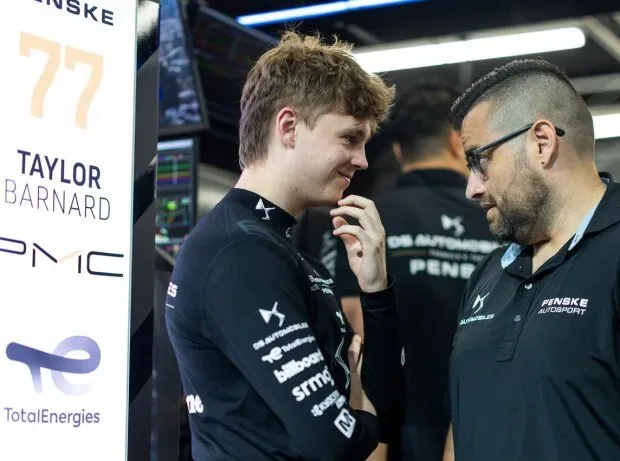
– In its very last Formula E race, DS Automobiles celebrated a great victory. Starting from sixth place, Taylor Barnard perfectly utilized his energy strategy and secured his first win in the electric world championship at his home race.
Read more MotoGP is becoming more global: Why Europe is likely to lose races in the future
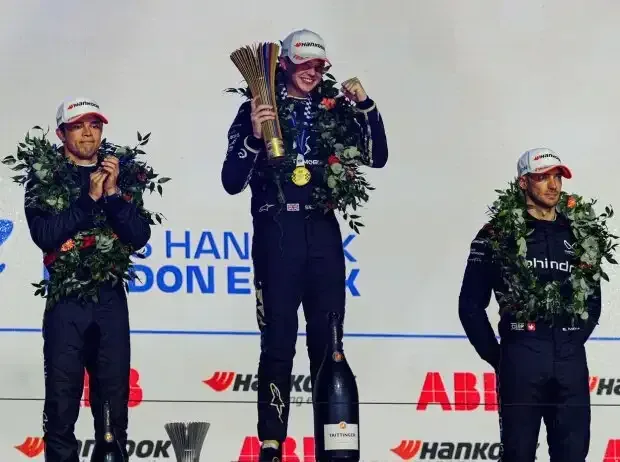
DS-Penske could not have wished for a better conclusion. After a sometimes difficult season, the French-American team returned to the top step of the podium thanks to Barnard. At just 22 years old, the Briton celebrated his maiden victory in Formula E after an exceptionally composed performance.
He chose precisely the last appearance of DS Automobiles in the racing series to break his duck – giving the French manufacturer a farewell that more than does justice to its impressive record of success.
Completely new energy equation
The second race in London presented a completely different picture than the event the day before. With 35 laps, the distance was shortened compared to the 38 laps on Saturday, and there was no mandatory pit-boost stop. Instead, drivers had eight minutes of Attack Mode available (instead of four on Saturday), while the usable energy amount was reduced from 30.85 to 28 kWh.
The strategic insights from the previous day were thus obsolete. The teams had to start their calculations from scratch again – a task that DS-Penske mastered particularly well. Already in the third free practice on Sunday morning, the pace noticeably increased. The track, which had laid down more rubber after Saturday’s race, offered significantly more grip. In addition, the stable temperatures allowed for more precise work on performance.
Photo gallery: All (world) champions of Formula E

In the DS-Penske garage, the engineers worked on the setup to give both drivers more confidence in the car before qualifying. Barnard quickly established himself in the leading group and was less than a hundredth of a second behind the best time halfway through the session.
A stoppage caused by Lucas di Grassi’s stranded Lola shortened the driving time, but both DS E-Tense FE25 cars finished the practice in the top 10 of the 300 kW ranking (the most used power level in the race).
Barnard again in the duels
As on the previous day, both DS-Penske drivers landed in the same qualifying group. A tricky situation, as only four of the eight drivers could advance to the quarterfinals. Barnard overcame the hurdle and advanced to the duel phase for the tenth time this season.
In the quarterfinal, he faced Edoardo Mortara and lost to the Mahindra driver by just nine hundredths of a second, earning him sixth place on the grid. Maximilian Günther, who originally qualified for 11th place, had to start the race from 14th position after a penalty.
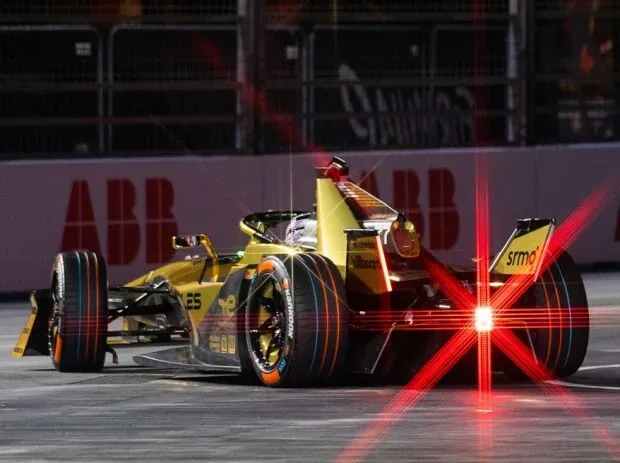
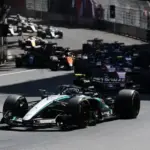
The start took place at exactly 3:04 p.m. local time without major incidents. The still open fight for the drivers’ title meant that the hottest contenders held back a bit, while the two DS-Penske cars chose different energy strategies.
Read more After the Grasser case: Engines from Preining, Engel, and Wittmann collected!
Barnard quickly activated his first Attack Mode phase and moved up to third place. Günther decided to wait in the midfield to benefit later in the race from his energy reserves.
A victory of patience
Barnard’s position improved lap by lap. The two leading Mahindras consumed significantly more energy ahead of him, while the Briton built up a noticeable buffer over his direct rivals. At the start of the last third of the race, the podium was already within reach, but the remaining twelve laps were challenging.
Barnard felt visibly comfortable behind the wheel of his DS E-Tense FE25, keeping Porsche and Jaguar at bay one after the other while simultaneously conserving his battery. When title contender Mitch Evans activated Attack Mode behind him, the DS driver had more than a four-second lead over the Jaguar, which could not keep up with DS-Penske’s pace.
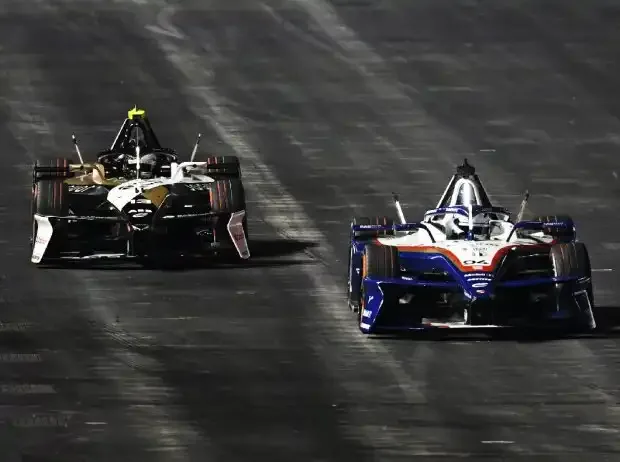
At the front, Nyck de Vries and Edoardo Mortara activated their last six minutes of extra power almost simultaneously. Barnard still had four minutes on the clock and waited coolly. A perfectly right decision! After reducing the gap to Mortara to just over one second, he also switched to the 350 kW mode – with two minutes of remaining power and two percent more energy in the tank than the competition.
The Briton overtook Mortara and took second place. Four laps from the end, he was already glued to the rear of De Vries. With the last seconds of his Attack Mode, he launched the decisive attack and confidently took the lead. He would not let that slip away: Barnard masterfully brought home a race characterized by patience, precision, and outstanding energy management.
“I’ve waited so long for this, I still can’t believe it – it’s an incredible feeling,” Barnard cheered a few minutes after crossing the finish line. “We executed this race perfectly, made the right decisions at the right moment, and above all never stopped believing in ourselves. I want to thank the entire team for helping me make this dream come true. This will remain a highlight of my career forever.”
This victory in the last race of the Gen3 era not only marks the end of the twelfth season of the Formula E World Championship but also the farewell of DS Automobiles from the series. After eleven seasons and three generations of electric race cars, the French manufacturer leaves the championship with an impressive record: four world titles, 19 wins, 56 podium finishes, and 26 pole positions.
- DTMAfter the Grasser case: Engines from Preining, Engel, and Wittmann collected!
- Formula 1Formula 1 engine: Can McLaren really follow Red Bull’s path?
- Formula 1Red Bull: Max Verstappen names “top priority” for the second half of the season
- MotoGPMotoGP is becoming more global: Why Europe is likely to lose races in the future
Transparency note: This article was made possible with a production cost subsidy from DS Automobiles. There was no editorial influence from DS on the content.
Read more DTM eSports Championship: Jarschel is champion and wins M2 Cup guest start