



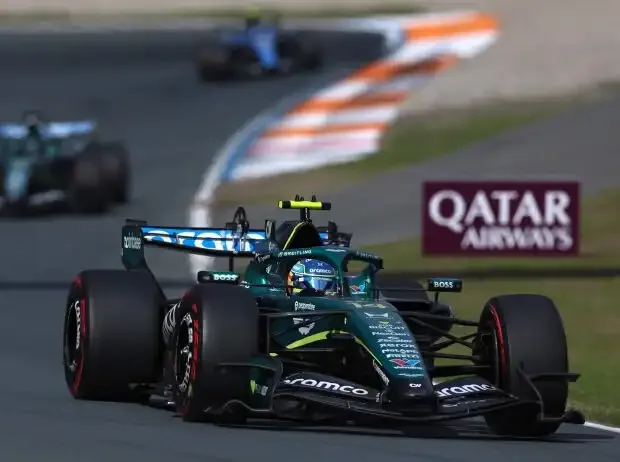
– Fernando Alonso delivered two important World Championship points to Aston Martin at the Dutch Grand Prix with an extraordinary strategy. The Spaniard finished ninth in Zandvoort – despite starting the race day from 18th on the grid.
Read more US market: Tesla Model Y receives adapter for bidirectional charging
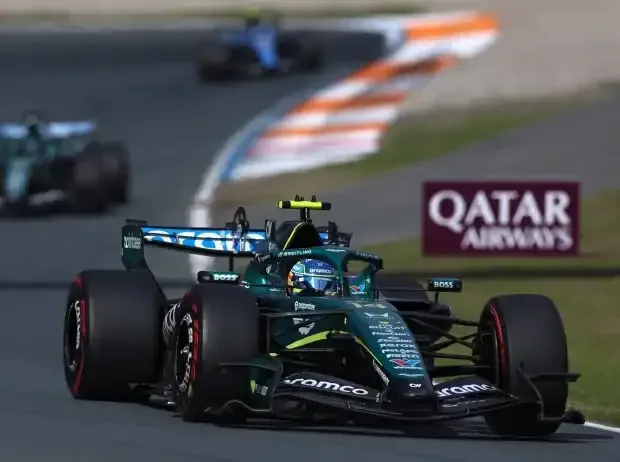
However, the key to the result was not just the pace of the Aston Martin. Rather, the team took advantage of an unusual opportunity after Max Verstappen’s accident and turned it into a one-stop strategy that initially hardly seemed like a realistic plan.
“That was not the plan,” Alonso revealed after the race. Aston Martin had actually expected two stops and a more conventional strategy. But the red flag after Verstappen’s accident changed the situation.
Aston Martin fitted Alonso with a fresh set of soft tires for the restart. The Spaniard then had to cover an enormous distance on them – and actually managed to keep the tires going for over 32 laps. While many competitors struggled with tire wear, Alonso kept the Aston Martin in the race and was later able to run on the hard tires to the finish.
32 laps on soft: Aston Martin seizes the opportunity
The strategy was especially clever because Aston Martin was able to bypass the car’s actual weakness in Zandvoort. Alonso describes the problem quite clearly: In the corners, his Aston Martin is now competitive, but on the straights, it still lacks significant power.
“We are faster in the corners and the people in front of us are slower on the straights – and we get stuck behind them,” Alonso explains. In traffic, Aston Martin can hardly use its strengths. “As soon as we have a clear track ahead, we try to use it – even if it’s not the optimal performance and the optimal strategy.”
Formula 1 Zandvoort Data Analysis
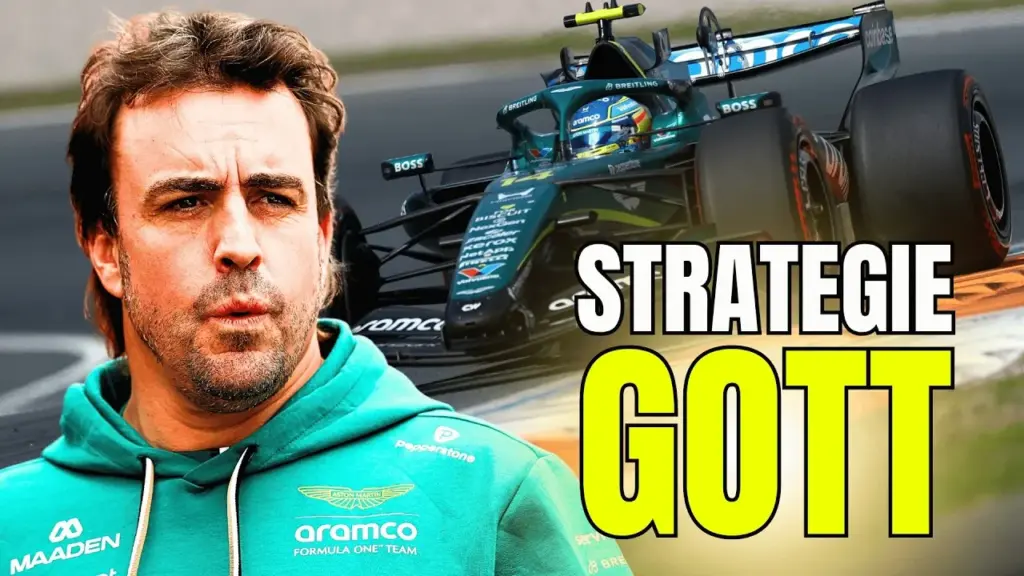
Exactly that happened after the restart. With the fresh soft tires, Alonso was initially able to use clear track, while Aston Martin simultaneously aimed to keep the tires alive as long as possible. Adrian Newey confirmed that the strategy was deliberately adjusted after the red flag.
“With good management, he was able to run almost half the race on these tires,” explains the Aston Martin team principal. This opened up the possibility for an effective one-stop strategy.
The midfield caught in the tire trap
Alonso’s advantage was not necessarily that Aston Martin suddenly had an exceptionally fast car. Rather, the team managed to use their race situation better than the direct competition, as other drivers struggled on track with fading tires.
Newey therefore described the approach as the “best chance” to still score points. Only in the last laps did Alonso come under pressure again from Pierre Gasly. But Aston Martin had enough pace to fend off the attack. “We had the pace to hold ninth place,” said Newey.
Read more Nico Rosberg warns Antonelli about the mental pitfalls in the World Championship battle
For Alonso, this flexibility is currently crucial. Because although the Aston Martin has improved significantly through recent updates, it still has clear weaknesses. “Sometimes we have to deviate a bit from what is normal,” says the two-time world champion.
Aston Martin makes progress – but Honda remains a problem
Alonso also attributes the success of the strategy to the progress Aston Martin has made with its new package. The team had already introduced new parts in Budapest. For Zandvoort, further components followed. Overall, according to Alonso, Aston Martin brought four or five new parts to the track.
“I think now we are optimizing the chassis side and can get the maximum out of it,” says Alonso. However, Alonso still sees significant catching up to do with the power unit, despite an update in Zandvoort. “We are not yet where we want to be in drivability,” he says.
Especially the engine braking and gear shifts cause problems. “The engine braking seems to be somewhat random from corner to corner.” Added to this is a classic problem: power on the straights. “We still lose a lot on the straights.”
This is particularly relevant for Aston Martin with regard to the upcoming races. Because the more a track is characterized by long straights and high engine power, the more the weakness of the Honda engine becomes apparent. Alonso is therefore already making a clear prediction for Monza: “I do not expect us to be competitive there.”
Alonso: “I am a very good driver”
All the more valuable are the two points from Zandvoort, because Alonso does not see the result as a lucky coincidence like the first points result in Monaco. “I think it was deserved,” he says.
The comparison with Monaco shows how much Aston Martin currently lives off such opportunities. In Monaco, Alonso scored a point even though nine cars retired. In Zandvoort, two more points were added – among other things because Verstappen retired.
- Formula 1“We have Max for the most important races”: Wolff jabs at Red Bull
- MotoGPKTM opens MotoGP engines before Aragon: New chance for Pedro Acosta
- Formula 1Verstappen puts finger in the wound: Why was Lawson so close?
- Formula 1Driver ratings Zandvoort: Alonso and Hülkenberg surprise the readers
But ninth place was by no means solely a product of retirements from Alonso’s point of view. When asked how he controlled the car under these conditions, the Spaniard replied dryly: “Very difficult.” When asked how he managed it: “I am a very good driver,” Alonso said with a smile.
Read more Alonso conjures with strategy: How Aston Martin outsmarts the midfield