


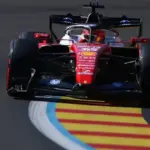


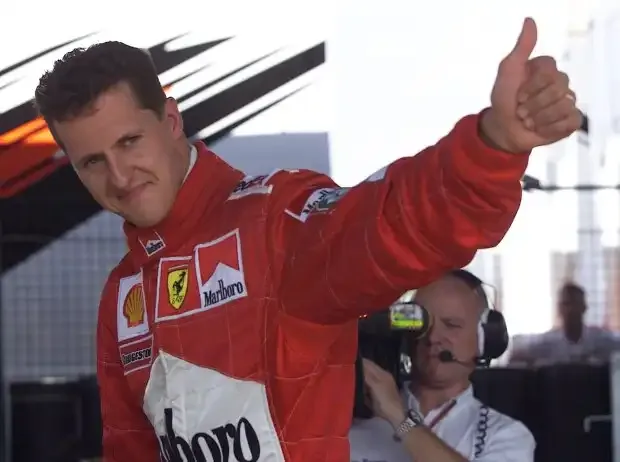
– It is often said that Michael Schumacher brought Ferrari back to the path of success in the 1990s. Just as often, it is said that one person alone cannot achieve such a thing. But 30 years after Schumacher’s first home win for Ferrari in Monza, Piero Ferrari stated: “It’s true. During Michael’s time, our way of working changed fundamentally.”
Read more Hardly any changes: Why the F1 driver market for 2027 is so static
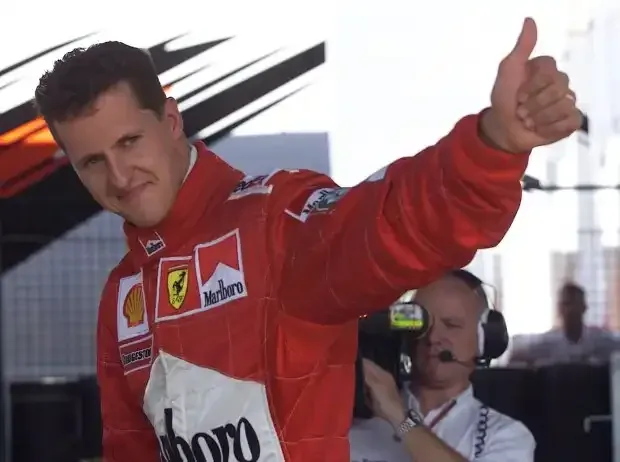
As the son of Ferrari founder Enzo Ferrari, Piero Ferrari closely followed the revival of the Italian traditional brand under the leadership of team principal Jean Todt. In his opinion, however, it was especially Schumacher who left marks in Maranello.
Because until Schumacher arrived, “the development of the car was mainly based on the driver’s feeling, his feedback, and the technical data collected on the track,” said Piero Ferrari.
What Michael Schumacher did differently
“Michael went one step further: He began to analyze intensively what he himself was doing in the car. I remember that he took the telemetry data home to examine every detail of his driving. He wanted to understand where he could improve and at which points on the track he could make the difference.”
This highly methodical and data-based approach had a profound impact on the working culture at Ferrari – to this day: “Certain procedures within the team still reflect this approach today,” said Piero Ferrari.
Why Schumacher’s “basic principle” still applies today
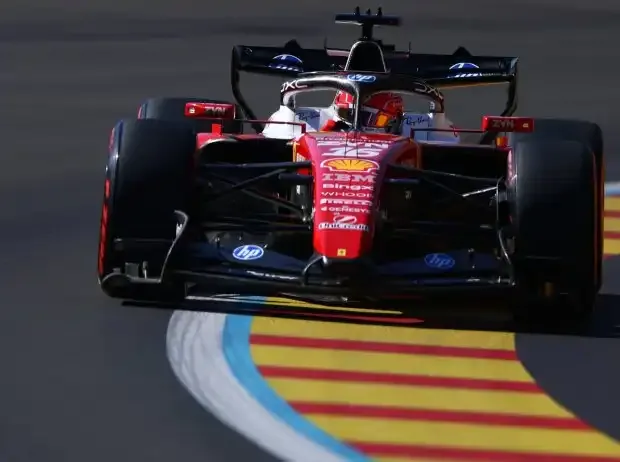
But 30 years after Schumacher’s debut season in red, Formula 1 is a completely different sport. Schumacher, for example, was able to test much more than today’s Lewis Hamilton and Charles Leclerc. Schumacher and Ferrari were usually better prepared than many of their rivals even before a wheel turned on race weekend. According to Piero Ferrari, “the basic principle” has, however, “remained the same.”
Read more Marc Marquez shows the unvarnished image of his right arm
“Michael showed how important it is to examine every detail, to use data as a tool, and to prepare with the greatest care – even off the racetrack. I believe this ability to analyze one’s own work and constantly look for ways to improve is one of the most significant legacies he left Ferrari.” (Photo series: Michael Schumacher – the Ferrari years)
Photo series: Michael Schumacher: The Ferrari years
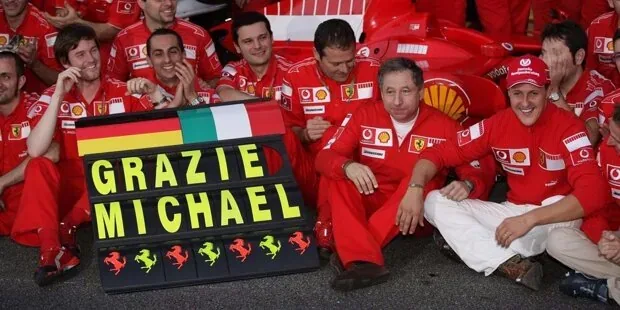
The fact is: The Ferrari team after the Schumacher era was in a much better position than the Ferrari team before the Schumacher era. The driver world championship title in 2007 with Schumacher’s successor Kimi Räikkönen as well as the constructors’ world championship titles in 2007 and 2008 immediately after Schumacher’s retirement underline this. (More on this in the Formula 1 database!)
The first home win as a key moment for “Schumi” and Ferrari
However, the situation was different in 1996: Ferrari was mostly trailing behind and only able to set individual highlights – mainly thanks to Schumacher and his “extraordinary abilities,” according to Piero Ferrari. “His win in 1996 in Monza is a perfect example of this: That was the performance of a great champion – and at a place that has a very special meaning for Ferrari.”
Thus, the home win at the Italian Grand Prix became a key moment in the relationship between Schumacher, Ferrari, and the Tifosi. “Michael understood what it meant to drive for Ferrari and what significance that had for our fans,” explained Piero Ferrari. “I believe that is also why he became such an important part of their history and won a very special place in their hearts.”
Read more Advice from Tennis Legend: How Antonelli Stays Grounded in the 2026 Title Fight