








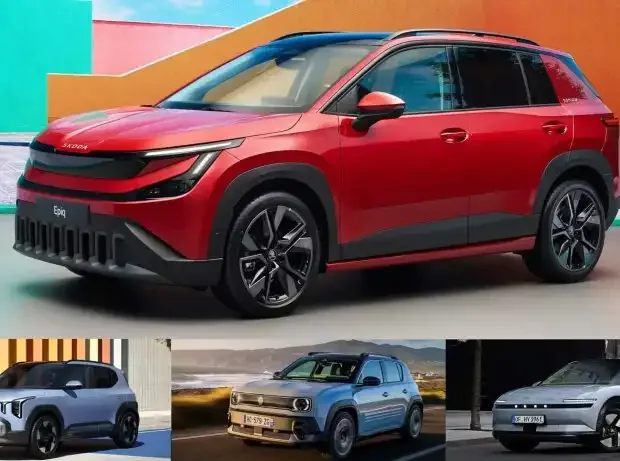
(Motorsport-Total.com/Motor1) – The Skoda Epiq is launching. We will soon test the small electric SUV. To properly assess it, we compare the currently only orderable powertrain Epiq 55 with the competitors. These include, within the group, the VW ID. Cross, the VW ID. Polo, and the Cupra Raval. Otherwise, the Kia EV2, the Renault 4 E-Tech Electric, and the Hyundai Ioniq 3 are suitable.
Read more Slipstream and Battery: Why Monza Unveils the New Racing of F1
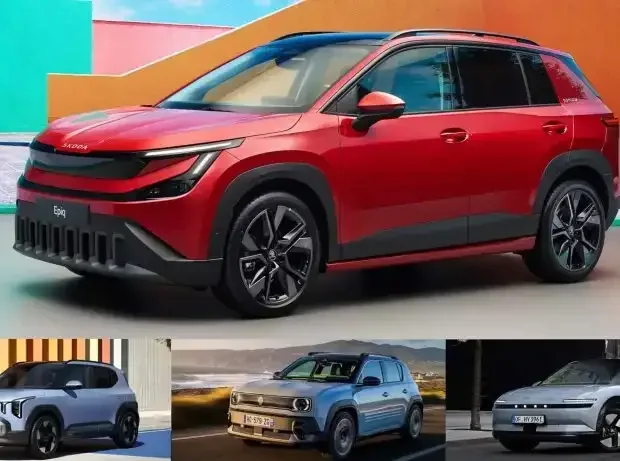
Since we want to limit ourselves to three competitors for space reasons, we have to choose. We leave out the internal group rivals because they are technically very similar to the Epiq. So the Kia EV2, the Renault 4, and the Ioniq 3 remain.
Exterior and Dimensions
Let’s start with the dimensions and the trunk. The length of our four comparison vehicles is quite similar, only the Kia EV2 is about ten centimeters shorter:
| Skoda Epiq | Kia EV2 | Renault 4 | Hyundai Ioniq 3 | |
| Length | 4,171 mm | 4,060 mm | 4,144 mm | 4,155 mm |
| Width | 1,798 mm | 1,800 mm | 1,808 mm | 1,800 mm |
| Height | 1,581 mm | 1,575 mm | 1,552 mm | 1,505 mm |
| Wheelbase | 2,601 mm | 2,565 mm | 2,624 mm | 2,680 mm |
| Trunk | 475-1,345 liters25 liters frunk | 403-1,201 liters15 liters frunk | 375-1,149 liters (according to VDA) | 322 liters + 119 liters Megabox |
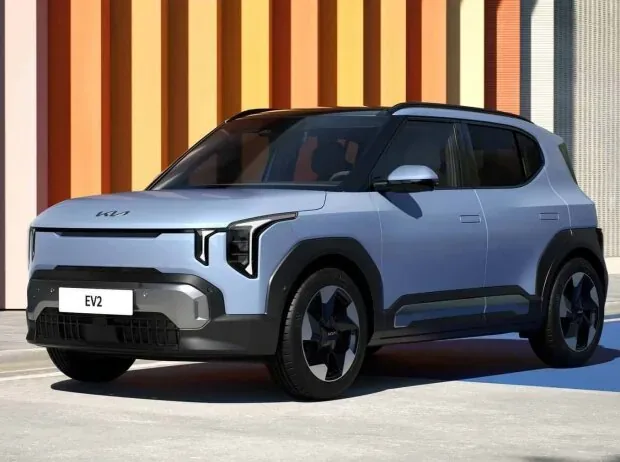
The Skoda Epiq, the Kia, and the Renault belong to SUVs by our definition due to their height, while the Ioniq 3 is a hatchback sedan. But the height difference is so small that it is probably not decisive for buying. However, the Ioniq 3 also has the smallest trunk, at least according to the data known so far: Some manufacturers include the underfloor compartment (called “Megabox” by Renault), others do not.
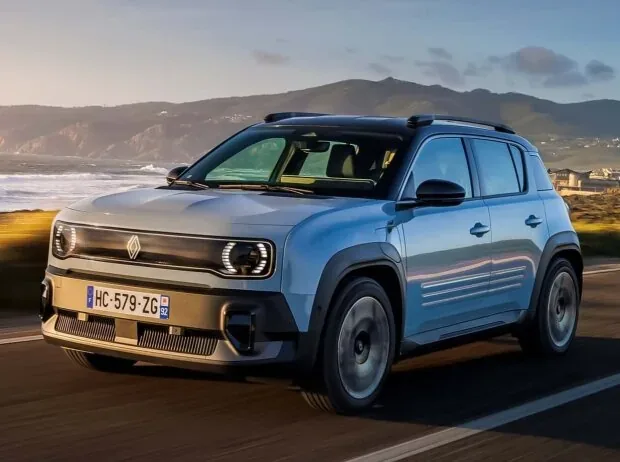
For the Epiq, it is included, so the figure no longer complies with the VDA standard. As we learned at the driving event, the volume without this compartment is about 360 to 370 liters. Presumably, the maximum volume without the compartment is also about 100 liters less.
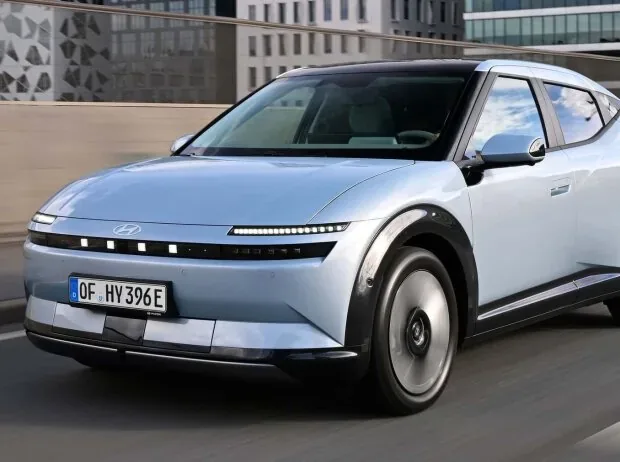
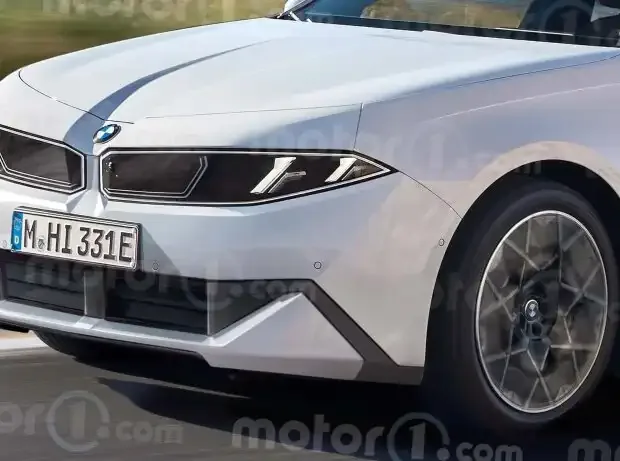
Visually, the Epiq with its T-shaped lights looks quite daring for Skoda standards. Even more futuristic is the Kia EV2. The Renault 4 is likely to be less controversial with its retro look. But the most stylish model for us is the Ioniq 3 with its sporty look.
Interior
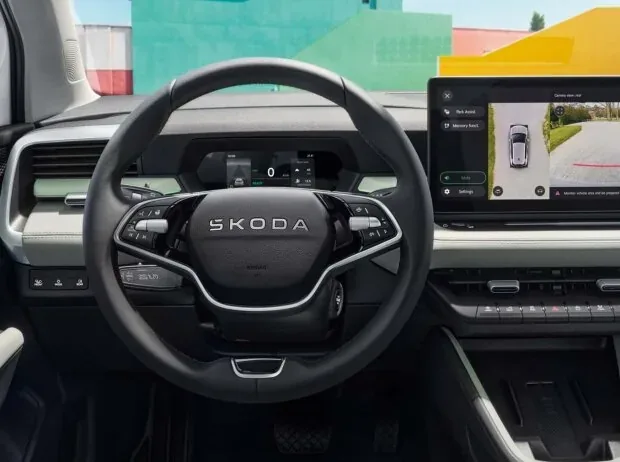
The Skoda Epiq offers only a small 5.3-inch instrument display. This makes the display significantly smaller than in the sibling models, all of which offer 10.25 inches. In addition, the display is housed in a traditional hood. This looks a bit like in combustion engine models that were retrofitted with electric drive. As with the sibling models, a freestanding touchscreen with 12.9 or 13 inches diagonal is also installed.
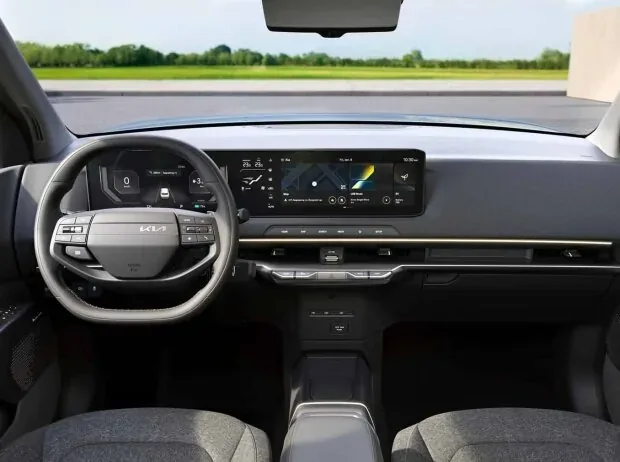
The display setup of the EV2 looks more modern with its two 12.3-inch displays side by side. An advantage of the EV2 is also the optionally longitudinally adjustable rear bench.
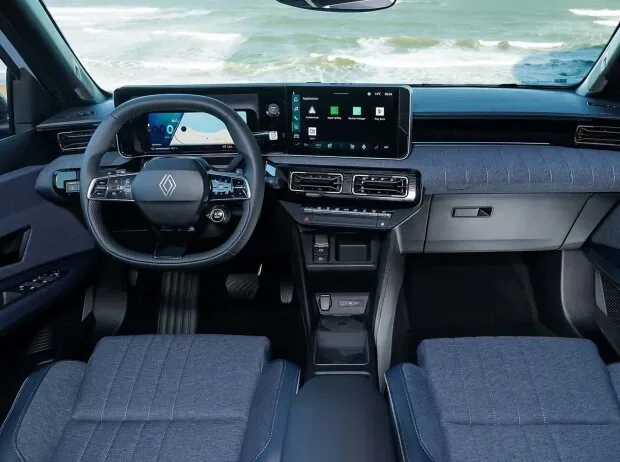
The Renault 4 comes standard with a 7-inch instrument display, optionally a 10-inch instrument display. There is always a 10-inch touchscreen. An advantage here is the familiar and well-functioning Google Maps navigation.
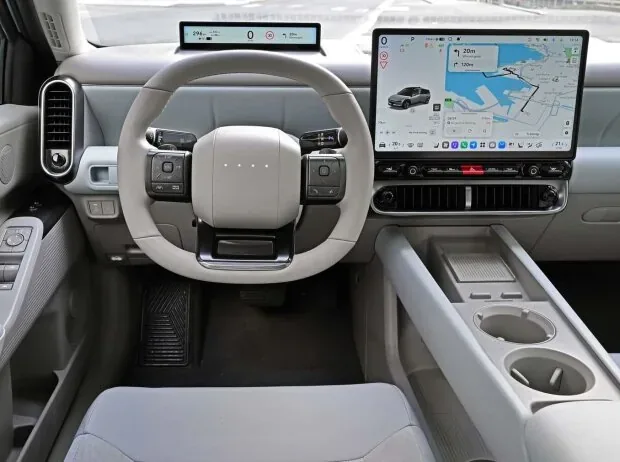
The Ioniq 3 finally offers a small, line-type instrument display and a touchscreen that measures 12.9 or 14.6 inches depending on the version. Here too, infotainment is based on Android Automotive, but without Google Maps navigation.
Drive and Battery
The currently only orderable version of the Skoda Epiq is the top powertrain Epiq 55. It offers front-wheel drive with no less than 155 kW. This makes the Skoda by far the strongest drive; the other vehicles are all around 100 kW. In the future, there will also be the Skoda with 99 kW, but then with the smaller battery. The battery of the Epiq 55 stores 52 kWh (more precisely 51.7 kWh) net. This should allow up to 440 km according to WLTP.
Read more Audi 90 quattro (B3) in review: Luxury sedan with five-cylinder cult
| Skoda Epiq 55 Essence | Kia EV2 Long Range | Renault 4 Comfort Range | Hyundai Ioniq 3 (61 kWh) | |
| Drive | FWD 155 kW | FWD 100 kW | FWD 110 kW | FWD 100 kW |
| 0-100 km/h / Vmax | 7.1 sec. /160 km/h | 9.5-9.7 sec. / 161 km/h | 8.2 sec. /150 km/h | 9.6 sec. /170 km/h |
| WLTP Consumption | 13.7-13.9 kWh/100 km | 14.9-16.2 kWh/100 km | 15.7 kWh/100 km | 13.8-14.2 kWh/100 km |
| Battery net | 52 kWh | approx. 58 kWh | 52 kWh | approx. 58 kWh |
| WLTP Range | 435-440 km | 418-453 km | 409 km | 496 km |
All four comparison candidates use NMC batteries, but the net capacities of the two Korean models are larger than those of Skoda and Renault. This is reflected in the greater ranges of the Kia and Hyundai. The best WLTP value is offered by the Ioniq 3 with its low, aerodynamically favorable body, followed by the EV2, which achieves 453 km according to WLTP with 16-inch wheels. The Skoda Epiq has a smaller battery but is significantly more economical than the Renault and thus extracts significantly more range from a roughly equal net capacity.
When charging, the average charging power in the range between 10 and 80 percent is more important than the maximum charging power. This value can be calculated from the amount of energy to be recharged and the charging time. For the Epiq 55, this results in 51.7 kWh × 0.7 / 24 min × 60 min/h = 90 kW. This is the highest value in the comparison, even though the two Korean models are not much worse.
| Skoda Epiq 55 Essence | Kia EV2 Long Range | Renault 4 Comfort Range | Hyundai Ioniq 3 (61 kWh) | |
| Max. Charging Power (DC) | 105 kW | 118 kW | 100 kW | 110 kW |
| DC Charging Time | 24 min | 30 min | 30 min (15-80 %) | 30 min |
| Average DC Charging Power | 90 kW | approx. 81 kW | 68 kW | approx. 81 kW |
| Range Recharge | up to 12.8 km/min | up to 10.6 km/min | up to 8.9 km/min | 11.6 km/min |
The Skoda is also ahead when recharging range. Here, up to 440 km × 0.7 / 24 min = 12.8 km/min are calculated for the Epiq 55. This means: per minute of charging time, you can recharge electricity for almost 13 km.
Prices and Equipment
Now let’s look at prices and equipment. A positive aspect of the Epiq is that the top powertrain is also available in the base equipment Essence. You pay 32,100 euros for this. The equipment is already quite good, but the model only has steel wheels (in 17 inches), only a single-zone automatic climate control, and lacks seat heating, front parking sensors, and inductive charging for the smartphone. At least we would want the seat heating. Therefore, the comfort package for 840 euros is recommended, which offers seat heating as well as steering wheel heating, two-zone automatic climate control, and tinted windows.
| Skoda Epiq 55 Essence | Kia EV2 Long Range Air | Renault 4 Comf. Range Evolution | Hyundai Ioniq 3 (61 kWh) Select | |
| Price | 32,100 euros | 33,490 euros | 32,500 euros | approx. 32,000 euros |
The Kia EV2 Long Range is 1,390 euros more expensive than the Skoda in the base equipment Air, but it is also better equipped. For example, alloy wheels are standard here, although only in 16 inches. The two-zone automatic climate control is also standard here, as are front and rear parking sensors and the rearview camera. However, inductive charging is also missing here. Seat and steering wheel heating are available as a package for 350 euros, optionally also together with a heat pump for another 990 euros.
For the Renault 4, the version with the large battery we considered is available from 32,500 euros, which means you pay 400 euros more than for Skoda. The equipment scope of the base version Evolution is similar to that there. This includes 18-inch steel wheels, rear parking sensors, a rearview camera, single-zone automatic climate control, and a heat pump. Adaptive cruise control, lane keeping assist, and blind spot warning are only available here at extra cost. For the base version Evolution, they are not available at all.
The German prices of the Hyundai Ioniq 3 have not yet been revealed, but in the Netherlands, the version with the large battery costs 31,995 euros. However, according to the configurator, a 1,500 euro discount is given there, so you only pay 30,495 euros. With this price, the Hyundai would be the cheapest model in the comparison. The Dutch base equipment Select includes 16-inch alloy wheels, adaptive cruise control, lane keeping assist, blind spot warning, and two-zone automatic climate control. Parking sensors, seat heating, and inductive charging are missing.
More small electric SUVs:
Small electric SUVs up to 4.30 meters in length (2026) at a glance
VW ID. Cross now configurable – with VW discount from 34,025 euros
In summary
The Skoda Epiq 55 offers a large trunk and is more economical than the competing models. But due to the smaller battery, it has less range than the Korean models Kia EV2 and Hyundai Ioniq 3. However, it leads in fast charging. We also like that you can now adjust the recuperation – up to one-pedal driving. However, the display setup is the least attractive in comparison. The prices are at the level of the competition. All in all, the Epiq 55 is not really clearly superior to the competition; it has specific strengths and weaknesses that everyone must weigh for themselves.
Read more Sainz expects chaos in Madrid: «We will see safety cars and red flags»
Source: Dutch Ioniq-3 configurator