


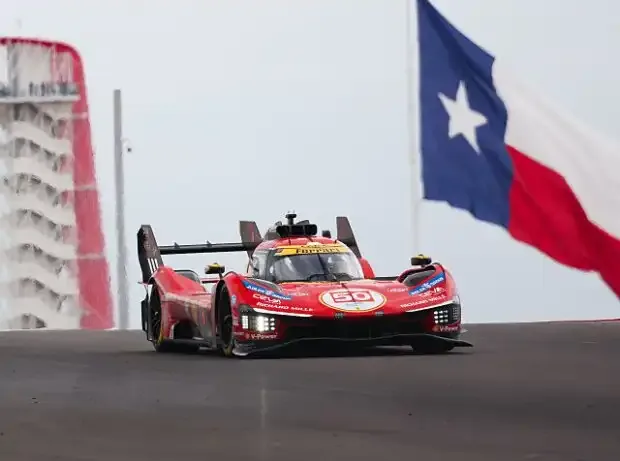
– Ferrari returned to the top step of the podium in the World Endurance Championship (WEC) last Sunday at the Lone Star Le Mans at the Circuit of The Americas in Austin. However, it was a race with mixed feelings and results for the Italian manufacturer, as the second 499P entered by the factory team remained without points.
Read more Review of the GT Summer Series 2026: Level exceeds expectations
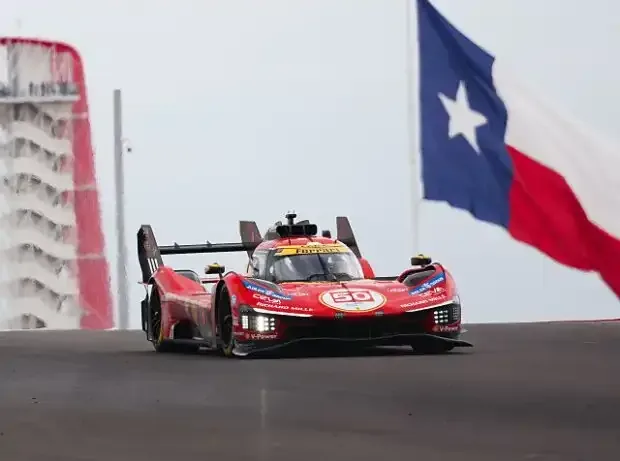
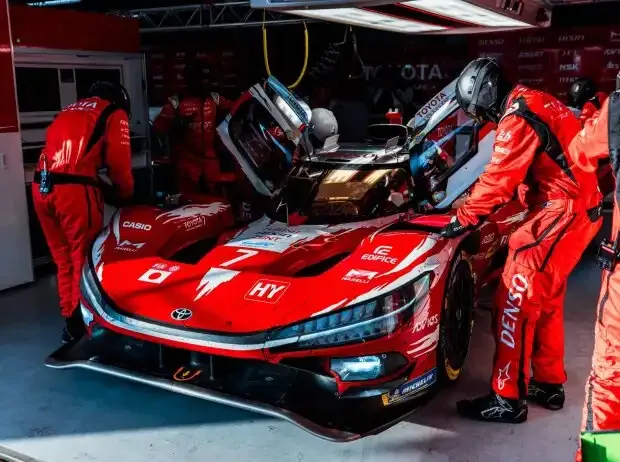
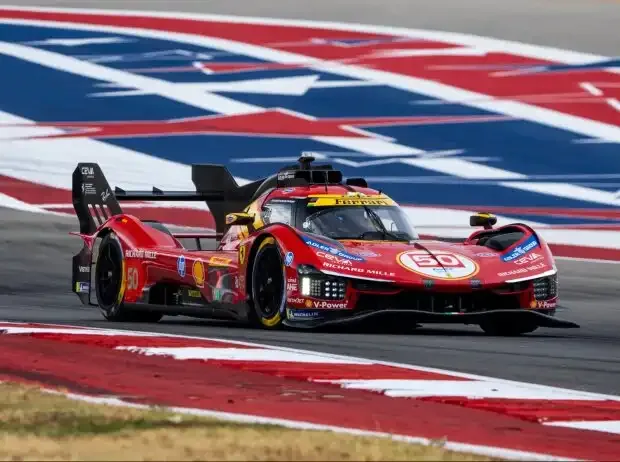
Antonio Fuoco, Miguel Molina, and Nicklas Nielsen fought back in the 6-hour race after a difficult start. They took the lead when the previously leading Toyota with the number 7, driven by Mike Conway, Kamui Kobayashi, and Nyck de Vries, suffered a hydraulic failure and retired 11 minutes before the finish. The Ferrari #50 finally crossed the finish line with a 4.7-second lead, beating the Cadillac V-Series.R with the number 38 driven by Earl Bamber, Sebastien Bourdais, and Jack Aitken.
It was Ferrari’s first WEC season win in 2026 and the first for the crew of car number 50 since the 1812km Qatar in March 2025. The result now revives Ferrari’s hopes of defending its world championship titles. The crew of Ferrari #50 is now, three races before the end of the season, only 21 points behind the leaders (WEC overall standings 2026). However, the win in Austin was anything but easy.
Molina had a strong start. However, a different pit stop strategy was pursued for Ferrari #50 to keep an eye on Toyota, BMW, and Cadillac while avoiding getting stuck in traffic. This initially caused the car to fall back before gradually working its way back into the fight for the podium.
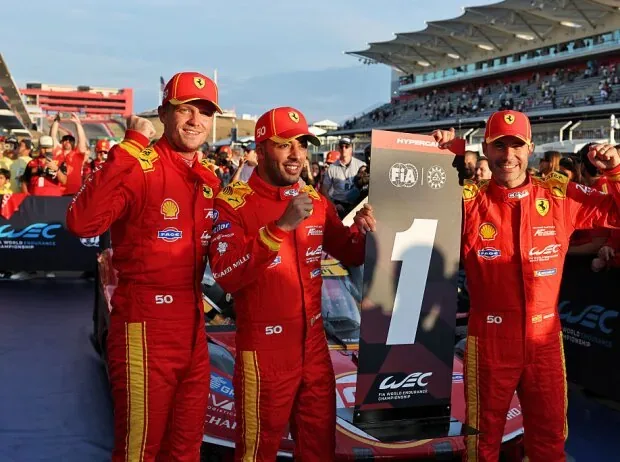
Nielsen and Fuoco optimally used the pace of the 499P in the second half of the race. In the last hour, Nielsen moved up from third to second place when the Alpine ahead of him made a mistake. The retirement of Nyck de Vries in the leading Toyota finally brought Ferrari #50 the lead. Ferrari had strategically kept an eye on Toyota.
“We tried to keep Toyota in check strategically, also with a view to the manufacturers’ championship,” explains Nielsen. “Our goal was to stay ahead of them, but at the same time, we had to get out of traffic. We took some risks, knowing that a safety car could completely wipe out our lead or cost us a lot of time.”
“When the first virtual safety car phase brought us back together with the others, we knew we just had to go full throttle. I think we made very good decisions and did a great job under difficult conditions.”
In the final phase, Nielsen had to take care of the tires: “My engineer told me that an Alpine was behind me, catching up and attacking hard to make up for a penalty. I tried to manage the situation without completely ruining the tires. Whenever he got closer, I could pull away again. It went back and forth, but I never thought about letting him pass. I wanted to be the one to cross the finish line first.”
Missed opportunity for Ferrari #51
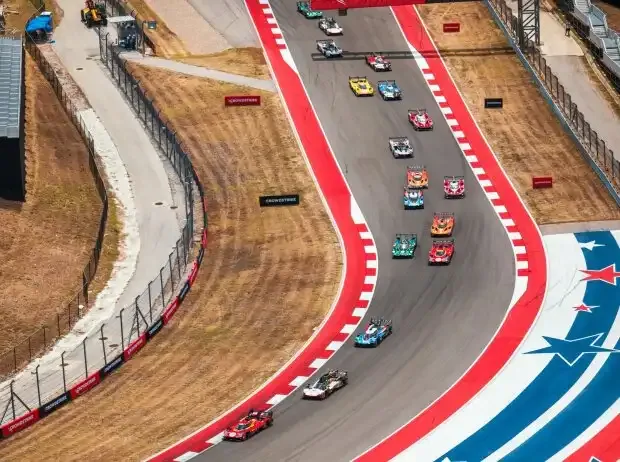
The second Ferrari 499P of the factory team experienced a very different race. Alessandro Pier Guidi, James Calado, and Antonio Giovinazzi started from pole in car number 51 and seemed best positioned to challenge Toyota for the win.
Giovinazzi had an excellent first stint, maintained the lead, and built a gap of up to 20 seconds over the chasing group. But during the second pit stop phase, the race took a dramatic turn. A problem at the restart caused Ferrari #51 to stay in its pit box much longer than expected.
“Car number 51 had a really good start, but unfortunately, there was a mistake during the pit stop on the driver’s side,” explains Giuliano Salvi, race engineer in Ferrari’s endurance program. “Basically, the car was turned off, and we had to perform a reset, which cost us about 30 seconds. In four years, we have never experienced anything like this. We need to find out what caused it so that it doesn’t happen again in the future.”
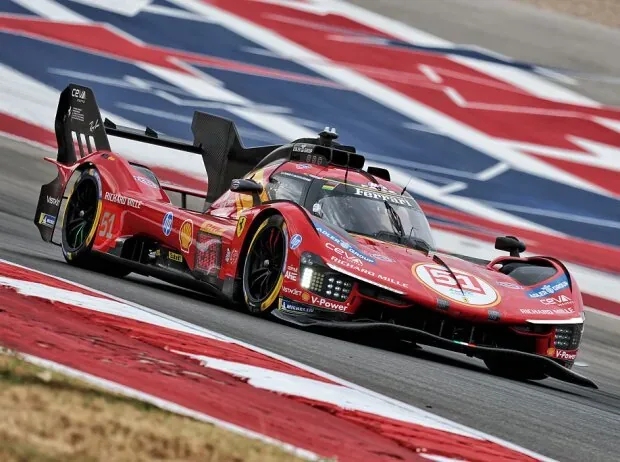
The lost time was especially bitter as Toyota had shown strong long-run pace throughout the weekend. “We were doing well, but honestly, I can’t say if it would have been enough for the win,” admits Salvi. “From the free practice sessions, we noticed that Toyota had a very strong pace, which worried us a lot. Although they started further back, they were extremely fast over the distance.”
Read more Monza debacle for Ferrari: Is team principal Frederic Vasseur now on shaky ground?
During its stint at the front, Ferrari #51 benefited from having clear track, which is particularly valuable at the Circuit of The Americas. “Because of the position at the front, Ferrari #51 was able to build a gap, as clear track is fundamentally important on this circuit to avoid problems with slipstreaming and the resulting loss of aerodynamic performance,” explains Salvi.
“Meanwhile, the Toyotas were stuck in traffic. It’s hard to say how the race would have developed without the problems, but there certainly would have been a fight with them. They would have made it very difficult for us,” believes the Ferrari engineer.
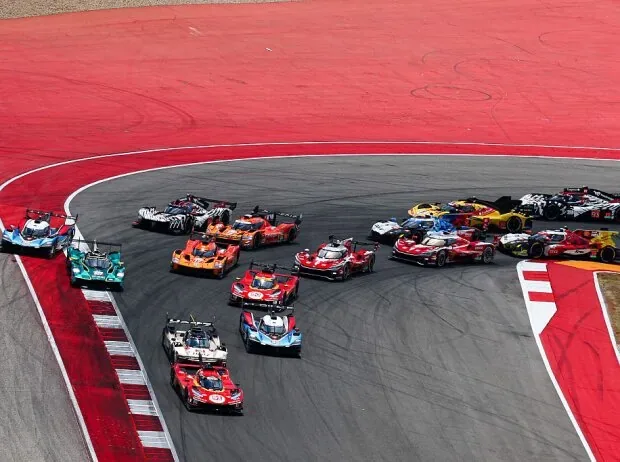
After the pit stop, however, Ferrari struggled. Both Pier Guidi and Calado complained about the car’s performance. “It had nothing to do with the hard tires we put on at the end,” says Salvi. “These were necessary because we had to push hard and make up ground, which would not have been possible with the medium tires.”
Calado describes the frustration that a potential win slipped far away as follows: “After a perfect start to the race, it got complicated. We couldn’t achieve a great result. After securing the hyperpole, we naturally started with the goal of achieving a better result.”
“Unfortunately, during ‘Giovi’s’ stint, there was a mix-up in procedures that cost us time. That disrupted our plans and is undoubtedly frustrating, not least because we thought we could still win thanks to the safety car phases.”
“On the other hand, it worked in our favor that car number 7 had a problem and retired. These are not things to be happy about, but ultimately we didn’t lose anything in the overall standings, except that we now have one less race to fight back,” says Calado.
Ferrari does not give up the title fight
The win in Austin, Ferrari’s first in the 2026 season and the third overall for the crew with car number 50, gives the manufacturer new momentum. Three races remain on the WEC calendar 2026: Fuji, Barcelona, and Monza. Ferrari’s focus is now on continuing to optimally use the strengths that Fuoco/Molina/Nielsen displayed in Austin.
“We didn’t expect to be able to win with car number 50 given how the race started,” admits Salvi. “After falling back into the midfield, the car recovered very well. It was well balanced. I know that Nicklas occasionally complained about the handling, but at such high temperatures, that can happen.”
“In the second half of the race, we stayed on the medium tires, as this was the most common choice among all participants. This strategy paid off. Initially, we were out of rhythm, just like car number 83 (the yellow Ferrari from AF Corse; editor’s note).”
- DTMHaug delivers bold ideas for the future of the DTM: “That should stir up passions”
- Formula 1Monza debacle for Ferrari: Is team principal Frederic Vasseur now on shaky ground?
- Formula 1 Formula 1 car on rails: Crazy stunt by Red Bull in Madrid
- Formula 1Herta fails at Formula 2 hurdle: Is the dream of the top class over?
“If you start further back, you get caught in traffic. Toyota was affected by this as well. That’s why we brought the pit stop forward to escape the chaos. It’s hard for spectators to understand, but if you look at the lap times in clear air, they were ultimately at the level of the fastest cars,” explains Salvi.
Read more Haug delivers bold ideas for the future of the DTM: «That should stir up passions»