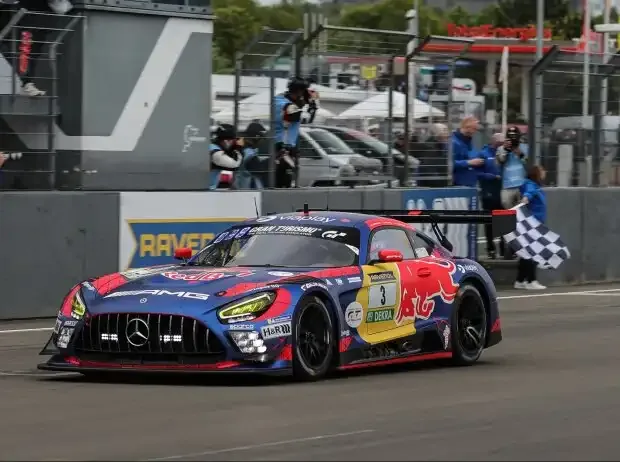










– Whether it’s the Porsche 911 GT3 R, BMW M4 GT3, Audi R8 LMS GT3, Mercedes-AMG GT3, Ford Mustang GT3, Lamborghini Huracan GT3, Aston Martin Vantage GT3, Ferrari 296 GT3 or McLaren 720S GT3: no vehicle can get past the Balance of Performance (BoP) in the Nürburgring Endurance Series (NLS) and the 24-hour race.
Read more After Bearman crash: Haas team principal warns against quick rule changes

The classification of the GT3 cars in the SP9 class is handled by the technical committee of ADAC Nordrhein, which, as the organizer of the 24-hour race at the Nürburgring, has authority over the SP regulations.
The BoP at the Nürburgring continues to be created classically via the parameters of vehicle weight and boost pressure or air restrictors. Torque sensors, as used in Le Mans, are dispensed with in order to keep costs within limits.
In addition, fixed values apply to the angle of attack of the rear wing and the vehicle itself (“rake”) as well as for the wheel camber. These values can vary depending on the tire manufacturer. The amount of fuel is limited so that the GT3 vehicles can drive eight laps in a row.
At the 24-hour race, the organizer has the possibility to adjust the BoP during the ongoing event until the start of the race, which has often been used in the past.
BoP changes: What is being adjusted?
Update NLS3: The Zetti is coming! The BoP for the BMW Z4 GT3 has been set for the first time. The McLaren 720S GT3 is to be reclassified; weight and boost pressure are still marked as “tba” in an initial list.
For the non-Evo Porsche (model year 2023), the second air restrictor is reduced back to 35 millimeters. Both versions of the Porsche 911 GT3 R are docked two liters of fuel, while the BMW M4 GT3 Evo gets two liters more. In addition, Porsche teams with Pirelli tires are allowed to run significantly higher camber values.
Update NLS2: Unsurprisingly, there are no changes in the SP9 class after the canceled first race. Only the BMW M3 Touring 24h is reclassified in the SPX class and receives the same boost pressure curve as the M4 GT3 Evo at also 1.365 kilograms. This was significantly corrected downwards at NLS1 (see below).
Update NLS1: Compared to the 2025 season finale, there are some significant adjustments at the start of the season, including a complete reclassification of the Mercedes-AMG GT3. The AMG becomes 20 kilograms heavier, but the air restrictors are increased by 0,5 millimeters each, making a total of one millimeter. The vehicle’s overall angle of attack (“rake”) is set 0,097 degrees flatter. To compensate for the advantage on the straight, the rear wing must be set four degrees steeper. In addition, camber values were defined for the new Toyo tire.
The Lamborghini Huracan GT3 Evo1 is also allowed to use two air restrictors that are 0,5 millimeters larger each for its farewell race (Konrad will switch to Evo2 from NLS2); there is no counter-sanction. It’s a different story for the Aston Martin AMG GT3 without the Evo package, which must add 20 kilograms of ballast.
The BMW M4 GT3 Evo experiences a very hard slowdown: following allegations after last year’s 24-hour race about power peaks, 20 kilograms are added. Much worse, however: the M4 loses massive boost pressure, up to 0,506 bar at the peak!
The Ferrari 296 GT3 Evo and the Evo version of the Porsche 911 GT3 R (992) have been newly classified.
Overview of BoP NLS + 24h for all GT3 cars
Values in brackets: Change from the previous BoP classification
FA = Falken
GY = Goodyear
MI = Michelin
PI = Pirelli
YO = Yokohama
HA = Hankook
TO = Toyo
DU = Dunlop
Aston Martin Vantage GT3 AMR
Vehicle weight: 1.340 kilograms
Boost pressure: 1,662 – 1,825 bar
Rear wing: 8,6 degrees
Angle of attack: 0,395 degrees
Camber F/R: 3,2/2,5 degrees
Tank: 118 liters
Read more Big IndyCar time check: How fast Mick Schumacher really was
Aston Martin Vantage GT3 AMR Evo
Vehicle weight: 1.325 kilograms
Boost pressure: 1,662 – 1,820 bar
Rear wing: 9,0 degrees
Angle of attack: 0,23 degrees
Camber F/R: MI: 3,1/2,2 degrees, PI: 3,6/3,2
Tank: 120 liters
Audi R8 LMS GT3 Evo II
Vehicle weight: 1.305 kilograms
Air restrictor: 2x 34,5 millimeters
Rear wing: 5,0 degrees
Angle of attack: FA & GY: 0,536 degrees; MI & YO: 0,494
Camber F/R: FA & GY: 3,4/2,5 degrees; MI & YO: 3,3/2,5
Tank: 113 liters (Class AT: 114l)
BMW M4 GT3 Evo
Vehicle weight: 1.365 kilograms
Boost pressure: 1,820 – 2,285 bar
Rear wing: 1,0 degrees
Angle of attack: 0,46 degrees
Camber F/R: 3,5/2,4 degrees
Tank: 112 liters (+2)
BMW Z4 GT3
Vehicle weight: 1.300 kilograms
Air restrictor: 1x 65,0 millimeters
Rear wing: -2,75 degrees
Angle of attack: 6,0 degrees
Camber F/R: 3,7/3,2 degrees
Tank: 111 liters
Ferrari 296 GT3
Vehicle weight: 1345 kilograms
Boost pressure: 1,713 – 2,413 bar
Rear wing: 6,0 degrees
Angle of attack: 0,33 degrees
Camber F/R: GY: 2,7/2,5 degrees; MI: 3,0/2,7; PI: 3,1/3,0; YO: 2,8/2,4
Tank: 115 liters
Ferrari 296 GT3 Evo
Vehicle weight: 1365 kilograms
Boost pressure: 1,713 – 2,413 bar
Rear wing: 5,3 degrees
Angle of attack: 0,45 degrees
Camber F/R: GY: 2,7/2,5 degrees; MI: 3,0/2,7; PI: 3,1/3,0; YO: 2,8/2,4
Tank: 115 liters
Ford Mustang GT3
Vehicle weight: 1320 kilograms
Air restrictor: 1x 36,0 + 1x 35,0 millimeters
Rear wing: 5,5 degrees
Angle of attack: 0,1 degrees
Camber F/R: 3,8/3,0 degrees
Tank: 122 liters
Lamborghini Huracan GT3 Evo1
Vehicle weight: 1.300 kilograms
Air restrictor: 2x 38,5 millimeters
Rear wing: 10,0 degrees
Angle of attack: 0,22 degrees
Camber F/R: 3,5/3,2 degrees
Tank: 113 liters
Lamborghini Huracan GT3 Evo2
Vehicle weight: 1.320 kilograms
Air restrictor: 1x 51,0 millimeters
Rear wing: MI: 9,5 degrees; GY: 8,5
Angle of attack: MI: 0,27 degrees; GY: 0,12
Camber F/R: GY: 2,4/2,5 degrees; MI: 3,0/2,6
Tank: 120 liters
McLaren 720S GT3 Evo
Vehicle weight: tba (reclassification)
Boost pressure: tba (reclassification)
Rear wing: 4,1 degrees
Angle of attack: 0,7 degrees
Camber F/R: 3,3/3,0 degrees
Tank: 118 liters
Mercedes