



– No matter how one feels about the 2026 Formula 1 rules, pragmatism is now required. The regulations will probably remain in place until the end of 2030, and it is up to all stakeholders in the premier class to make the best of them.
Read more Coulthard: Red Bull is in a dilemma because of the Lambiase change
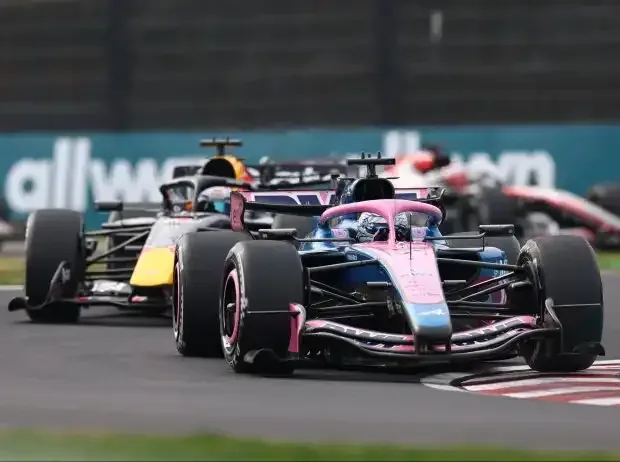
In meetings during the April break, Formula 1, FIA, teams, and drivers tried to conduct a kind of autopsy on the first three races and put possible changes on the table.
Originally, the officials wanted to focus on reviving the qualifying spectacle. Although the current cars are capable of high speeds and are only a few seconds slower than last year’s cars with enormous downforce.
However, the image of cars passively rolling into braking zones instead of biting into the kerbs was seen as an anomaly. Formula 1 was satisfied with the aesthetics of the racing, even if a vocal part of the fans saw it differently.
Oliver Bearman’s crash in Suzuka forced a re-evaluation of this view. The Haas driver’s departure highlighted the danger of being surprised by different approach speeds and prompted Formula 1 to address the issue further.
The three goals of the discussions were therefore: partially reverse the damage to qualifying, address and try to reduce the difference in approach speeds, and introduce protective measures in the event of wet races.
After Monday’s meeting with the teams, the FIA has now ratified some changes for the Miami weekend in May – albeit with a few additional elements to be tested for possible inclusion in future races.
How the new rules will affect things
For qualifying, the recuperation limit has been set at a maximum of 7 MJ per lap, with the possibility of further reducing it depending on the track. A reduction in the maximum value should reduce the amount of super-clipping before corners.
Even if this does not eliminate the regular power reduction when drivers run out of energy on the straights, the visual flaw of lift-and-coast or slow rolling into corners should be less noticeable.
It is unavoidable that the batteries must be charged during the lap, as they can only store up to 4 MJ. The solution is therefore a compromise.
When the cars enter the super-clipping phase, this process should be shorter. The maximum energy recovery has been set at 350 kW, previously the limit was 250 kW. This will brake the cars more strongly.
Theoretically, the 100 kW higher value shortens the super-clipping distance, and in an optimistic reading, this would transition more seamlessly into the conventional braking zone and further reduce the visual effect.
What’s happening in Formula 1? You ask, the editorial team answers! I Q&A F1 2026 LIVE

This also affects the races, as part of the effort to reduce the more noticeable differences in approach speeds. Furthermore, the boost button – essentially the 350 kW power-on-demand function – may only be used when the MGU-K delivers more than 150 kW, to limit abrupt acceleration bursts.
The most effective change, however, is that the maximum output will now be variable. In SLM zones, the activation of the active aero package ensures that the cars can reach their 350 kW platform. In corners, the cars will now be limited to 250 kW.
This is intended to ensure two things: firstly, drivers are more equally matched in terms of deployable energy in aerodynamically critical zones on the track, and secondly, the deployment can be distributed somewhat more evenly over the lap.
Even if there are places where teams deliberately do not deploy energy, as the Esses in Suzuka have shown, the rules for this are quite complex. Elsewhere, there are regulations for power-limited phases around the track, and engineers create maps based on these to determine their power output.
This is somewhat similar to the previous rules but is more emphasized because the electrical systems gain more weight due to their higher performance.
Formula 1 wanted to maintain the nominal 50:50 split between internal combustion engine and electric drive, which is why the nominal values were retained (even if it’s not truly 50:50), with the full 350 kW power of the MGU-K only being used sporadically.
Adjustments also for wet races and at the start
In addition, there are changes for wet races. Tyre blanket temperatures for intermediates will be increased, and there are also plans to limit energy deployment in wet conditions to reduce the risk of drivers losing control due to the high torque of the electrical systems.
A range of approximately 200 to 250 kW is expected, without the possibility of activating boost or overtake mode on the steering wheel. In addition, the rear lights will be revised to improve visibility for following drivers.
Read more Marc Marquez knows: His own maximum decreases with every injury
Formula 1 will also test a new system in Miami to alleviate concerns about slow and stalled cars at the race start. This includes what the FIA calls a “Low-Power-Start-Detection-System,” which intervenes if it detects that a driver is getting away slowly after releasing the clutch.
Photo gallery: Crashingly failed: These Formula 1 major projects were never successful
The MGU-K is used as a safety measure to ensure that the driver achieves at least a minimum level of acceleration, so that drivers behind do not suddenly have to swerve.
The energy level is kept low so that no performance advantage is created, and drivers behind are informed about slow-starting cars ahead of them via rear light signals.
It is important to note that this will not yet be implemented in the race in Miami. Formula 1 will put the system through its paces in practice and then evaluate the data generated.
Are these changes really enough?
With the announced changes, there is inevitably a certain “trial and error” approach, as Formula 1 is essentially reacting ad hoc to new scenarios. This is understandable, because since there is no possibility for test races, it was clear that the first races of 2026 would be a stress test for the new rules.
It is still difficult to say whether the changes will be sufficient. The reduction of the recuperation limit by at least one megajoule per lap in qualifying helps somewhat, but most of the difference is likely to be offset by the changed super-clipping rules.
The idea of switching to a 350 kW recharge phase was explored in winter tests, particularly by McLaren team principal Andrea Stella, who believed it would massively reduce the problem of lift-and-coast in corners. Apparently, Formula 1 stakeholders now agree.
The changes for the races, aimed at reducing concerns about different approach speeds, address both the upper and lower ends of the deployment spectrum. The fact that boost is only allowed when a driver is already deploying 150 kW ensures that it is less likely to be used in problematic sections of the track.
In addition, there are the 250 kW zones around the track. This should lead to the boost button being embedded in the larger acceleration zones where the rest of the field is already deploying power.
For now, this might be the best we get, and we will re-evaluate the impact of the changes after the next races. As long as Formula 1 adheres to the idea of a 50:50 power split, there will be limitations on what changes are possible.
Limiting the MGU-K to 250 kW continuously might be the most sensible option to smooth out energy management and reduce the risk of “overspeed.” But that is unlikely to happen, even if the 350 kW were returned in certain situations as a kind of “push-to-pass.”
What consequences the adjustments have
The knock-on effects must also be considered. Redefining the parameters of powertrain usage also changes the load cycle of the components, which could take them out of the operating window for which they were designed.
The higher super-clipping rate is unlikely to have too much impact, but it extends the phases in which the crankshaft is loaded with “reverse” maximum power.
Furthermore, while reducing the recuperation limit in qualifying can mitigate lift-and-coast and super-clipping, it also means that drivers will have less battery energy available at the end.
“As for more natural driving behavior, I’m not sure if the reduction in the overall charging limit significantly affects that,” says Hoagy Nidd, Head of Vehicle Performance at Haas.
Is racing in Formula 1 a problem? F1 boss Domenicali says this about it! #Autosport #Racing #F1

“However, it is obvious that a reduction in recovered energy also leads to a reduction in deployed energy. This means that you can recover a larger portion of the required energy when braking or partially accelerating out of corners.”
“This means: if you reach your energy target under more normal driving conditions, you no longer have to change your behavior as much to extract the last megajoule,” explains Nidd.
“So you don’t have to start with lift-and-coast, you don’t have to start with super-clipping, you don’t have to make drivers drive with partial throttle at corner exit just to avoid deploying too much energy at one point. But it’s just that you’re essentially introducing another problem to solve one.”
- DTMTwo tire pots and “Lex Rene Rast”: This is what the new DTM regulations look like
- MotoGPMarc Marquez knows: His own maximum decreases with every injury
- Formula 1Ex-Williams Formula 1 driver: “In the end, I just didn’t feel like it anymore”
- Formula 1FIA confirms: Formula 1 regulations to be adjusted immediately
“We already have a fairly energy-poor formula. And if you reduce that even further, it might mean even more clipping and less time for the cars to go as fast as they actually could,” he warns.
Read more Ex-Williams Formula 1 driver: «In the end, I just didn’t feel like it anymore»