
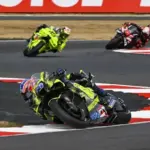



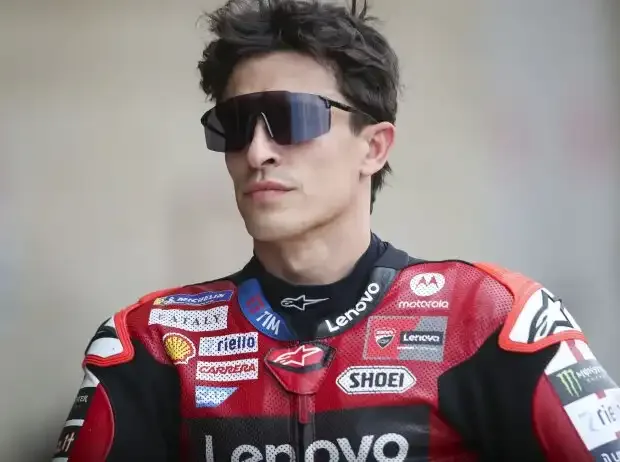
– In motorsport, speed, technique, and talent are often discussed, but rarely as openly about the psychological dimension as by Marc Marquez. The Spaniard has experienced an unprecedented series of injuries in recent years, redefining both physical and mental boundaries.
Read more Ex-Williams Formula 1 driver: «In the end, I just didn’t feel like it anymore»
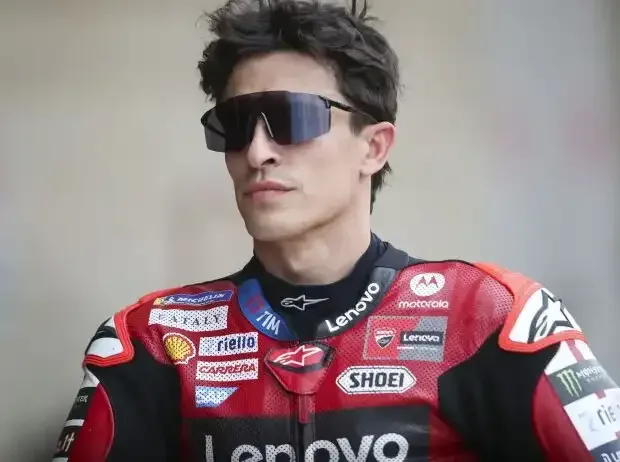
In the Spanish podcast “Imagin and Tengo un Plan”, he recounts a conversation with football legend Carlos Puyol that has stayed with him. Puyol explained to him the principle of “100 percent” after injuries.
As a young athlete, you always push to the limit, but with each injury, this maximum permanently decreases. Marquez clearly agrees with this assessment: “What Carlos says is absolutely right.” At the same time, the 33-year-old makes it clear how difficult it is to grasp these 100 percent in motorsport.
In search of the new 100 percent
Especially after an injury, Marquez’s own performance maximum is hardly measurable. “One of the questions the press asks me is: Will you be back at 100 percent? And my answer is: I don’t even know what my 100 percent is,” he says. Every injury leaves its mark, sometimes more, sometimes less.
“Maybe it drops by three percent, by ten or by twenty percent, but it drops,” Marquez admits. Only months later can one assess where they truly stand.
Photo gallery: The ordeal of MotoGP star Marc Marquez
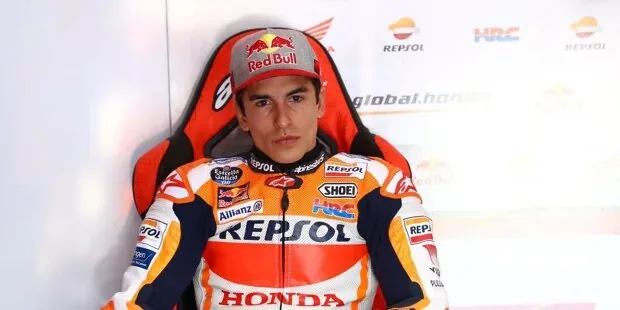
This uncertainty, however, is only part of the challenge. Much more difficult is the mental handling of certain track sections or entire racetracks. Memories – both positive and negative – influence the driving feel.
Memories also play a role
Places of great success are characterized by “good energy,” while other tracks can trigger a noticeable inner block. A particularly striking example for Marquez himself is the famous Turn 3 in Jerez, part of the Circuito de Jerez.
Read more Which modern Formula 1 driver actually drove for the most teams?
There, in 2020, the reigning world champion suffered his fateful crash, which initiated a long period of suffering. Nevertheless, he describes his relationship with this spot surprisingly soberly: neither clearly positive nor unequivocally negative. “I have very good memories there and only one bad one,” he explains.
Nevertheless, the details show how deeply such experiences affect him. In the first practice session, he still finds it difficult to navigate this section with full confidence.
¿pbfs||pb¿”At the beginning, it costs me to go through there with confidence,” Marquez admits. But with increasing riding time, the usual focus returns: “Then you get back into concentration mode, and everything else disappears.”
It is precisely this process that distinguishes great champions from good riders: the ability not to suppress fear, but to actively overcome it. Marquez knows that even a hint of hesitation can be crucial. “If you’re afraid, you lose half a second there,” says the Ducati rider.
His statements impressively show that peak performance in motorsport goes far beyond physical fitness. It is a constant balancing act between body, mind, and memory. And in the end, perhaps the realization is that “100 percent” is not a fixed value, but rather a moving target.