




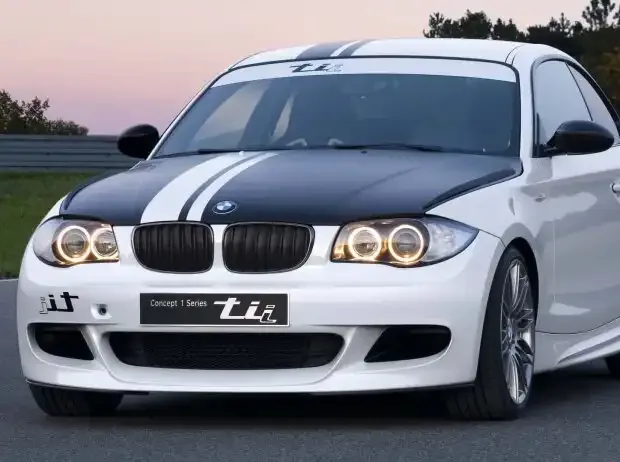
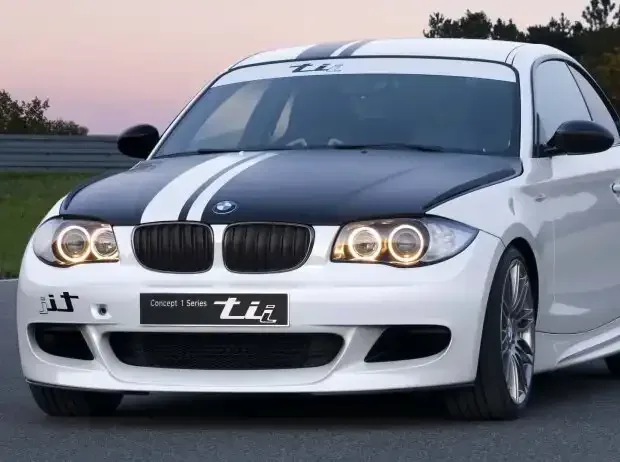
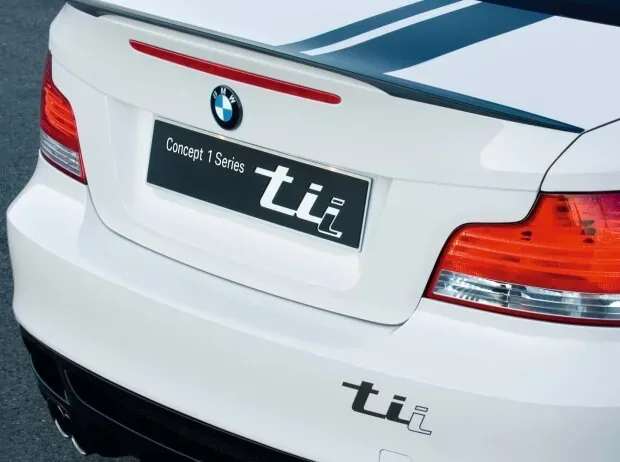
(Motorsport-Total.com/Motor1) – Was it the true successor to the legendary 02? At the 2007 IAA, BMW added a coupe (E82) to the 1 Series model range. Sales began on November 24, 2007. Exactly four weeks earlier, the brand showed a study of the 1 Series Coupe with a legendary abbreviation at the Tokyo Motor Show: tii. The exact name was “Concept 1 Series tii”.
Read more Mick Schumacher after early exit: “The risk is always there at the back”
There was no more power, but BMW refined the look. The study saw itself as a radical interpretation of a compact two-door car with a clear focus on agility, low weight, and driver-oriented dynamics. The goal was to make the classic brand virtues visible in a concentrated form and at the same time demonstrate the driving dynamics potential inherent in the vehicle concept when lightweight construction, aerodynamics, and motorsport principles are consistently implemented. However, this was only realized in 2011 in the 1 Series M Coupe with 340 hp.
In terms of design, the Concept 1 Series tii deliberately linked back to the brand’s successful sports coupes from the 1960s and 1970s. The reference to the legendary BMW 02 is particularly clear, whose combination of compact dimensions, low weight, balanced axle load distribution, and rear-wheel drive became synonymous with agile driving characteristics. The concept car “transfers these development principles into the present,” it was said at the time.
Consistent Lightweight Construction
A central role is played by the consistent use of modern lightweight technology. Numerous body elements were made of carbon fiber reinforced plastic, including the hood, mirror caps, air intake inlays, the Gurney on the trunk lid, and parts of the rear bumper. The visible CFRP structure remains recognizable under a matte clear coat.
Photo Gallery: BMW Concept 1 Series tii (2007)
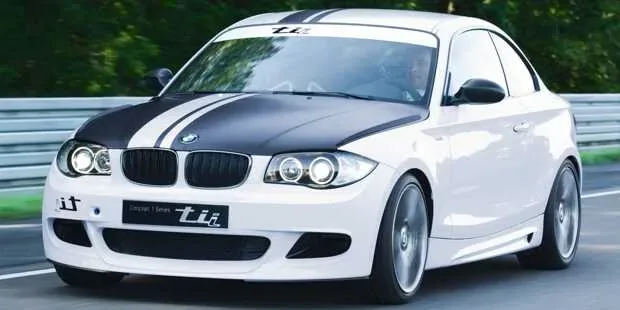
In addition to weight savings, the dark hood also fulfills a functional task: it reduces light reflections and thus supports the driver’s concentration. In addition, a wide white sun protection strip on the windshield prevents glare when the sun is low.
The color design follows a clear concept. The Alpine White paint contrasts with the dark CFRP surfaces and is complemented by decorative stripes that run across the entire body from the front to the rear. While the stripes on the hood are white, they appear in black on the roof and rear.
Borrowing from the BMW 3.0 CSL
Blue accents set additional visual markers: painted brake calipers, individual wheel bolts, and an openly visible towing eye pick up on motorsport details and, together with black and white, form a color canon based on the brand logo.
Aerodynamically, the study also differs significantly from the production model. The front apron, side skirts, rear bumper, and trunk lid were completely redesigned. Large side air intakes, air splitters, and air-guiding elements derived from racing optimize the flow guidance.
Hood fins on the outer edges of the hood improve stability at high speeds – a concept that was already used on the BMW 3.0 CSL. The BMW kidney grille received a honeycomb mesh instead of classic struts, while darkened headlight elements emphasize the typical twin round headlights more strongly.
Read more Formula 1 2026: These five drivers are under particular pressure
In the side view, the classic three-box architecture is preserved, characterized by a long hood, set-back passenger cell, and short rear. Specially designed side skirts reinforce the wedge shape of the silhouette and make the vehicle appear visually lower. A round opening in front of the rear wheel improves airflow and at the same time draws the eye to the driven rear axle. The vehicle stands on 18-inch light-alloy wheels in a five-spoke design with a dark chrome finish.
The interior is also decidedly sporty
At the rear, an enlarged CFRP Gurney provides increased downforce and thus more driving stability. A three-part diffuser reduces air turbulence and formally picks up the design of the front air intakes. The aerodynamic optimization thus follows a holistic approach across all vehicle areas.
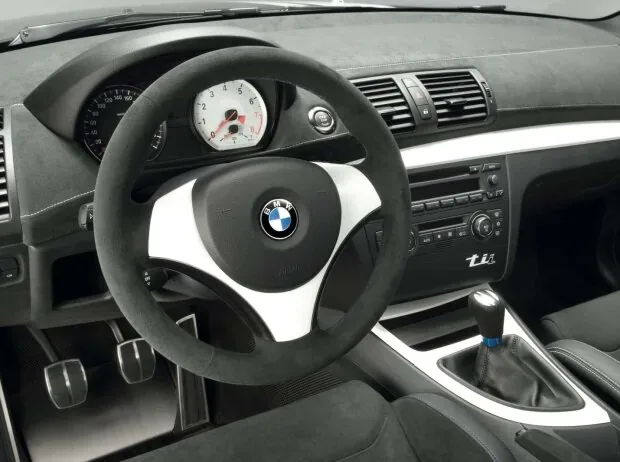
The sporty orientation continues consistently in the interior. The color design picks up the black-and-white contrast of the exterior, but with reversed weighting. White accents are only found on frequently touched elements such as door handles and steering wheel spokes. Blue details specifically mark the driver’s position, for example through seat stitching, a decorative ring on the gear lever, and a blue seat belt exclusively for the driver’s seat. The other seats receive silver-colored belts – a deliberate reference to the driver-centered design.
Dark materials dominate the interior to minimize distractions. The dashboard, headliner, and trim are in anthracite, while an Alcantara-covered instrument panel reduces reflections.
The instrument cluster is oriented towards motorsport: a white tachometer dial with red needles puts the engine speed more in focus than the speedometer. An Alcantara-covered sports steering wheel improves grip during fast steering movements.
Newly developed sports bucket seats with integrated headrests, side airbags, and Alcantara leather covers offer high lateral support, while the rear passengers also adopt a low-positioned seating position. Door sills with model-specific lettering and a durable floor covering with a structure reminiscent of CFRP round off the interior.
Even more unknown BMW concepts:
A new M1 was 95 percent finished before BMW axed it
Forgotten studies: BMW E1 (1991/1993)
Read more IndyCar season opener 2026: Mick Schumacher out in start crash