


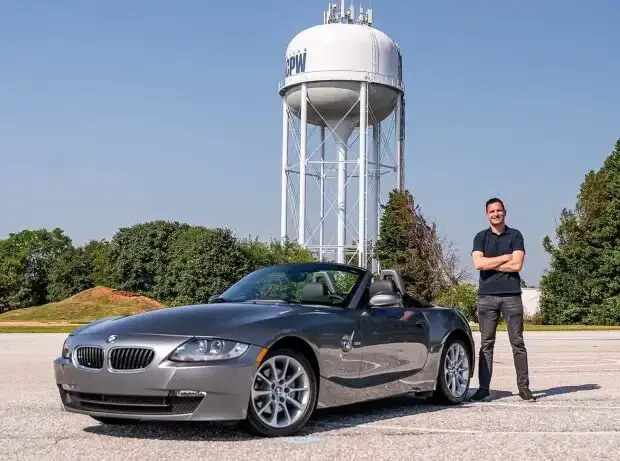
(Motorsport-Total.com/Motor1) – It stands in the dazzling light of South Carolina and shines like on the first day. The space gray metallic looks flawless, the headlight lenses are absolutely stone chip-free. A look at the instrument cluster reveals the unbelievable. The digital odometer shows exactly 1,069 miles. This car is a real time capsule. It is the very last Z4 of the E85 generation, which rolled off the line in Spartanburg on August 27, 2008.
Read more Pit Beirer comments on Vinales: «It is not a nice situation»
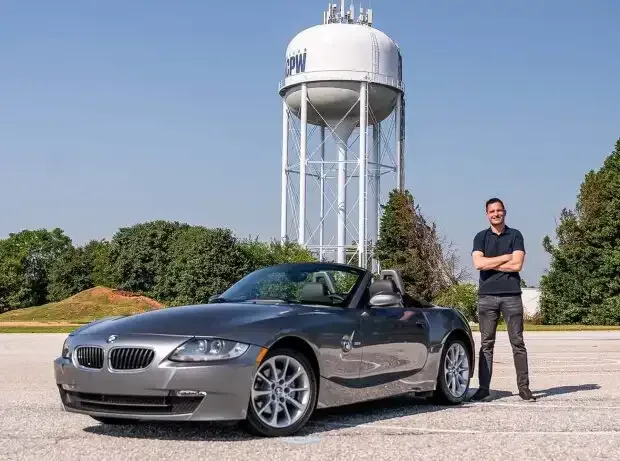
For me, this drive as part of the new X5 presentation is a highly emotional journey through time. The roadster with chassis number LW76378 is guarded by BMW like a treasure and only rarely moved. It represents the end of an era in which roadsters were still uncomplicated fun machines to drive.
Despite the extremely low body, I manage to get in surprisingly easily. I slide deep into the seats and am immediately enveloped by a familiar atmosphere that takes me straight back to the late 2000s.
Radical design step
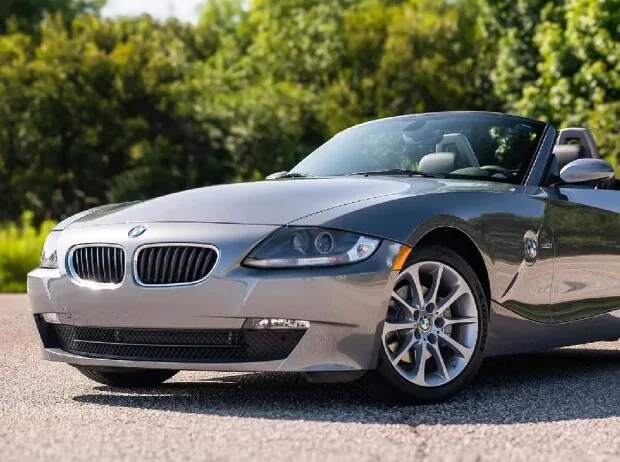
The history of this series began with a radical cut. When production of the popular Z3 ended in June 2002, BMW wanted to take completely new paths with the successor. Under the direction of design chief Chris Bangle, Anders Warming designed the Z4 on a blank sheet of paper. The body introduced a completely new design language, known as “flame surfacing.”
Photo series: BMW Z4 Roadster E85 (2008) in the driving report: The last of its kind
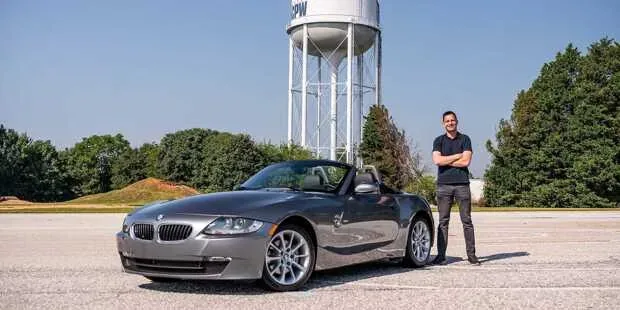
Surfaces bend and twist according to mathematical constants, giving the car an incredible dynamism when stationary. This look was not undisputed, but like many designs of the Bangle era, the E85 Z4 gains over the years.
From the side, the edges of the front fenders and the lines on the sills form the silhouette of the letter Z. In autumn 2002, the sensational roadster debuted at the Paris Motor Show. Production started the same year at the US plant in Spartanburg.
Initially, the Z4 was only available as an open two-seater; the coupe with a fixed roof and the fast M versions followed later. Our gray model now marks the definitive end point of this glorious first generation of the series in the USA.
A look at the original Monroney document reveals the price of this vehicle at the time. The base price for the roadster was $36,700. With some extras, however, the sum rose significantly. The dealer charged $550 for the space gray metallic, the premium package cost $1,150.
The automatic transmission, xenon lights, and navigation system also pushed the price up. In the end, the window sticker showed a proud total price of $47,050, which was a lot of money at the time.
The entire series was a real export hit for the American plant. A total of 180,856 Z4 units rolled off the line in the USA. Although the car was assembled in Spartanburg, many important components came directly from Germany.
The supplier share from the home country was around 60 percent, while American and Canadian parts made up about 30 percent. Both the engine and the transmission traveled from German plants across the Atlantic to be married with the body in the South Carolina plant.
Modern chassis technology under the long hood
Under the sheet metal was modern chassis technology at the time. The roadster came standard with a strut front suspension that had forged aluminum control arms. At the rear, the engineers installed a sophisticated central arm axle with transverse arms made of aluminum casting.
Electronic aids such as Dynamic Stability Control DSC including hill-start assist, brake drying, and brake readiness were added. This fine technology ensured that the Z4 was significantly more stable on the road compared to the rather wild Z3.
In the cockpit, it smells original like in a new BMW from that time. Anyone who drove these cars back then immediately remembers this typical scent of leather and plastics. The interior exudes the typical charm of the turn of the millennium.
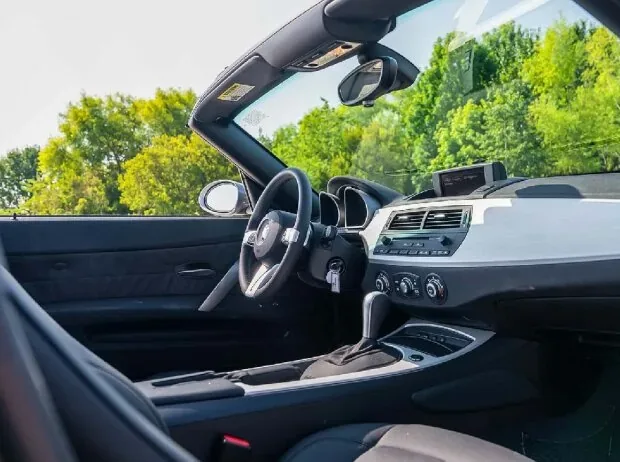
The dashboard shows courage to leave gaps and breaks with familiar BMW layouts. The two tubes deeply cut into the instrument panel for the speedometer and tachometer remained unique in the model range at the time and give the interior a sporty touch.
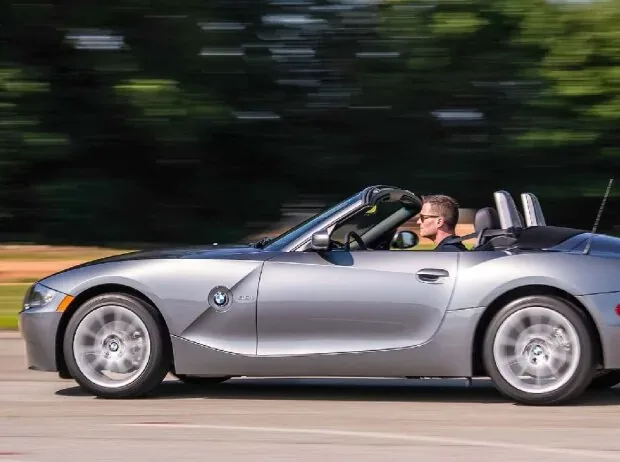
The burning sun in the American South calls for an open drive. A press of the button is enough, and the fabric roof folds fully automatically to the rear in a few seconds. Compared to the Z3, no manual operation is needed here anymore. You sit wonderfully free and seemingly directly on the rear axle.
At the same time, the navigation monitor moves with a quiet hum. It mechanically flips up from the dashboard. The small display is extremely pixelated but today has a wonderfully nostalgic charm for that reason.
Read more Why Ferrari continues to refuse to think about the World Championship title
Technical dreams and a legendary six-cylinder
A small downside awaits in the center console. There sits the selector lever of the six-speed Steptronic. For such a purist roadster with a fabulous inline six-cylinder under the hood, I would of course have wished for a crisp manual transmission. But this historic car was simply ordered that way. I put the lever in D and roll off. Already in the first meters on the rolling country roads around the plant, my skepticism disappears because the drive harmonizes wonderfully.
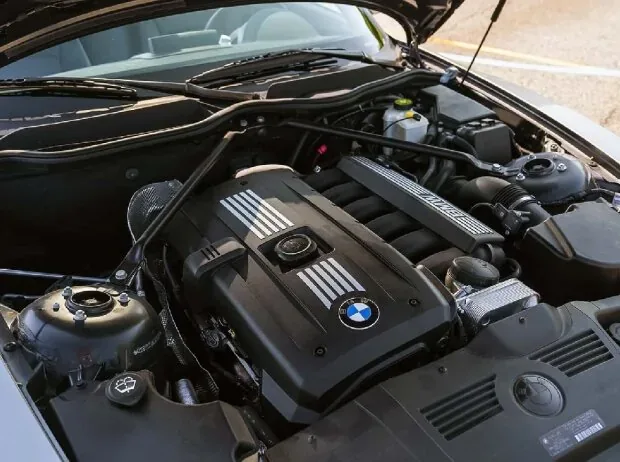
Under the hood works the legendary 3.0-liter inline six-cylinder naturally aspirated engine with a magnesium-aluminum block. The unit produces 215 hp and eagerly responds to the throttle. The automatic transmission performs surprisingly well and always keeps the engine happy. The paddle shifters on the steering wheel from back then are especially fun. You can press with your thumb on both sides to downshift or pull with your fingers to upshift.
This old shifting system allows me to change gears lightning-fast with just one hand on the steering wheel. That is no longer possible with today’s vehicles. What completely fascinates me, however, is the sound. The inline six-cylinder trumpets with a wonderfully metallic note from the chromed twin tailpipe.
It is an absolutely honest sound that flows unfiltered into the open interior. No artificial sound generator falsifies the experience, no speakers help out. This is genuine, mechanical sound pleasure.
Corner hunting and muscular shapes
The driving behavior of the Z4 convinces me completely on the winding roads in South Carolina. Due to the extremely low seating position, I feel every movement of the car in my seat. The roadster can be directed with the unexpectedly firm and solid steering with millimeter precision.
The steering wheel itself may not win a beauty prize but feels excellent in the hands. Mid-acceleration out of tight corners is simply addictive in combination with the honest feedback of the steering.
On uneven asphalt, you do feel the sporty stiffness of the M sport suspension, but it never becomes uncomfortable. The structure of the roadster is surprisingly torsionally stiff. Even on worse roads, there is almost no creaking or twisting. That was a huge advance compared to the Z3, whose bodywork still noticeably flexed under hard impacts. Instead, the Z4 conveys the solid feeling of a well soundproofed coupe as soon as you close the roof and shut out the outside world.
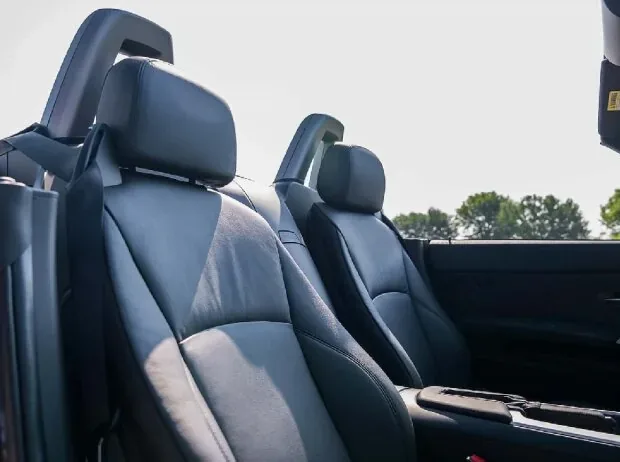
The narrowly cut leather seats do not offer outstanding lateral support for the racetrack but are perfectly sufficient for country roads. The Z4 E85 was not designed as a uncompromising race car anyway but as an emotional cruiser.
The air conditioning blows icy air at me and successfully fights the heat. During the drive, I enjoy the looks of passersby who curiously examine this flawless roadster (or wonder why the guy is driving open in this heat). The design polarizes far less today than it did back then.
A sculptural roadster for eternity
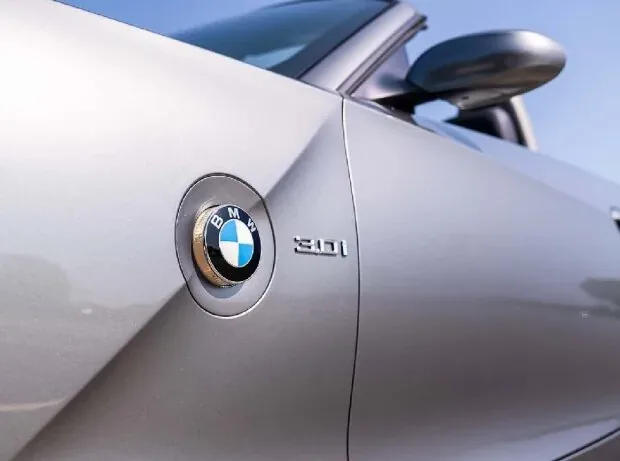
During a short stop, I look at the body in the warm sunlight. The famous lines look extremely plastic. Especially the side indicators in the front fender are a work of art in themselves. They house the BMW emblem, which is enclosed by the indicator lens.
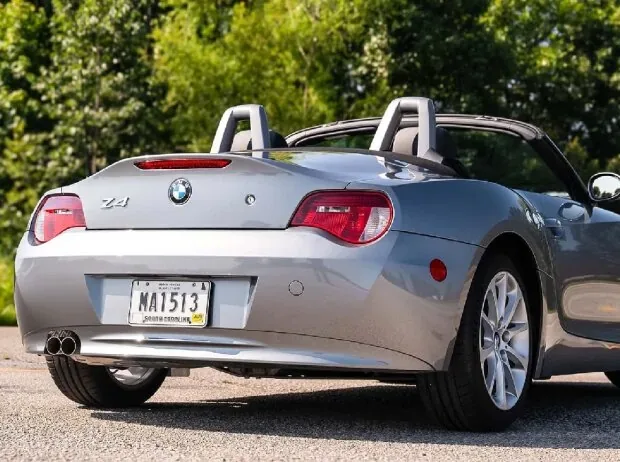
The rear wheel arches look extremely muscular and wide. The massive roll bars in shiny aluminum look behind the seats complete the picture. This roadster does not seem outdated even almost two decades after its premiere.

The Z4 initially had a hard time. It was always in the shadow of its predecessor Z3, which looked even more compact and agile. But with some time distance, the E85 shows itself as the clearly more mature car with high driving stability.
It looks like a modern classic in today’s traffic. After this wonderful drive, I park the historic one-off safely again. The view of the odometer now shows a few more miles, but the condition remains flawless.
It makes me a little wistful that this type of affordable, purist roadsters with characterful naturally aspirated engines is now almost completely extinct. Anyone who owns a good Z4 E85 should cherish and care for it. Or now look out for a nice specimen because they will not get any cheaper. Such an unfiltered and emotional driving experience as in this last specimen from Spartanburg will probably not happen again in the future.
More classics in the driving report:
Mercedes SLK 200 (R 170) in the driving report: Still works well
Opel Corsa GSi (1989) in the driving report: Dwarf racer
Read more ADAC GT Masters: Hirsiger secures debut pole at Nürburgring