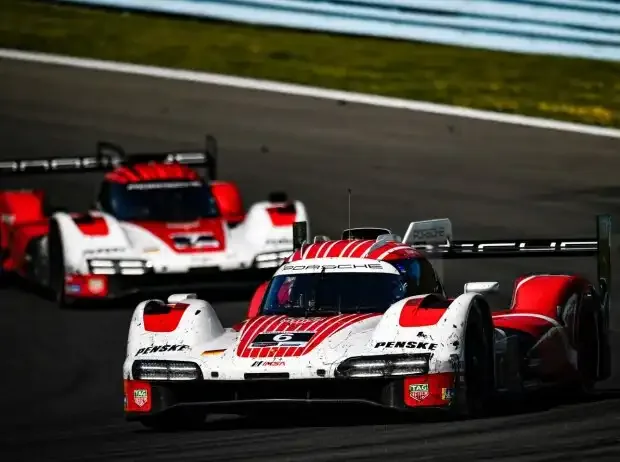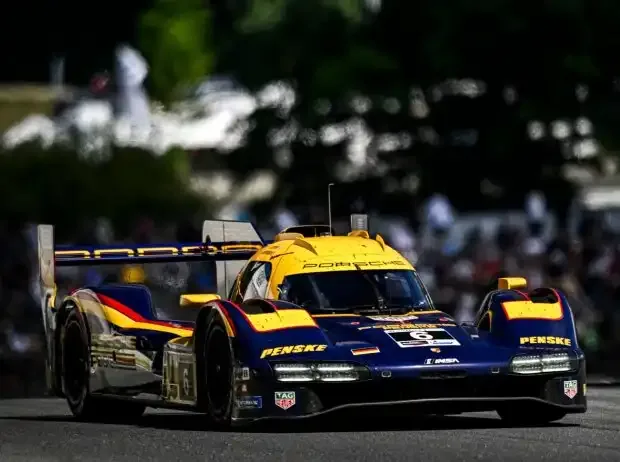







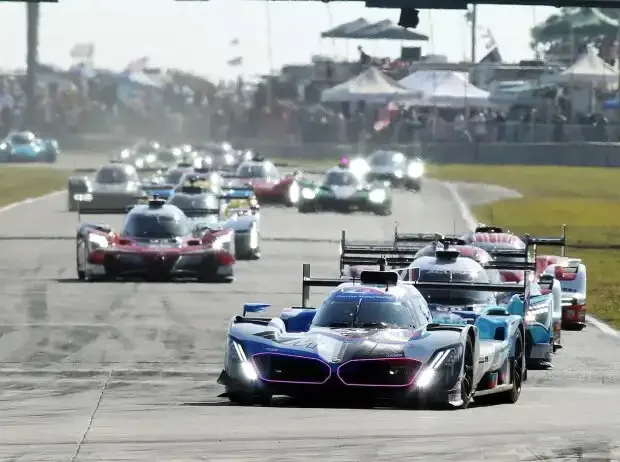
– The Balance of Performance for the 2026 12 Hours of Sebring has been published and shows a significant disadvantage for Porsche after their third consecutive victory at the Rolex 24 at Daytona.
Read more Collision in Arlington: Bitter penalty for Mick Schumacher
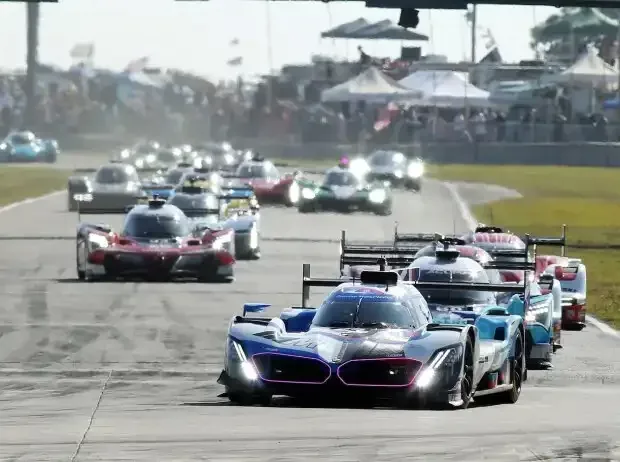
The numbers are not good news for Porsche Penske Motorsport, but a logical consequence of the triumph of the #7. Overall, the Porsche 963 receives the same power-to-weight ratio for Sebring as in 2025, but the US competition is classified significantly better than in the previous year.
The important range up to 230 km/h
The power-to-weight ratio for all GTP cars in the crucial range below 230 km/h:
1. Aston Martin Valkyrie 1.981 kg/kW
2. Cadillac V-Series.R 2.045
3. Acura ARX-06 2.060
4. BMW M Hybrid V8 2.063
5. Porsche 963 2.077
The Aston Martin Valkyrie is the clear winner here and is classified at a level comparable to the BoP from the World Endurance Championship (WEC). The Valkyrie needs this classification to compete on equal footing with the other hypercars in both series.
The rest of the field is close together, with the Porsche 963 now being the lowest-rated GTP car. This is mainly due to a weight increase of 20 kilograms, bringing the 963 to 1.055 kilograms.
Since the Porsche has excelled on flat tracks in the past, this is a double setback, even if recent updates should improve handling on bumps.
Compared to the Rolex 24, Porsche loses the most:
1. Aston Martin Valkyrie -0.024 kg/kW
2. Acura ARX-06 +0.058
Cadillac V-Series.R +0.058
3. BMW M Hybrid V8 +0.059
4. Porsche 963 +0.078
Again, it is the Aston Martin that receives the biggest boost compared to Daytona. While Acura, Cadillac, and BMW undergo similar adjustments, Porsche is hit hardest by the additional weight.
All GTP cars except the Aston Martin, which retains its 520 kW maximum power, lose around ten kilowatts of power below 230 km/h compared to Daytona. Due to the bumpy surface of the Sebring International Raceway, manufacturers may have to throttle power even further to avoid power peaks when the rear wheels lose contact with the ground.
Compared to previous years in Sebring, there are significant changes. However, since all LMDh cars have received updates since last year, a direct comparison of numbers should be taken with caution.
Changes in power-to-weight ratio compared to the 2025 12h Sebring:
1. Aston Martin Valkyrie -0.078 kg/kW
2. Cadillac V-Series.R -0.060
3. Acura ARX-06 -0.058
4. Porsche 963 -0.002
5. BMW M Hybrid V8 +0.051
As the numbers show, the biggest loser compared to 2025 is not Porsche, but BMW. The M Hybrid V8 received its worst classification for Sebring since its debut in 2023. It seems that WRT’s surprisingly strong performance in Daytona prompted the technical stewards to be cautious.
All other cars are better off than in 2025. Unsurprisingly, the Aston Martin leads the table, as it was classified very conservatively during its debut twelve months ago.
Acura and Cadillac record the greatest advantages, while Porsche remains almost at the 2025 level. Historically, the classification of these three brands now resembles the 2024 edition again.
Top speed range above 240 km/h
Since the Sebring International Raceway does not have long straights, the BoP above 240 km/h is less relevant than on tracks like Daytona or Road America. The raw numbers:
Read more Toyota changes GR Yaris steering wheel after complaints from owners
1. Aston Martin Valkyrie 1.981 kg/kW
2. BMW M Hybrid V8 2.076
3. Cadillac V-Series.R 2.085
4. Porsche 963 2.089
5. Acura ARX-06 2.099
The Aston Martin, known to be a high-drag vehicle, receives even more help in the top speed range than in the lower speed range. The other GTP cars are within just 0.023 kg/kW.
Compared to the Rolex 24, where top speed is much more important, all manufacturers except Aston Martin were slowed down:
1. Aston Martin Valkyrie +-0.000 kg/kW
2. Cadillac V-Series.R +0.039
3. BMW M Hybrid V8 +0.041
Acura ARX-06 +0.041
4. Porsche 963 +0.061
Porsche is slowed down slightly harder here than the competition from Acura, BMW, and Cadillac, all of which have to carry around 0.04 kg/kW more weight per kilowatt than in Daytona.
Finally, the comparison to the 2025 12h Sebring:
1. Aston Martin Valkyrie -0.074 kg/kW
2. Porsche 963 +0.019
3. Acura ARX-06 +0.038
Cadillac V-Series.R +0.038
4. BMW M Hybrid V8 +0.044
Again, it shows: The Aston Martin receives a massive concession compared to its debut year. For Porsche, however, the classification above 240 km/h compared to 2025 turned out leniently; they only receive half of the restrictions that the competition has to endure.
Conclusion
The 2026 12 Hours of Sebring are likely to be a tough test for the two German manufacturers, while Acura and Cadillac benefit. While the classification for Porsche was to be expected after the Daytona victory, the significant slowing down of the BMWs comes as a surprise.
It remains to be seen how much Aston Martin can benefit from the BoP relief on a track where they have already gained racing experience. After the strong performance at Petit Le Mans last year, Sebring could well bring the first victory for the V12 bolide.
The classifications of the GTP bolides in detail
Values in brackets = change compared to Daytona/previous year
Acura ARX-06
Minimum weight: 1.051 kilograms (+10/-4)
Max. power <230 km/h: 510,12 kW (-9,88/+12,12); 694 hp
Max. power >240 km/h: 500,76 kW (-5,2/-11,184); 681 hp
Max. RPM: 9.512 revolutions per minute
Max. energy per stint: 898 megajoules (-1/-5)
Fuel flow refueling: 22,450 megajoules per second (-0,025/-0,125)
Aston Martin Valkyrie
Minimum weight: 1.030 kilograms (+-0/-18)
Max. power <230 km/h: 520 kW (+6,24/+11); 707 hp
Max. power >240 km/h: 520 kW (+-0/+9,82); 707 hp
Max. RPM: 8.400 revolutions per minute
Max. energy per stint: 912 megajoules (-1/+5)
Fuel flow refueling: 22,800 megajoules per second (-0,025/+0,125)
BMW M Hybrid V8
Minimum weight: 1.048 kilograms (+10/+18)
Max. power <230 km/h: 508,04 (-9,88/-3,96); 691 hp
Max. power >240 km/h: 506,88 kW (-5,2/-1,96); 689 hp
Max. RPM: 8.000 revolutions per minute
Max. energy per stint: 900 megajoules (-3/-1)
Fuel flow refueling: 22,500 megajoules per second (-0,075/-0,025)
Cadillac V-Series.R
Minimum weight: 1.043 kilograms (+10/-22)
Max. power <230 km/h: 510,12 (+-9,88/+4,12); 694 hp
Max. power >240 km/h: 500,24 kW (-4,68/-19,928); 681 hp
Max. RPM: 8.800 revolutions per minute
Max. energy per stint: 895 megajoules (-1/-17)
Fuel flow refueling: 22,375 megajoules per second (-0,025/-0,425)
- IndyCarIndyCar Arlington 2026: Mick Schumacher last after penalty
- Formel 1“For me, this is a joke”: Max Verstappen rants against regulations in China as well
- Formel 1China in analysis: McLaren drama and Antonelli premiere
- IndyCarCollision in Arlington: Bitter penalty for Mick Schumacher
Porsche 963
Minimum weight: 1.055 kilograms (+20/-3)
Max. power <230 km/h: 508,04 kW (-9,88/-0,96); 691 hp
Max. power >240 km/h: 504,92 kW (-5,2/-6,116); 687 hp
Max. RPM: 8.158 revolutions per minute
Max. energy per stint: 902 megajoules (-1/-6)
Fuel flow refueling: 22,550 megajoules per second (-0,025/-0,150)
Read more Despite points from Carlos Sainz: Clear statement from James Vowles