


– As Formula 1 continues its 2026 season at the Miami Autodrome this weekend, everything seems set for a reshuffle of the cards, as teams bring extensive upgrades to the USA. But will it really happen?
Read more Formula 1: Concerns from Isack Hadjar ahead of duel with Max Verstappen
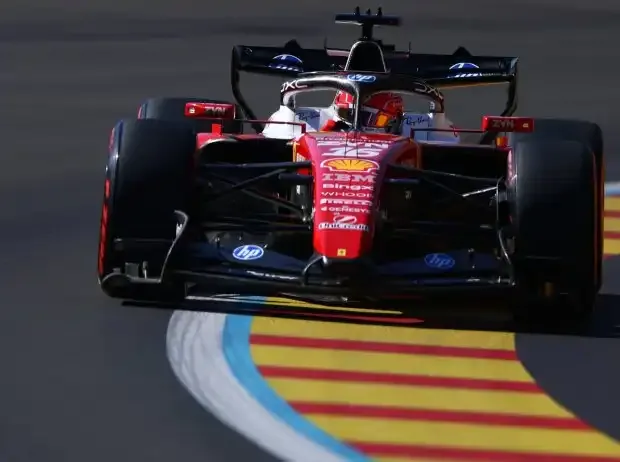
Ferrari boss Frederic Vasseur was the first to describe Miami as the start of a “new championship”. Perhaps he wanted to temper expectations by tirelessly pointing out that the balance of power at the season opener in Australia was just an early snapshot.
It was a starting point for the teams to build upon as they master the complex 2026 regulations – and not a final judgment for which the Tifosi should crucify the Maranello team if they had done something wrong.
As it turned out, Ferrari got off to a promising start in 2026, but Vasseur’s point remains. All of that could be in vain if the men and women in red at the factory don’t underpin this hard work with an aggressive development program throughout the year.
Not every team has confirmed this so clearly, but after the cancellations in Bahrain and Saudi Arabia, it’s safe to assume that every single team has now marked Miami as the most important date on the calendar: the first major opportunity to upgrade their 2026 cars.
Could Mercedes already be dethroned?
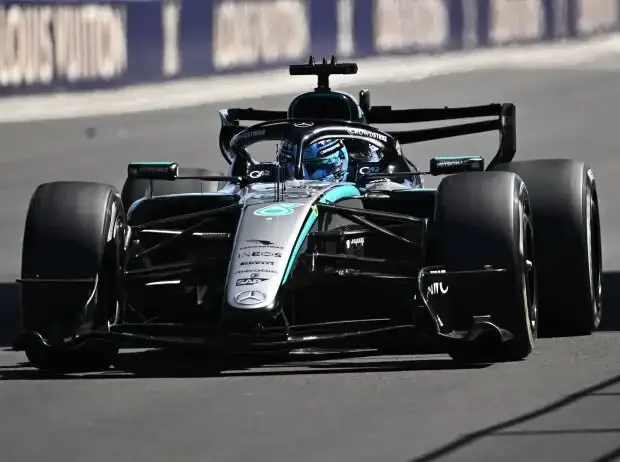
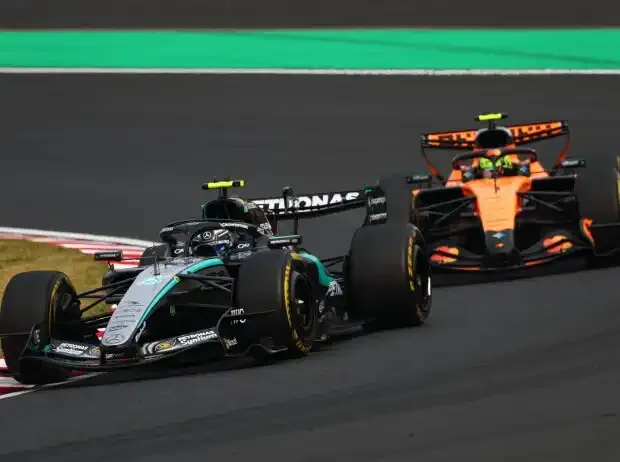
Could Mercedes’ reign really be over after just three race weekends? Given the performance advantage the team had in Australia, China, and Japan, this thought seems almost utopian – after all, the smallest of the three Mercedes leads in Suzuka was still a hefty 13 seconds.
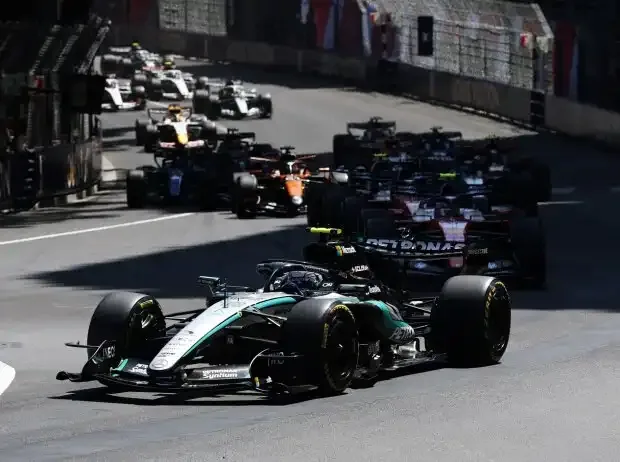
Yet, in the hands of Oscar Piastri, McLaren seemed to get significantly closer as they began to better understand the Mercedes customer engines. After qualifying just three-tenths behind polesitter Kimi Antonelli, Piastri took the lead at the start and could have come even closer to a surprise without an unfortunate safety car timing.
Photo gallery: Formula 1 Fails: These rule changes were a flop
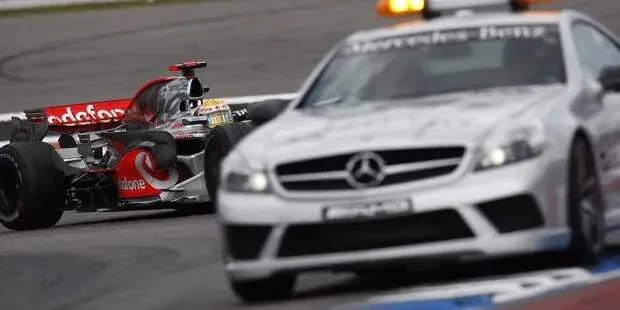
The reigning Constructors’ World Champion makes no secret of the fact that Miami is a crucial weekend for its fate in 2026. Speaking to selected media representatives at the Woking headquarters, Team Principal Andrea Stella stated that McLaren aims to bring a “completely new car” to the events in Florida and subsequently in Montreal at the end of May.
“Our intention has always been to deliver a completely new car, especially with regard to aerodynamic upgrades for the North American races,” Stella explained. “One could say that we will see a completely new MCL40 again across Miami and Canada.”
However, Formula 1 teams are chasing a moving target, as Mercedes will not have been idle in the last five weeks either. Nevertheless, Stella expressed confidence that McLaren – which boasts an impressive track record of in-season development – can present a “slightly more competitive MCL40” in Miami and then in Canada.
At least as fierce will be the battle in the already closely matched midfield. Red Bull is a team desperately in need of an overhaul for its difficult-to-tame 2026 car and is currently languishing in sixth place. Meanwhile, the midfield is surprisingly led by Haas ahead of Alpine, with the Racing Bulls hot on the heels of the parent team in seventh.
Read more Indy 500 field complete: Mick Schumacher meets Katherine Legge
Hadjar on par: Is the Verstappen myth broken? | Data Analysis F1 2026 LIVE

Regarding the Racing Bulls’ upgrade program, Team Principal Alan Permane said earlier this month that the team had postponed a package originally planned for Bahrain to Miami, with another boost to follow in Canada. “I am very confident that we can keep up with, if not outperform, the other midfield teams,” he said.
“I think we’re starting a bit further back than some of them. We’ve already made a good step from the Bahrain tests to Melbourne. Another good step is ahead of us for the next race, and then another one from Montreal.”
The Uncertainty of Power Units
While Formula 1 teams had plenty of time to prepare for the next phase of the championship, a package of refinements passed last week to improve the bumpy start of the 2026 engine regulations meant a lot of rethinking in tuning the new hybrids last week.
The maximum energy recovery limit has been reduced from eight to seven megajoules, while teams can now harvest the full 250 kW while operating what is known as super-clipping at full throttle. In addition, a new emergency mode at the start will be tested as a safety measure to help the cars get going.
Any change to the sporting regulations surrounding the use of the power unit means almost starting from scratch with car tuning. However, the capabilities of modern simulation tools make teams confident that much of this work can be done in advance.
Thus, calibrating the new upgrades on the actual race weekend seems to be a significantly greater challenge than adapting to the rule changes themselves.
Formula 1 before restart: Will better racing come now?
“As we have seen before, we will be able to predict the behavior of the power unit to a certain extent after applying the new rules through simulations,” Stella hinted. “At the same time, playing through these rules in the simulator does not mean that one can cover all possible scenarios.”
“One definitely has to think ahead, consider everything that can happen, and ensure that the way the power unit is used is optimal. But I am quite confident that we can achieve this to a certain extent with current simulations.”
- Formula 1Due to vibrations: Honda keeps Aston Martin car in Japan
- MotoGPFabio Quartararo settles scores: “Yamaha has not a single strong point”
- MotoGPMotoGP Test Jerez: Ogura’s best time – Innovations at Ducati and Aprilia
- Formula 1Audi before restart in Miami: “Chance to see where we stand!”
Bringing all of this together within the tight schedule of a sprint weekend is a formidable task. However, to give teams more time for the necessary adjustments, the FIA has adapted the format for Miami: the sole free practice session on Friday has been extended from 60 to 90 minutes before heading into sprint qualifying in the afternoon.
Read more Sensational victory in China: Why Italy is going crazy over Antonelli