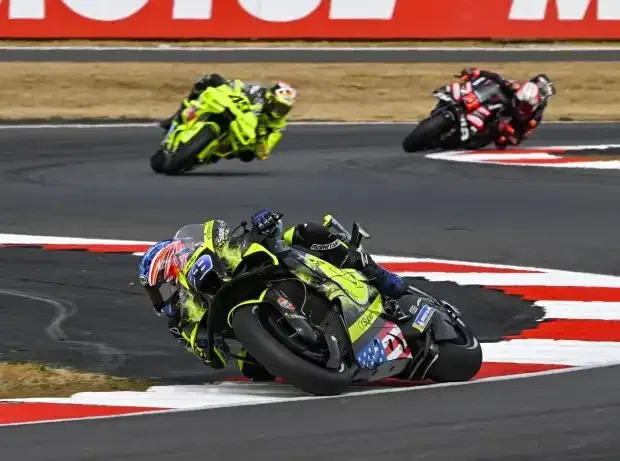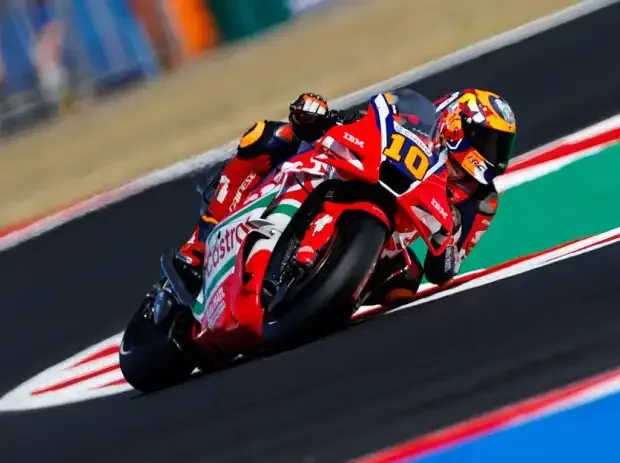



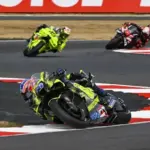
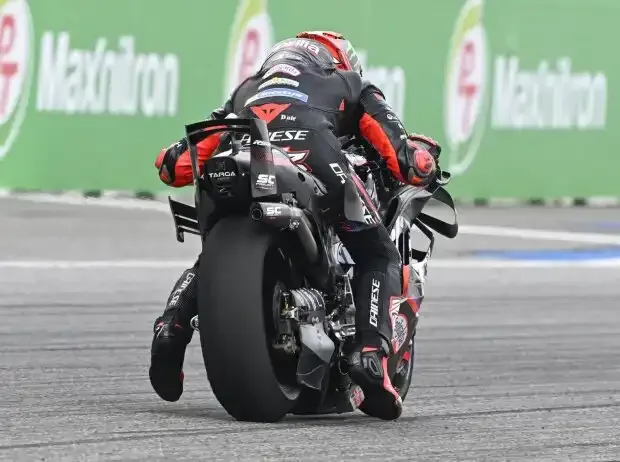
– In MotoGP, a brief moment can often decide victory or defeat. This is especially true for the start. This is exactly where one of the most influential innovations of recent years came into play: the so-called Holeshot Device.
Read more Is «talking a lot of crap»: Jos Verstappen shoots against Ralf Schumacher
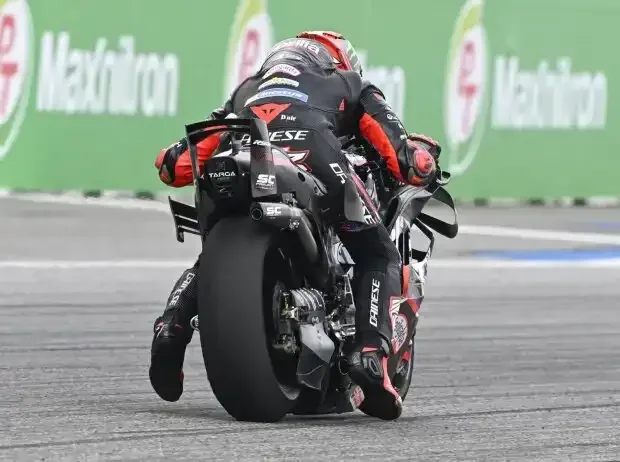
Originally introduced by Ducati towards the end of the 2018 season, the system quickly became the standard in the premier class of motorcycle racing.
The basic principle is as simple as it is effective. By mechanically lowering the motorcycle, the center of gravity is shifted downwards. This prevents the front wheel from lifting during acceleration – an effect that not only costs time but also forces the electronics to reduce power.
The result: a significantly more efficient start with maximum acceleration and optimal traction. The term “Holeshot” itself comes from motocross and describes the first position when entering the first corner, a strategically very important moment that often influences the further course of the race.
Mechanics instead of electronics: How the system works
The Holeshot Device is a purely mechanical system that is activated by the rider immediately before the start. By applying targeted pressure on the motorcycle, the suspension is compressed and then locked in this position.
Once the race begins, the bike remains lowered initially, allowing for aggressive but controlled acceleration. Only when heavily braking for the first corner does the lock release automatically. The motorcycle returns to its normal riding state. Important: According to regulations, the system may only be used at the start and operates completely without electronic assistance.
The evolution to the Ride-Height Device
What began as a starting aid quickly evolved. Manufacturers transferred the principle to the entire race and developed so-called Ride-Height Devices. These systems lower the rear – usually hydraulically controlled – during the ride.
The advantage is obvious: when accelerating out of corners, the front wheel remains stable on the ground (fewer wheelies), allowing more power to be converted into forward motion. This brings measurable benefits, especially on tracks with long straights or tight corner combinations.
In fact, engineers assumed that teams without this technology lost up to 0.4 seconds per lap at times – a huge deficit in the tight MotoGP field.
Impact on riding style and race strategy
With the introduction of the systems, not only the technology changed but also the riders’ approach. Starts became more aggressive and at the same time more controlled. The importance of the first corner increased further.
Read more “Unacceptable”: Bearman criticizes Colapinto and demands respect
Photo gallery: The motorcycles and teams of the 2026 MotoGP season
Even during the race, timing became crucial: riders must know exactly when to activate and deactivate the Ride-Height Device. Factors such as layout, corner type, and race situation play a central role.
Additionally, the systems also influence the setup. Suspension travel, weight distribution, as well as tire and brake wear must be adjusted to the changed conditions.
Between innovation and risk: Criticism of the systems
Despite all advantages, Holeshot and Ride-Height Devices increasingly came under criticism. The main reason: safety concerns. There were repeated situations where the systems could not be deactivated as intended.
A blocked system can massively affect handling, especially when braking. In the past, such defects sometimes led to crashes or race stoppages. Another critical aspect is that some riders deliberately brake particularly hard into the first corner to reliably deactivate the system, which poses a potential risk to following riders.
Besides safety, rising development costs and increasing technical complexity also played a role in the discussion about a possible ban.
The end of an era: Ban from 2027
The consequence has already been decided: from the 2027 season, all systems for changing ride height in MotoGP will be banned. This means that both Holeshot Devices and Ride-Height Devices will disappear from the technical arsenal.
The decision is based on several factors. Besides safety aspects, factors such as cost control and equal opportunities are the focus. It was also questioned to what extent such technologies provide real added value for motorsport or merely increase complexity.
- Formula 1Formula 1 in Germany? This is what drivers, experts, and Nürburgring say
- 24h NürburgringLivestream 24h Qualifiers Nürburgring: The races with Max Verstappen live!
- Formula 1Red Bull crisis: A promotion and a new addition to Racing Bulls
- Formula 1He “talks a lot of crap”: Jos Verstappen shoots against Ralf Schumacher
Holeshot and Ride-Height Devices have left a lasting mark on MotoGP. They made starts more efficient, races faster, and strategies more complex. At the same time, they also showed the limits of technological innovation in motorsport – with all their consequences. Within a few years, the systems went through the entire cycle from groundbreaking innovation to abolition.
Read more Red Bull Crisis: A Promotion and a New Addition to Racing Bulls