








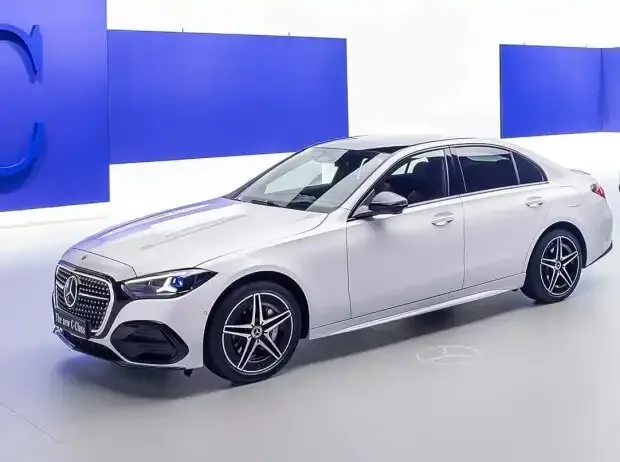
(Motorsport-Total.com/Motor1) – After five years on the market, Mercedes is giving one of its most popular model series a major facelift. We are talking about the current C-Class as a sedan and estate, internal code 206. The reason for the revision is obvious, as the all-electric C-Class was recently unveiled.
Read more Why the Monaco case is so complex — and could drag on for weeks
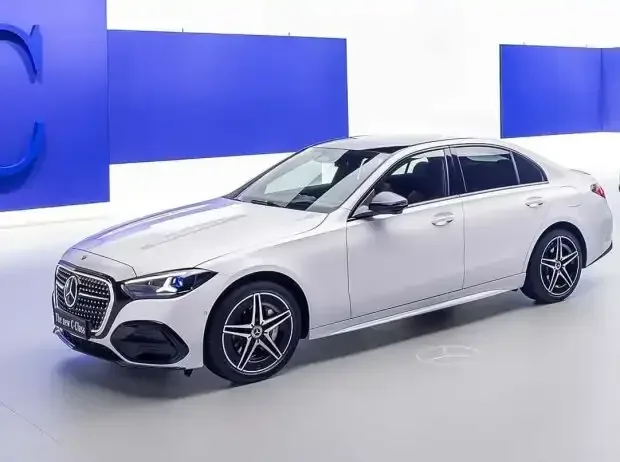
The large grille of the combustion engine C-Class is now being adapted, but the future 206 front end also strongly references the larger E-Class and S-Class. Family resemblance is a must, as it has been part of the Mercedes brand since the 1950s.
The revision of the C-Class as a sedan and estate represents, according to Mercedes, a comprehensive technical update of the core model series. With more than twelve million units sold since the 190 in 1982, the model series forms the backbone of the manufacturer’s product portfolio.
More grille, more light
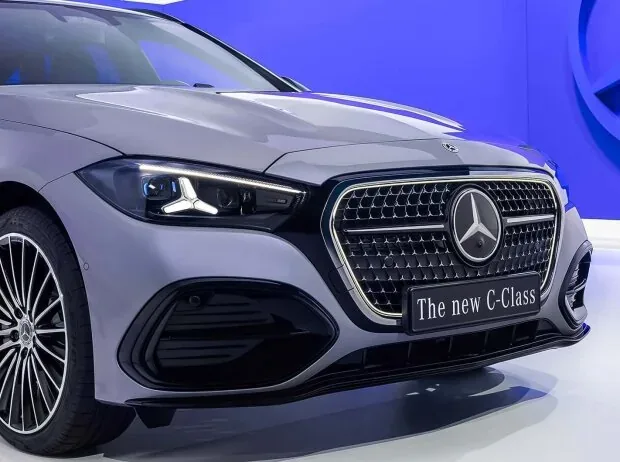
Visually, the C-Class receives a subtle refinement with a focus on more presence. The front end is characterized by a more vertically oriented radiator grille with integrated LED light guide and daytime running lights in a double star design. Depending on the country market and equipment, the central star in the radiator grille is also illuminated.
A high-gloss black element visually connects the grille with the headlight complexes. The light graphics of the headlights and rear lights of the sedan also pick up the star shape. For the first time, light elements integrated into the side skirts project an animated pattern onto the ground when the doors are opened. Bumpers with chrome accents and high-gloss black trims emphasize the vehicle’s width.
Photo gallery: Mercedes C-Class: Facelift 2026
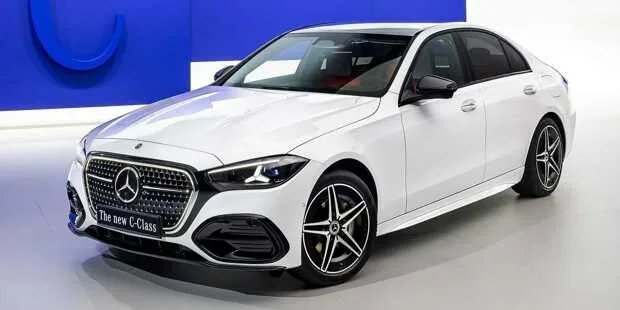
In addition, two new paint colors and changed wheel designs from 17 to 19 inches expand the range. The AMG Line Plus introduces a new equipment version that includes dark design accents, integral sports seats with red decorative stitching, and red seat belts.
Inside, the design follows the previous layout with a 12.3-inch digital instrument cluster and a portrait-oriented 11.9-inch touchscreen. The newly designed multifunction steering wheel relies on tactile separated rocker and roller elements to control cruise control and volume. On the software side, Mercedes introduces the fourth generation of the MBUX multimedia system based on its own operating system MB.OS.
A virtual assistant accesses artificial intelligence from ChatGPT, Microsoft Bing, and Google Gemini using a multi-agent approach. According to Mercedes, this allows for complex conversations and querying everyday data such as weather conditions, stock prices, or conversions. For navigation, a Google Maps system with the Google Cloud Automotive AI Agent is used. It offers conversational searches for parking spaces and charging stations.
Additionally, a surround navigation displays three-dimensional environmental data including lanes and other road users. Functions and apps can also be updated or added after purchase via an over-the-air update system.
More sound, more light
Material-wise, two new upholstery colors and three open-pore wood and metal trim parts expand the options. The Burmester 3D surround sound system with 15 speakers and 710 watts output offers ten-level 3D effects and adjusts sound distribution thanks to automatic seatbelt lock detection according to seat occupancy.
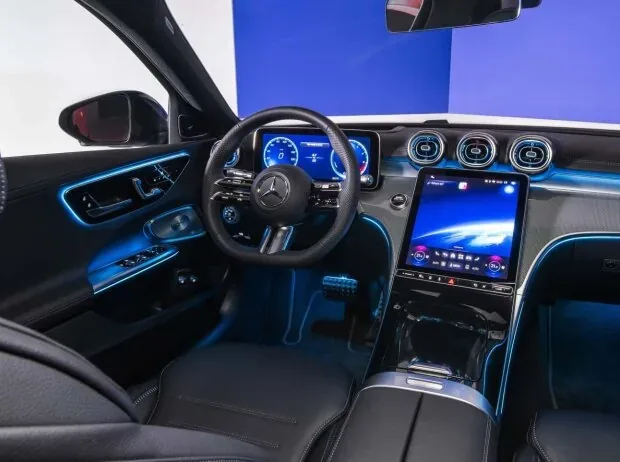
The ambient lighting includes 64 colors with individually adjustable dimming zones as well as visual feedback for temperature changes or blind spot warnings. The interior air can be purified and scented via a filter and ionization system.
The C-Class estate offers a loading volume of 490 to 1,510 liters. The rear seat backrest is split in a 40/20/40 ratio. An electrically operated tailgate as well as separately stowable cover and partition net blinds are standard.
Read more Pramac-Yamaha confirms: Izan Guevara moves up to MotoGP in 2027
Gasoline, diesel or plug-in hybrid
The engine program relies on electrified four-cylinder gasoline and diesel units prepared for upcoming emission standards such as Euro 7. All combustion engines feature a 48-volt electrical system with an integrated starter-generator of the second generation (ISG 2.0). This supports with up to 17 kW additional power and 205 Nm torque and enables coasting functions as well as start-stop assurance.
The 2.0-liter gasoline engines of the M 254 EVO series use an electric auxiliary compressor to eliminate turbo lag at low engine speeds. Available are the C 200 with 130 kW (177 hp), the C 250 with 160 kW (218 hp), and the C 300 with 190 kW (258 hp). The combined fuel consumption range of the gasoline engines is between 6.2 and 7.1 liters per 100 kilometers depending on model and body style, with CO2 emissions from 141 to 162 grams per kilometer.
The four-cylinder diesel OM 654 EVO is offered in power levels of 120 kW (163 hp) and 147 kW (200 hp), is equipped with injection pressures of up to 2,200 bar, and is approved for operation with biofuels such as HVO100.
The plug-in hybrid models C 400 e 4MATIC (as sedan and estate) combine the gasoline engine with an electric motor to a system output of 290 kW (395 hp) and a system torque of 650 Nm. The battery has a usable energy content of 19.53 kWh, enabling a purely electric range according to WLTP of up to 100 kilometers. Charging is possible with up to 11 kW on alternating current and up to 55 kW at DC fast charging stations.
Quiet please!
Noise and vibration comfort has been further improved through numerous detailed measures. The sophisticated aerodynamics with a drag coefficient from 0.24 for the sedan and from 0.26 for the estate reduce wind noise from the outset, supported by the newly designed exterior mirror with aeroacoustically optimized mirror foot.
The aerodynamic design of the rear deck lid edge including spoiler shaping as well as side break-off edges in the rear lights minimize vortices and associated noises. An additional seal on the windshield further reduces wind noise. The exhaust system is now mounted in a cage position, which noticeably reduces vibration transmission. Further developed insulation packages and targeted damping measures contribute to a quiet interior level even during acceleration and at higher speeds.
Improvements to the chassis
On the chassis side, the adjustable damping and the connection of the four-link front axle and the multi-link rear axle have been retuned for less body movement. The vehicle offers an optional rear-axle steering with a steering angle of up to 2.5 degrees. Below 100 km/h, the rear wheels steer opposite to the front axle, reducing the turning circle by 43 centimeters to 10.64 meters. At higher speeds, the wheels steer in the same direction to increase lane stability.
The safety system MB.DRIVE processes sensor data from up to ten cameras, five radar sensors, and twelve ultrasonic sensors via MB.OS. In addition to lane keeping, distance, and braking assistants, extended levels are available: The equipment includes automatic lane changes via turn signal lever, stopping at red lights, as well as extended parking and maneuvering assistants with reverse function and trailer articulation angle protection.
Market launch and price
Ordering starts on August 18, 2026. Entry prices on the German market start at 48,844 euros including VAT for the C 200 sedan.
The previous generations of the C-Class:
Mercedes C-Class (1993-2001): Classic of the future?
Mercedes C-Class (2000-2007): The second generation turns 25
Read more WRC 2027: Revolution instead of Evolution, Behind the Scenes, Updated Release Info