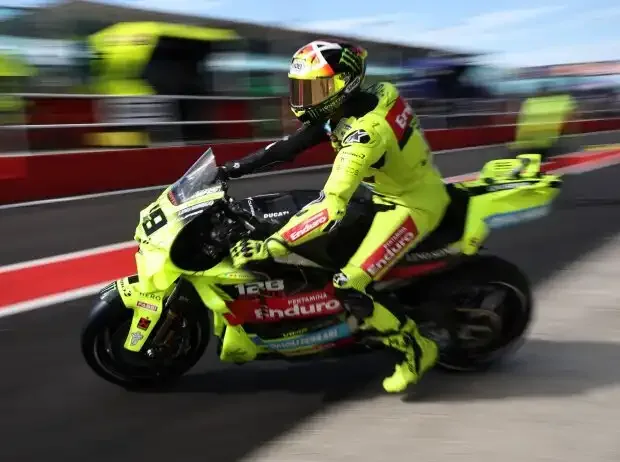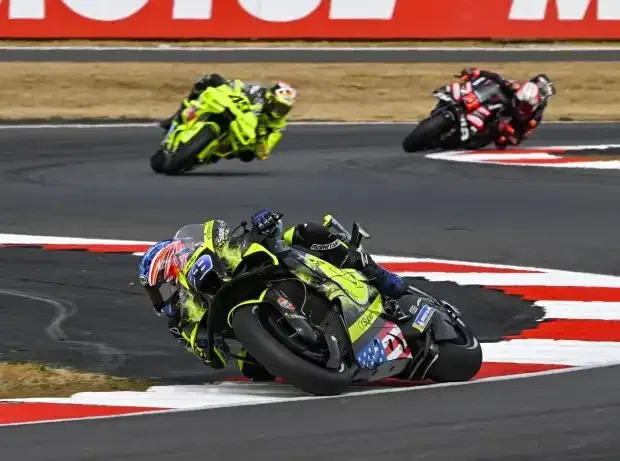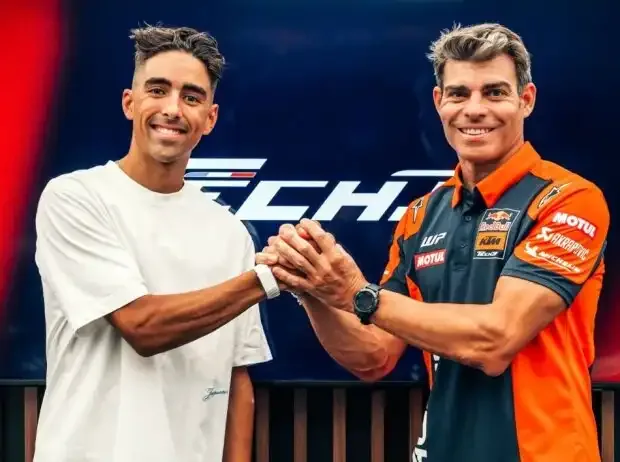
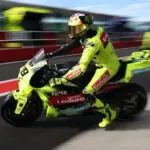

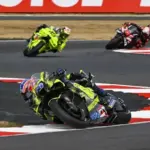
– After the race weekend in Jerez, MotoGP stayed and used Monday for an official test day. From 10 am to 6 pm, the track was available to teams to evaluate new components, aero updates, and electronic adjustments. A short break took place from 1 pm to 1:20 pm.
Read more MotoGP Test Jerez 2026: Lap times at a glance
The conditions were ideal: constant temperatures, good track conditions, and sufficient grip on the already heavily rubbered track, although teams, as often in such tests, emphasized that the high grip on a Monday is not fully representative of a race weekend.
The Participants
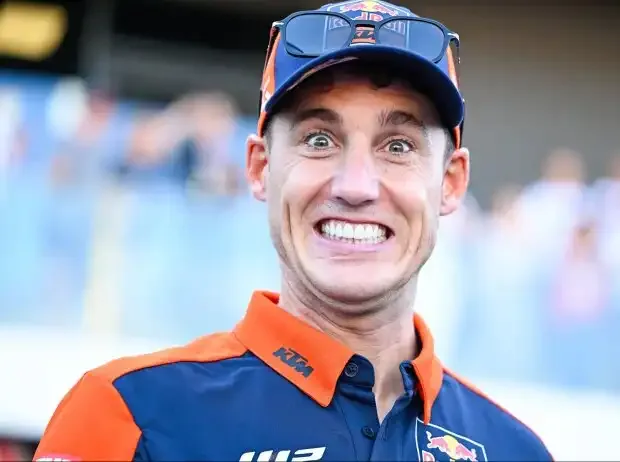
Almost the entire regular field was in action. The only exception was Maverick Vinales, who had already missed the race weekend and had not been replaced. On Monday, however, KTM bolstered its squad with test rider Dani Pedrosa, who returned to the track and continued to develop the RC16.
Augusto Fernandez, who had been on a wildcard for Yamaha at the Spanish Grand Prix, did not go out. However, Aprilia test rider Lorenzo Savadori was active again. The Italian had prematurely retired from Sunday’s race after an unprovoked crash in the sprint the day before, to conserve energy and return as fit as possible for the important test on Monday.
MotoGP Test 2026: Monday Test in Jerez
Gresini rider Fermin Aldeguer only went out on track in the morning. The Spaniard is still recovering from a leg injury sustained in winter. As the discomfort recently increased, he wants to have it medically checked to ensure everything is alright with his leg.
The Times
The first test session ended at 1 pm with a best time of 1:36.394 minutes, set by Jerez winner Alex Marquez. Johann Zarco and Francesco Bagnaia followed in second and third place. The top 3 were separated by 0.303 seconds.
In the afternoon, the pace picked up again. Ai Ogura secured the best time of 1:25.944 minutes with a late attack – just five thousandths ahead of Trackhouse teammate Raul Fernandez. Marco Bezzecchi completed the Aprilia sweep in third. Marc Marquez was fourth, and Pedro Acosta rounded out the top 5.
Alex Marquez was in sixth place, having been faster in the morning, followed by Fabio Quartararo, Fabio Di Giannantonio, Johann Zarco, and Francesco Bagnaia. A detailed overview of all times from the test day can be found here.
Crashes and Incidents
The first crash of the day occurred early: Diogo Moreira went down hard in Turn 4. While he himself remained uninjured, his machine was significantly damaged.
Toprak Razgatlioglu also crashed. The Turk went off in Turn 3 shortly before the lunch break. He had already announced after the race that he specifically wanted to work on engine braking – an area that might have been related to the crash.
There was also a technical problem for Jack Miller, who had to stop his Yamaha in Turn 6 shortly before the end of the first test session. Later in the day, he joined the list of crashed riders with a crash in Turn 2, as did Marco Bezzecchi. The Aprilia rider crashed in Turn 11. Dani Pedrosa caused the last crash of the day in the final corner. All riders remained uninjured.
Ducati
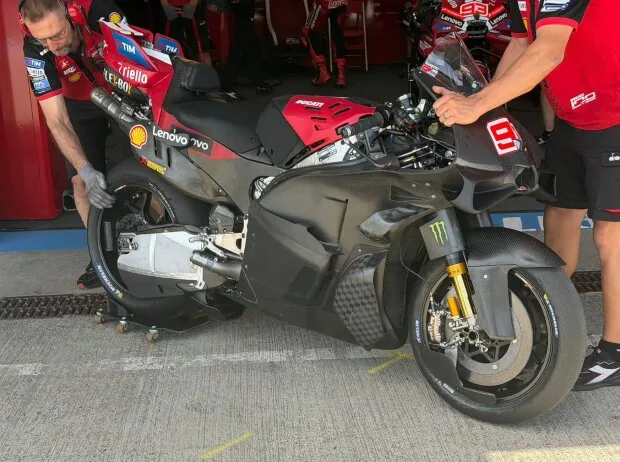
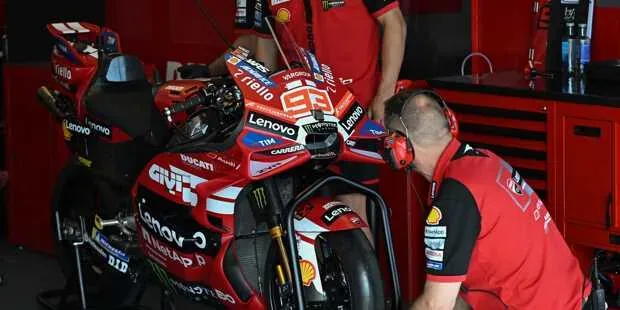
At Ducati, the focus was clearly on aerodynamic updates. A slightly modified package was tested, similar to the fairing that had been discarded during winter tests. Notably, the rear swingarm was also faired.
Both Marc and Alex Marquez, as well as Francesco Bagnaia, tried out the new specification. Among the Ducati riders with the current GP26, Fabio Di Giannantonio was the only rider who rode without the new aerodynamic package.
Team Manager Davide Tardozzi explained to Sky Italia: “We are experimenting with aerodynamics to find the right solutions. From the next race, I think we will have an advantage to be competitive and keep up with Aprilia. There will be tracks where they will naturally be faster, like Silverstone, but we will see.”
Aprilia
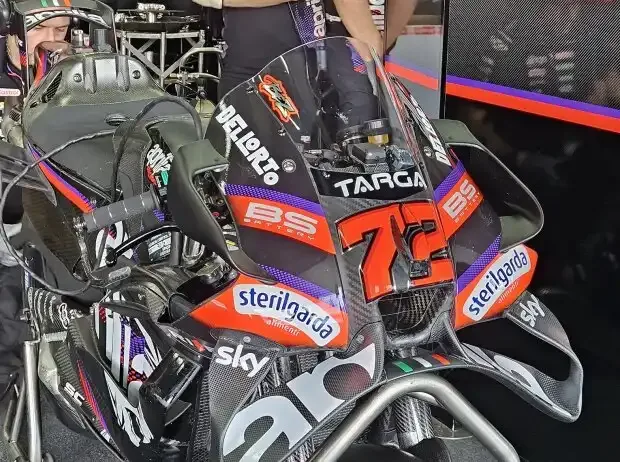
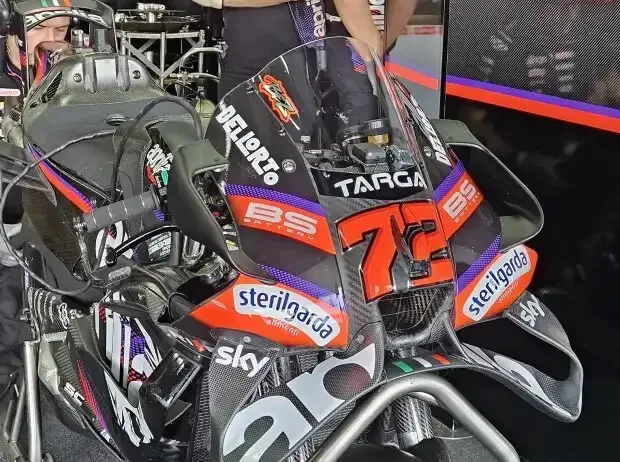
At Aprilia, Marco Bezzecchi evaluated various novelties, including a revised fairing with aerodynamic adjustments. Wing elements on the sides of the windshield were particularly noticeable. This construction could serve to specifically divert airflow from the rider’s shoulders.
Read more Jeff Dodds is convinced: Formula E helps Formula 1 understand new rules
Bezzecchi’s teammate Jorge Martin used the test to catch up on components he had not yet been able to use due to winter tests missed due to injury.
His initial conclusion was positive: Martin spoke of progress in braking, turn-in, and acceleration. “The bike feels much more natural now,” said the Spaniard, who noted an improvement of about two tenths per lap.
Test rider Lorenzo Savadori primarily conducted comparison runs for data acquisition. A striking feature was unusual sensor technology at the rear of his RS-GP, which was used for detailed analysis of airflows.
KTM
KTM focused primarily on the further development of aerodynamic packages for the upcoming homologation, as well as on minor set-up and electronics optimizations.
Team boss Aki Ajo explained to MotoGP.com: “The results of our test team are already very promising and the initial feeling in the morning was also positive. But it’s not just about the feeling. We have to analyze everything very carefully afterwards before we make decisions for the future.”
Although stable conditions allowed for good comparative values, a Monday always brings special conditions with high grip. In addition to aero work, findings from the difficult race weekend were also reviewed and integrated into the development work.
Yamaha
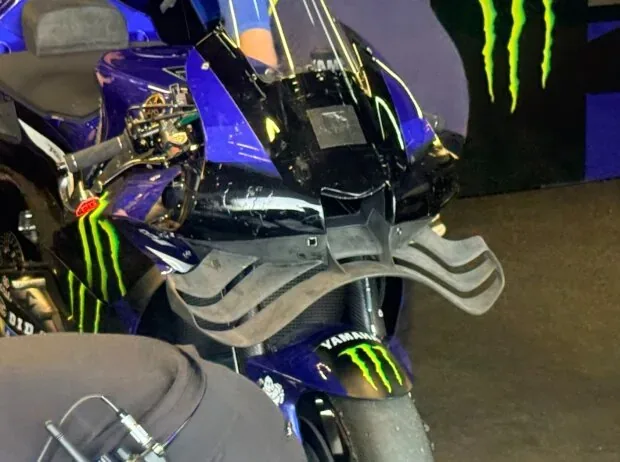
At Yamaha, components were used that had sometimes already been seen during the weekend, including aero updates at the front and rear, as well as a new chassis.
According to Team Director Massimo Meregalli, some aerodynamic solutions provided measurable improvements in the data. However, the riders could hardly perceive these in their direct feeling. Even detailed adjustments to the engine were measurable but not dramatically noticeable, said Meregalli.
Fabio Quartararo had already emphasized on Sunday: “To be honest, peak performance is the least of our problems.” The Frenchman did not expect a big performance leap from the test day in Jerez. More important for him was to accumulate riding time and develop a better feeling for the bike.
Meregalli realistically assessed the overall situation: “We are encountering problems that we did not expect, but the team is working intensively as always. We knew that the first half of the season would be difficult, but we believe in progress in the second half.”
Honda
Honda worked intensively on the further development of the RC213V, especially in the electronic area. Luca Marini confirmed an extensive test program focusing on rideability in the corner entry phase. The goal was to improve turn-in behavior to indirectly mitigate problems at corner exit – a central weakness of Honda’s current motorcycle.
Technical Director Romano Albesiano described the approach as very concept-driven: “There weren’t many new parts, but many new set-up concepts, very interesting from a mechanical and electronic point of view.” He rated the test positively.
The Italian spoke of one of the best test days so far since he joined Honda, as the rider feedback on the tested concepts had been consistently good.
Update for Head Protection
In addition to motorcycle development, new helmet concepts were also tested. Several riders, including Marco Bezzecchi, Luca Marini, and Franco Morbidelli, rode with a prototype designed to improve airflow around the head. This was an initial development step by the Italian equipment manufacturer AGV.
Read more Williams: James Vowles sends clear message after difficult start