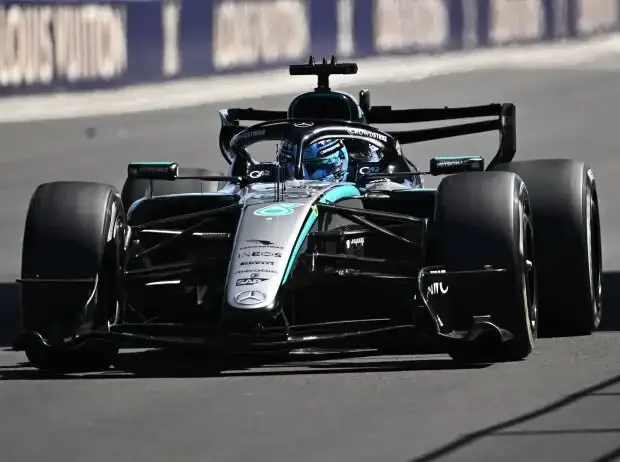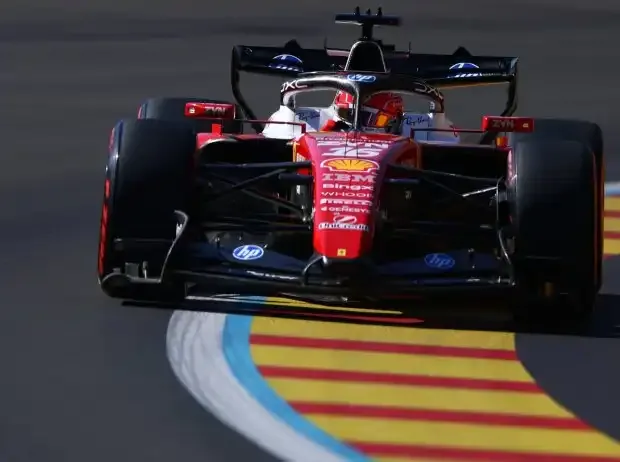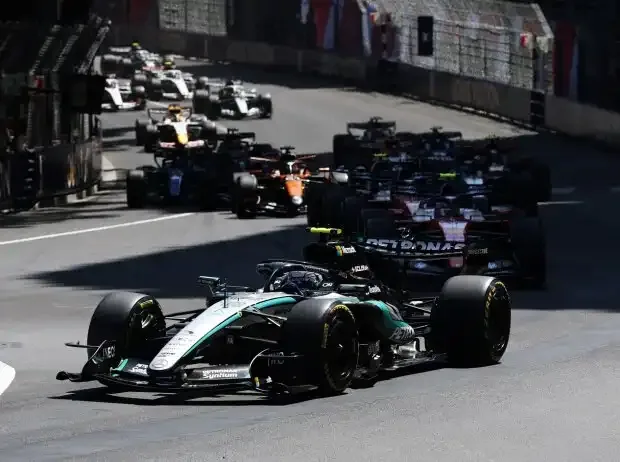


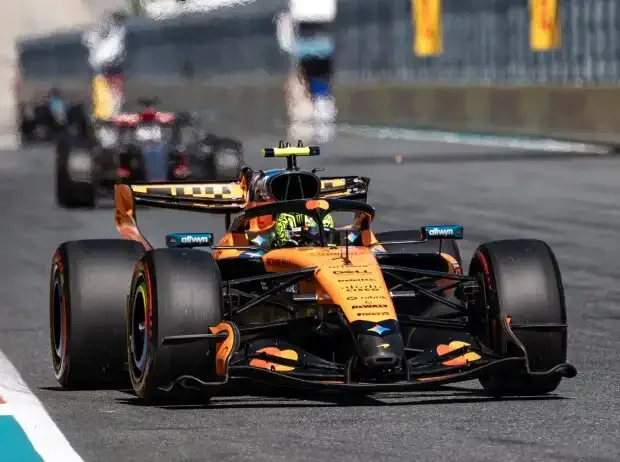
– Since the Miami Grand Prix, energy management in Formula 1 has changed, including in qualifying: Because the drivers often went at “half throttle” during their warm-up lap to save energy, the FIA, the world governing body for motorsport, has automated the process. This now allows the drivers to go full throttle again.
Read more Itala 35 (2026): Traditional brand returns after 91 years
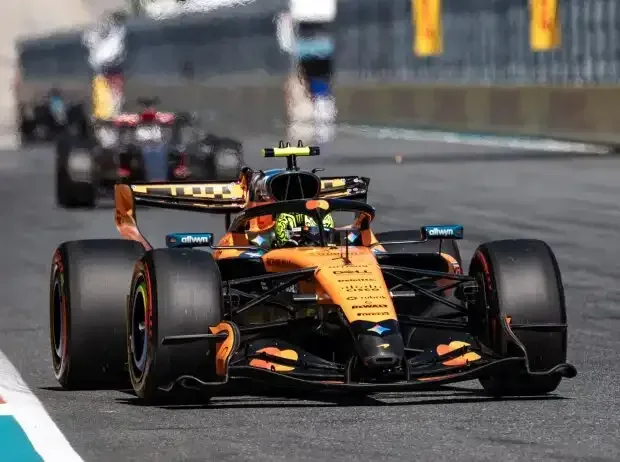
This has at least reduced one of the previous problems. Even before the season started, it was clear that drivers were forced to make compromises in energy management at the start of their fast lap in qualifying. To save energy, they often only pressed the throttle to 100 percent a few meters before the finish line.
In Bahrain, for example, where winter testing already took place this year, drivers in the past would accelerate out of the last corner at full throttle onto the long straight to carry as much momentum as possible and maximize top speed at the end of the straight.
Changes work: Norris with pole after REAL qualifying action! I Sprint Qualifying F1 Miami 2026

This behavior was related to the previous power unit concept: The older power units had a significantly smaller MGU-K, with only 120 kW instead of today’s 350 kW. As a result, the battery discharged much more slowly, so the need to “lift” before the start of the lap practically did not exist.
In addition, there was the MGU-H, which could recover additional energy and transfer it to the second electric motor. This made energy management overall less critical. However, in 2026, this dynamic has noticeably intensified. Although the battery can still store a maximum of 4 MJ, the significantly more powerful MGU-K causes the energy to be consumed faster.
Formula 1 drivers drove at half throttle in qualifying
In Bahrain, for example, drivers tended to keep the throttle at only 60 to 70 percent over large parts of the straight and only pressed it fully shortly before the finish line. Due to the efficiency of the electric drive, some momentum could still be gained for the second half of the straight.
The main goal, however, was to save energy in the first section of the straight in order to be able to call it up specifically in the second half of the acceleration phase. Applying 100 percent throttle too early would have increased the risk of running out of energy during the lap – with a corresponding loss of time.
A pattern that also appeared at other races, such as in Australia, where drivers were precisely instructed by radio from the engineers during qualifying when the moment for full throttle had come, because it was a parameter that changed from session to session.
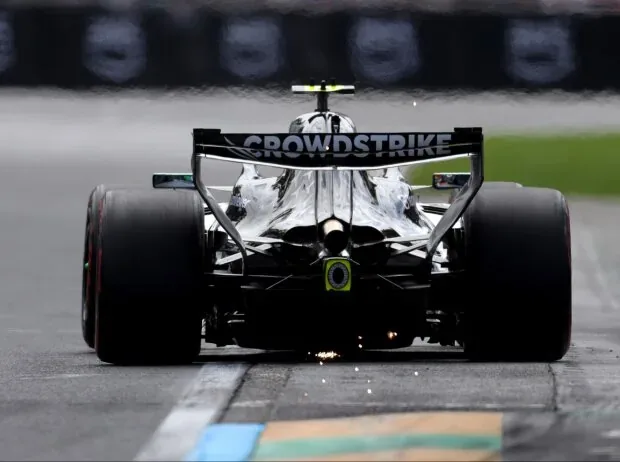
In Q1, corners are attacked less aggressively, allowing more opportunities for energy recovery; in Q3, on the other hand, driving is much more aggressive, which increases consumption. Therefore, at the beginning of the lap, the goal was not to reach maximum speed but to optimize energy management.
New qualifying regulation also improves safety
With the recent regulation changes that came into effect from Miami, this scenario has fundamentally changed: Drivers no longer have to manually modulate the throttle before their flying lap because this process has since been automated.
“There were some really positive things,” Oliver Bearman explained in Miami and welcomed this innovation: “For example, the start of the qualifying lap is now automatic, after we had to manually control the throttle position in the last races.”
Read more Ford restarts in Europe and plans seven new models
“It was at about 50 percent, so you had to look down at the display to precisely control how much acceleration you used at the start of the lap, and that was quite dangerous. Now it is automated, and that simplifies things for us.”
The teams know exactly where the car is at all times during the lap – a crucial factor for managing those zones where the FIA allows switching off the MGU-K to save energy or, since Miami, limits system power in the race to 250 kW for safety reasons.
Photo gallery: Formula 1 fails: These regulation changes were a flop
Without a system that precisely records the position of the vehicle along the track, all this would not be possible. Interestingly, the energy no longer has to be released immediately and fully. The teams can now decide specifically when the energy is released.
Full throttle no longer means “full power”
Even at 100 percent throttle position, this does not automatically mean that the MGU-K is working at 350 kW. This allows the battery to be preserved more effectively. A good example cited by Haas team principal Ayao Komatsu is the track in Barcelona.
The last sector there consists of a series of fast corners. If the energy were used too early compared to the optimal time, there would be a risk of running out of MGU-K support before the end of the long straight and thus losing valuable tenths.
However, this does not mean that only the combustion engine is working: minimal electric support remains performance-relevant due to the immediately available torque. What is crucial is the ability to specifically control the use of energy to avoid wasting resources.
This smarter management also directly affects the drivers, who no longer have to keep the throttle constantly at partial position during the outlap. “Take Barcelona as an example: If you come out of the last corner and go full throttle too early, you discharge the battery too much,” Komatsu explains.
“So you have to wait for the right moment before pressing the throttle fully. That’s why the regulation was changed. The best way to describe the new rule is that there is now more freedom. Now the drivers can go full throttle but do not necessarily have to start deployment immediately.”
“We can decide when to start deployment,” emphasizes the team principal. “At some point, you have to use the electric energy anyway to cross the finish line fast enough, otherwise you carry the disadvantage to the first corner.”
- DTMManthey delivers radical reform idea for DTM BoP: Rivals suspect calculation
- MotoGP“Something is wrong”: Bagnaia fears injury after Zarco crash
- 24h NürburgringColumn 24h Nürburgring: Motorsport lives – but only at the top
- MotoGP“Frightening”: Zarco describes start accident – surgery not yet possible
“That depends on the track, but in this outlap, from the last corner to the finish line, the driver can now just push instead of waiting for the exact point given by the engineer to go full throttle.”
Read more Smedley: Slow reactions at the command post «unacceptable»