





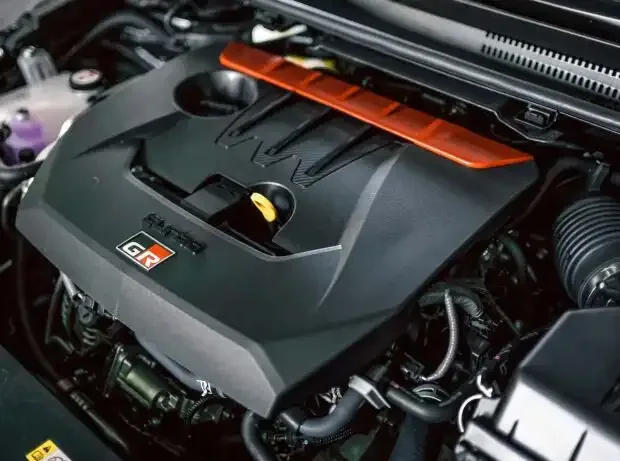
(Motorsport-Total.com/Motor1) – While many car manufacturers were hastily setting end dates for internal combustion engines, Toyota remained conspicuously quiet. Many competitors have since scaled back their pure electric plans and are once again relying on models with gasoline or diesel engines for the coming decade – and in some cases beyond.
Read more Porsche Cayenne Turbo Electric (2026): 850-kW rocket tested
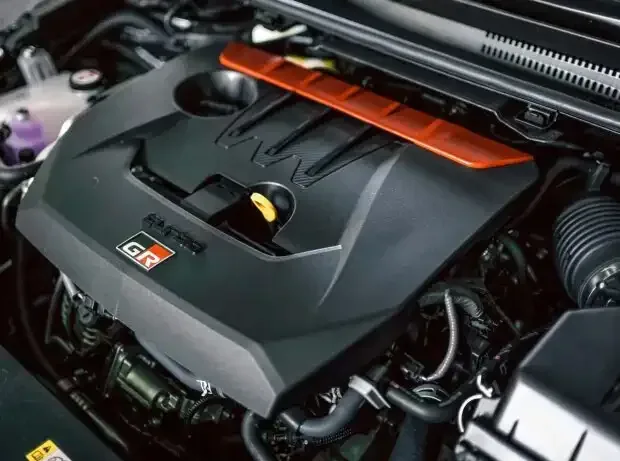
Meanwhile, the world’s largest car manufacturer is investing in a new family of smaller, more efficient four-cylinder gasoline engines that it intends to use across the group.
In a new post in Toyota Times, the official employee magazine, the group explains why internal combustion engines remain necessary from its perspective. Using the example of the immensely successful Corolla, it becomes clear: the uneven spread of electric cars shows that the sedan will continue to need internal combustion engine drivetrains in the next generation as well.
“Toyota often points out when explaining its multi-pathway strategy: energy conditions differ by region. Even within the same city, some people find electric vehicles practical, while others prefer hybrids. There are still many areas where people simply cannot get by without gasoline-powered cars.”
Toyota knows: Many people still prefer gasoline engines
Toyota has a valid point. Charging infrastructure is still insufficiently developed in many regions of the world – accordingly, concern about insufficient range remains an issue. Many people do not want to deal with the risk of an empty battery on longer journeys and prefer to rely on vehicles with internal combustion engines. And even where charging stations are available, the significantly longer “refueling time” compared to filling up remains an obstacle that many want to avoid.
While some electric cars support very fast charging and certain stations provide higher charging capacities, the system is not yet mature enough in many places for widespread, global use. The convenience of having a gas station nearby and refueling in a few minutes remains a decisive factor for many new car buyers.
Costs also play a role, as true price parity between internal combustion engines and electric cars has not yet been achieved. Vehicles with classic drivetrains are often still significantly cheaper to purchase – even if they can become more expensive to operate if fuel prices rise, for example, as a result of the crisis in the Middle East.
Global demand for electric cars is rising
It is indisputable: global demand for electric cars is growing – even if the market in the USA has recently cooled down. Kelley Blue Book reports that the EV share fell from 8.1 percent to 7.8 percent year-on-year. Despite the decline, it was still the second-best year ever for electric car sales in the USA.
Read more Lewis Hamilton: Why he is so much stronger in 2026 than in 2025
Last year, purely electric cars accounted for 19.5 percent of new registrations in Europe – specifically in the 27 EU states plus Iceland, Liechtenstein, Norway, Switzerland, and the United Kingdom. Figures from the European Automobile Manufacturers’ Association (ACEA) show a significant increase compared to 2024, when electric cars were at 15.4 percent.
And China? A study by the International Council on Clean Transportation concludes that New Energy Vehicles reached a share of 54 percent in 2025. However, NEVs also include plug-in hybrids. If PHEVs are added to the European balance, the total share rises to 29.1 percent.
The next Corolla should offer something for everyone
Regardless of whether you are clearly in favor of internal combustion engines, electric cars, or somewhere in between (hybrids): Toyota’s next Corolla should offer something for different preferences:
“Regardless of energy conditions or lifestyle, we want to develop a Corolla that someone locally would enjoy driving. In other words: we want to build the capability to produce these vehicles efficiently and operate them profitably. That is the core of the Corolla development planning.”
The 13th generation of the world’s best-selling model name was hinted at last year by a radically designed concept vehicle. Although this was electric, Toyota is also planning a hybrid version – and a plug-in hybrid is also not ruled out. It is unclear whether some markets will also receive a pure internal combustion variant.
It is known: Toyota has teamed up with Mazda and Subaru to extend the life of the internal combustion engine – including through tests with CO₂-neutral fuels such as liquid hydrogen, biofuels, and synthetic fuels.
Toyota’s promise? “To make the future Corolla a car that meets the needs of diverse customers in different countries.”
Read more Mir “without regret” after Austin crashes despite missed podium chance
More from Toyota:
Why the Toyota Aygo X did not break the fuel consumption record
Toyota is bringing back the Celica: Everything we know
- Formula 1Fernando Alonso: No Aston Martin progress in the coming months
- MotoGPFrom victory candidate to loser: The Bagnaia riddle of Austin
- 24h Le MansGenesis GMR-001: This is how the new LMDh enters the race
- Formula 1“Broken quite a lot of porcelain”: Wolff’s stance on a Horner return
Source: Toyota