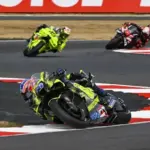
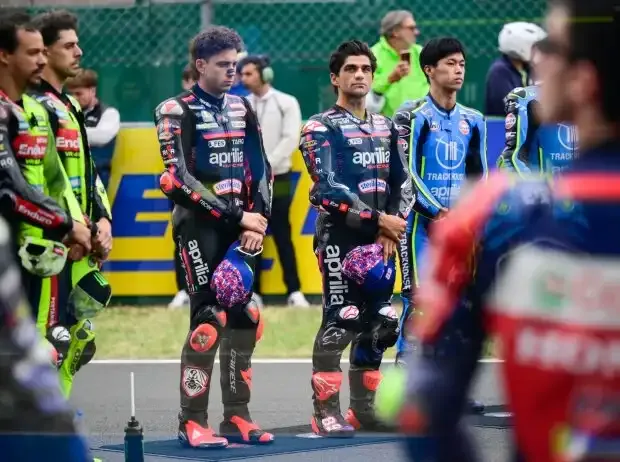
– The debate that erupted last Sunday at the Circuit de Barcelona-Catalunya about not canceling the MotoGP race despite two red flags could be the final push the riders need to unite. Unite in an association that can represent their interests – similar to what the GPDA riders’ union does in Formula 1.
Read more «Terrifying»: Zarco describes start crash — surgery not yet possible
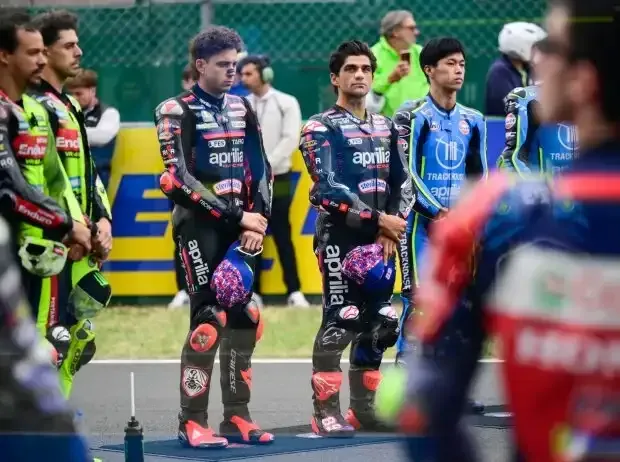
Race Sunday at the Catalonia Grand Prix combined all the elements that make this discipline unique in the global sports landscape – something Liberty Media clearly recognized when it invested more than four billion dollars two years ago to acquire the motorcycle world championship.
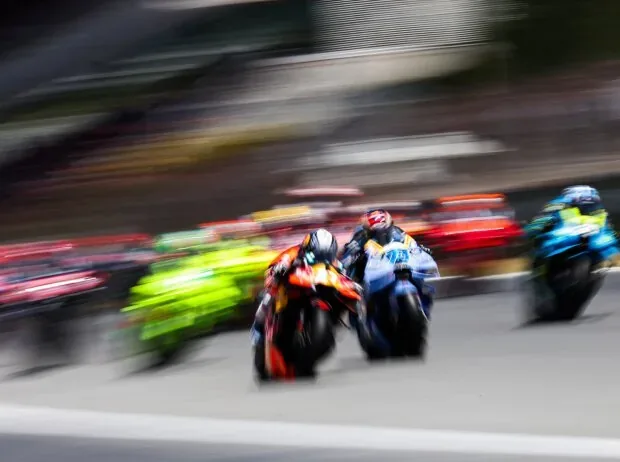
Barcelona 2026 once again made it clear that MotoGP riders are like astronauts or aliens in motorsport – due to their ability to mentally recover after witnessing two terrible accidents that forced the race to be stopped twice.
Acosta and Martin question procedures in Barcelona
While Alex Marquez and Johann Zarco were on their way to the hospital after their separate crashes, the rest of the field had to get back on their motorcycles for a third start – a start that, in the eyes of most of them, should never have taken place.
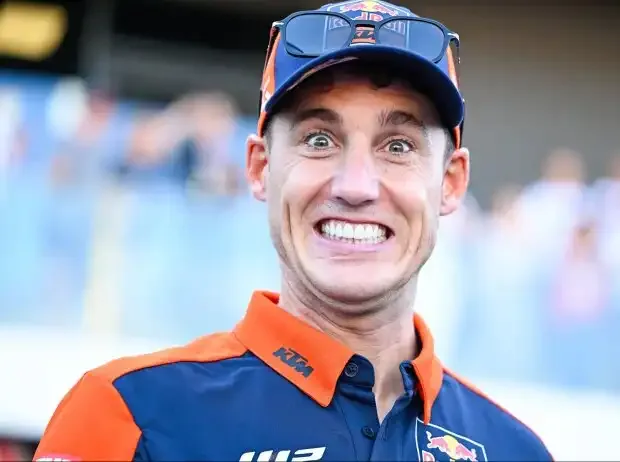
“It is true that we already have experience with situations like the one we just went through. And I understand that the show must go on after a red flag,” said Pedro Acosta, whose KTM had a technical problem that unintentionally caused Alex Marquez’s severe crash, which led to the first interruption.
“But I do not agree that we have to restart a third time after two such serious incidents,” Acosta said. KTM’s initial diagnosis found that an electronic defect on the RC16 caused the acceleration process to be interrupted when Alex Marquez was directly behind Acosta and had no time to react.
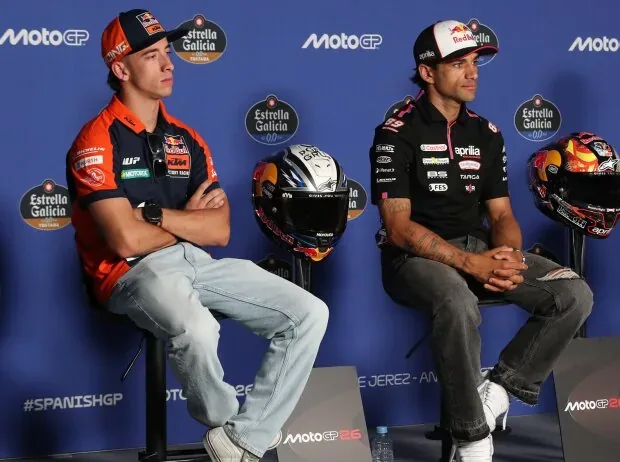
Jorge Martin expressed an almost identical view. “They always say the show must go on, but I think there comes a point where you have to start thinking about the human side. I don’t know to what extent it was necessary to take this risk further,” Martin said.
“I am an employee. I do what I am told,” said the Aprilia factory rider before adding: “But we have to stop and think about whether it is really worth risking our lives like this. Restarting three times is very dangerous and excessive. I can handle it mentally, but others cannot. The atmosphere that arises invites such things to happen.”
Not the first warning example
Even Fabio Di Giannantonio, ultimately the race winner, admitted he had doubts. Was it appropriate to return to the track a third time on a Sunday full of warning signs? “The question always arises whether to continue or stop. It is a show, but we must not forget that we are human,” said the VR46 rider.
The last time a MotoGP race that had already started was completely canceled without resuming racing was on October 23, 2011, in Sepang, the tragic day Marco Simoncelli lost his life. The excitement about incidents like those on Sunday at the Circuit de Barcelona-Catalunya usually lasts only briefly in the paddock.
The atmosphere of dismay in Barcelona resembled that which prevailed last year in Sepang after the collision between Noah Dettwiler and Jose Antonio Rueda during the sighting lap of the Moto3 race. Even then, amid uncertainty about Dettwiler’s condition, several voices questioned the decision to actually start the race. “This race should never have started,” Pedro Acosta said on that October 26, 2025, in Malaysia.
What happened last Sunday in Barcelona perfectly illustrates the imbalance between the role the riders play and the actual influence they exert in such critical and extreme moments as those at the Catalonia Grand Prix.
On Sunday, there was broad consensus among the riders that canceling the Grand Prix would have been the right decision, as they were not in the right mental state to race. However, this consensus did not carry enough weight to question the organizers’ decision to continue with the planned program.
Read more After a horror start: How Honda wants to save Aston Martin
The issue with the safety commission
The scenario could have looked very different if the riders had spoken together, united under an umbrella organization that can represent them. This refers to the riders’ association that has been discussed for years but has never fully materialized. Individualism, lack of cohesion, and the absence of a true collective mindset are probably the main reasons for this.
This assessment is supported by complaints from several riders about the low attendance at the safety commission meetings on Fridays of all MotoGP race weekends. In these meetings, the riders sit down behind closed doors with the organizers to discuss all topics that concern them.
“It doesn’t matter whether we are friends or not. What counts is respect,” said Francesco Bagnaia. “When it comes to important things like the safety commission, we just have to be there, period. We are the ones who know where the limits are. And if we think something is so serious that we shouldn’t race, then we have to say so.”
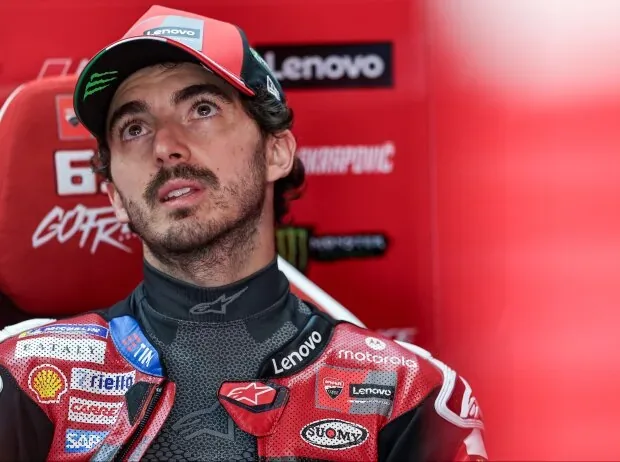
“But if only three riders show up at the safety commission meetings, then we lose a lot of influence,” lamented Bagnaia, referring to the Friday in Le Mans when only he, Jack Miller, and Luca Marini attended the meeting.
On Le Mans Friday, after the incident involving Marc Marquez two weeks earlier in Jerez, an immediate rule change was decided regarding the rules for entering the pit lane. “I have always believed that such changes should be made at the end of the season,” Bagnaia added, noting: “But what influence do we have if only three of us think that way?”
In Formula 1, the Grand Prix Drivers’ Association (GPDA) was originally founded in 1961 under the chairmanship of Stirling Moss before being revived in 1994. Since then, the organization – currently led by Alexander Wurz, George Russell, and Carlos Sainz Jr., with legal support from the law firm of Anastasia Fowle – has given drivers a united voice whenever they deemed it necessary.
Rider manager: “MotoGP riders don’t understand the obvious”
Two years ago, the GPDA sent a letter criticizing the FIA and its president Mohammed Bin Sulayem for treating the drivers “like children” and threatening them with sanctions for using offensive language. In 2022, the Formula 1 driver field was close to refusing to start during the Grand Prix weekend in Saudi Arabia after explosions occurred just a few kilometers from the track.
The motorcycle world championship with its premier class MotoGP came closest in 2023 to founding a similar organization like the GPDA. At that time, the rider field agreed that Sylvain Guintoli was the right person as representative and spokesperson. The process failed when it came to financing and covering operating costs. It is also worth mentioning that Dorna viewed the initiative with some suspicion, as a potential power balance could be created.
“MotoGP riders are different from Formula 1 drivers. Here, everyone looks out for themselves, and they don’t understand something obvious: Together they would be much stronger and could achieve much more for the common good,” explains a manager representing several riders to the Spanish edition of Motorsport.com, a sister platform of Motorsport-Total.com in the Motorsport Network.
“Because with the mentality they show, they will always be on the losing side in any dispute or confrontation with Dorna. It’s a matter of education and awareness,” the manager said.
The MotoGP World Championship rests on four pillars: the organizer, the manufacturers, the teams, and the riders. The organizer naturally holds the greatest power. The manufacturers are united in the MSMA, while the teams are represented by the IRTA.
- MotoGP“Terrifying”: Zarco describes start crash – surgery not yet possible
- 24h NürburgringFifth place! Why the M3 Touring was even faster than the M4 GT3
- 24h NürburgringVerstappen failure: bad luck or result of tough tactics at 24h Nürburgring?
- IndyCar“Useful damper tests”: How Mick Schumacher helps with RLL development
The only actors still unprotected are the riders themselves – the main gladiators of this circus and paradoxically also those who are most vulnerable in every respect.
Read more Spearmint and Leather: Why This Car Museum Evokes Memories