



(Motorsport-Total.com/Motor1) – The eyes of Jaguar fans are currently on the new Type 01. The controversially discussed electric car is set to debut in full glory in early October 2026. Almost exactly 40 years after another model from the brand caused a sensation.
Read more «Vettel was a great idol»: Discovery Finn Wiebelhaus about his beginnings
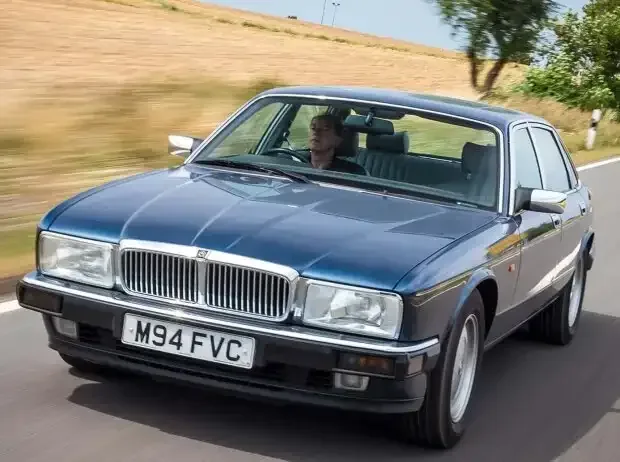
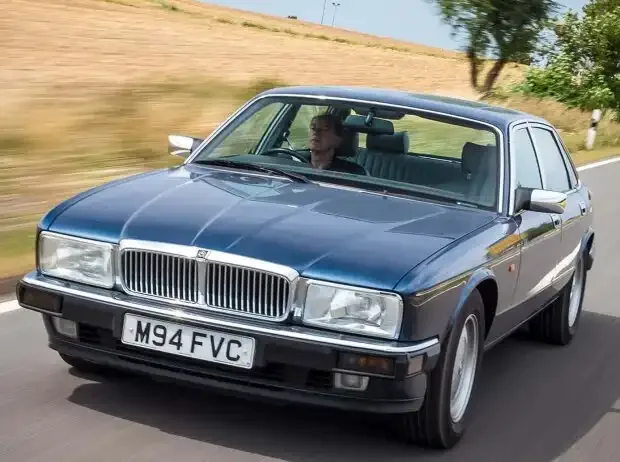
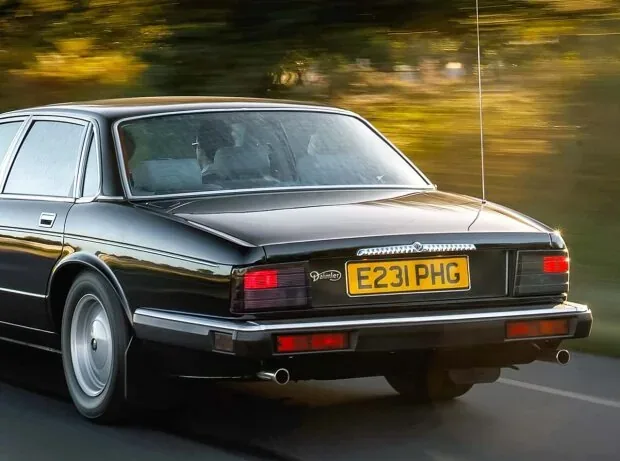
When the Jaguar XJ of the XJ40 generation is officially unveiled in October 1986, it takes on a heavy legacy. It is meant to replace the legendary Series III, whose origins date back to 1968. It is the second generation of the luxury sedan from Coventry to see the light of day. Both models even run in parallel on the production line for a while until the older series ends production in 1992.
The XJ40 is a huge technical step forward. It features a modernized independent rear suspension and attracts all eyes with digital instruments in the interior as well as electronic monitoring systems in the cockpit.
The last in-house development
From a development perspective, the model holds a special position. It is the last Jaguar to be developed entirely independently before the US giant Ford takes over the helm. Additionally, the sedan still bears the signature of the company founder Sir William Lyons. The legendary patron accompanies the early development phase as an advisor and views the final prototype shortly before his death in 1985 with great approval.
The roots of the project go far back. As early as 1972, the design team builds the first scale models. However, the 1973 oil crisis and chronic financial problems of the then parent company British Leyland delay the project for years. Designs from the in-house styling studio as well as from Pininfarina are debated. In the end, the in-house design prevails.
Photo series: 40 years of Jaguar XJ40 (1986-1994)
In February 1981, the board of British Leyland finally approves a budget of 80 million pounds. When the new CEO John Egan takes over and leads Jaguar to the stock market, he postpones the premiere again to sort out last teething problems and perfect the body structure.
The engineers reduce the number of required body parts by a quarter compared to the predecessor. This saves weight, increases stiffness, and simplifies manufacturing. Nevertheless, the XJ40 suffers from quality problems and vulnerable electronics in its first years of production, which affects the brand’s reputation. The sophisticated ergonomics in the interior, however, score points immediately.
Six instead of eight
The small screen in the dashboard shows dozens of warning functions via a vacuum fluorescent display called “Vehicle Condition Monitor.” From 1990, however, Jaguar returns to analog round instruments because the early days’ small screen circuit boards became a headache. At the same time, the new parent company Ford improves quality.
Mechanically, the series starts in 1986 with the new AJ6 inline six-cylinders as 2.9-liter and 3.6-liter versions. Later, displacement expansions to 3.2 and 4.0 liters follow. The new price of an XJ40 4.0 with 221 hp in Germany in July 1990 is exactly 79,686 DM, a similarly powerful Mercedes 420 SE (W126) is listed at 84,075 marks, while the BMW 735i with 211 hp is already available for 79,000 marks.
Read more Electric B-SUV: This is what the interior of the Volkswagen ID. Cross looks like
The driver selects the gears via the famous J-Gate shift pattern, which prevents accidentally engaging reverse gear. There is a fine anecdote about the engine bay dimensions to this day. The Jaguar engineers deliberately design the front end so narrow that the V8 engine from parent company British Leyland simply does not fit into the engine bay. This secures the continued use of their own engines. However, this backfires later when a V12 is to be integrated. Only from 1993 does the XJ40 roll to dealers as the XJ81 with the mighty 6.0-liter unit.
From 1990, Jaguar enlarges the six-cylinder to 4.0 liters displacement. A year later, the entry-level version grows to 3.2 liters and adopts the modern four-valve cylinder head, with which this model is now also offered in Germany as Jaguar XJ6 3.2 and Sovereign 3.2. The model range proves extremely versatile over the years.
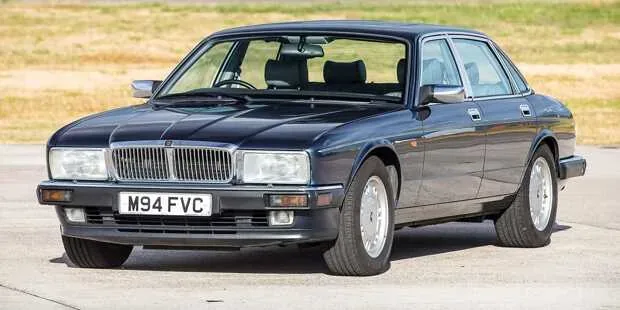
While the regular XJ6 is later recognizable by its four round headlights in rectangular housings, the higher-end models Sovereign and Daimler carry the distinctive wideband headlights. The Daimler is the noble flagship model, traditionally known as Jaguar Vanden Plas in the US market. Even the British motorway police use the XJ40 as a fast response vehicle on the M6, while the noble Majestic version with extended wheelbase serves as a state car.
Jaguar’s Insignia
For sportily oriented customers, Jaguar pushes the 3.2 S and 4.0 S models from 1993. The sporty XJR with subtle spoiler work and a slightly tuned four-liter engine by TWR has been in the program in England since 1989 and conquers German roads from 1992. Those who appreciate luxury particularly can opt for the XJ40 Insignia from 1993. (You read that right, exactly the name that the big Opel gets in 2009 ..)
Here, craftsmen produce the entire interior in finest genuine leather including two-tone options, noble special woods, and special paint finishes. The Daimler-typical fold-out wooden tables are also part of the Insignia package. In the same year, a chauffeur version debuts with a wheelbase extended by 125 millimeters and a slightly raised roof. Shortly thereafter, in 1994, the affordable special models 3.2 Gold and 4.0 Gold with reduced chrome trim mark the farewell of the series.
Despite the bumpy early days, the XJ40 proves to be a huge market success and secures Jaguar record sales figures in its best years before the heavily revised X300 in retro look takes over. From the Jaguar XJ of the XJ40 series (including the V12 variant XJ81), a total of 208,706 units (according to records of the Jaguar Daimler Heritage Trust exactly 208,733 vehicles) were produced at the Browns Lane plant between 1986 and 1994.
- IndyCarIndyCar Milwaukee 2026: Rain! Saturday race ends on Sunday
- IndyCarIndyCar Milwaukee 2026: Mick Schumacher again fourth in qualifying
- MotoGPQuartararo with clear words for Yamaha: “No longer want to help”
- MotoGPMotoGP live ticker: Race day in Aragon! Who wins on Sunday?
Jaguar yesterday and tomorrow:
Jaguar E-Type: Exclusive “E-Type 60 Collection” for the 60th birthday
Jaguar Type 01 shows itself at the Goodwood Festival of Speed 2026
Read more «Then it’s Lewis»: Steiner calls on Ferrari for a clear decision