


(Motorsport-Total.com/Motor1) – It is the mid-1930s: The still young company BMW has already made a name for itself in racing with the 315/1 and 319/1 models, but the competition is not sleeping and threatens to leave the Munich-based company behind technically.
Read more World Championship lead gone: Why George Russell still feels no pressure
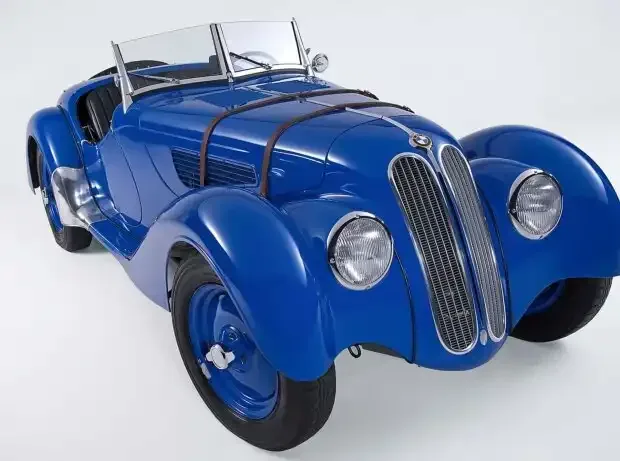
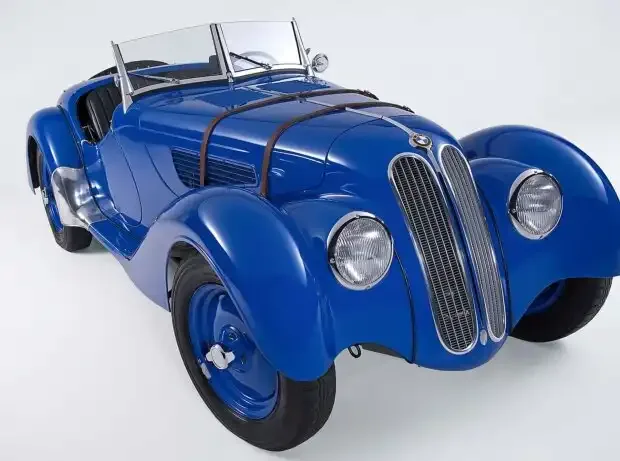
In the small but highly motivated racing department under the leadership of Fritz Fiedler, a design then emerged that was to change everything: the BMW 328. The roadster celebrated its debut in June 1936 at the Eifel race on the Nürburgring – a bombshell, followed in the spring of 1937 by the start of series production for a proud 7,400 Reichsmarks. It was the beginning of an era in which hardly a race in the two-liter class ended without a 328 on the podium.
Stylistically, the 328 marks the departure from the classic “box design”. Although the sporty ancestors can still be recognized, aerodynamics now rule. The shapes become smoother, the lines more fluid.
Photo gallery: BMW 328 (1937-1940)
As the first model with a lightweight tubular frame, it adopted the rounded radiator grille introduced with the BMW 326. However, the decisive design feature is the integration of the headlights into the front fenders – a modern look that shaped the face of the brand until the 1960s.
Technical treats under the hood
The centerpiece is the 1,971 cc straight-six engine. The engineers used the proven block of the two-liter engine but crowned it with a completely new cylinder head made of an aluminum alloy. The design was ingenious for its time: the intake valves are controlled by the side camshaft via pushrods and rocker arms, while the exhaust valves are operated via additional horizontal pushrods and bell cranks.
In series production, the unit produces 80 hp, which ensures decent propulsion with a weight of only approx. 830 kilograms. Depending on the tuning, the racing versions produce between 118 and 135 hp and drive the car up to 220 km/h.
Tailor-made suits and wind tunnel secrets
In addition to the series roadster, individual bodies were available for wealthier customers. Companies such as Ludwig Weinberger or Gläser manufactured elegant convertibles, while Wendler in Reutlingen even realized a coupé with a removable hardtop. Particularly exciting are the streamlined cars from Wendler based on designs by the aerodynamics pope Baron Koenig-Fachsenfeld.
Interesting: Wind tunnel measurements in 1978 resulted in a drag coefficient (Cd) of 0.44 for the 328. This is partly due to the striking ventilation slots in the hood. If these had been reduced in size as originally planned, the value would have even fallen below 0.40. These bodies were manufactured using traditional craftsmanship: a wooden frame forms the skeleton, onto which the metal sheets are attached with countless small nails.
Read more Toyota makes it clear: Without combustion engines, it won’t work globally
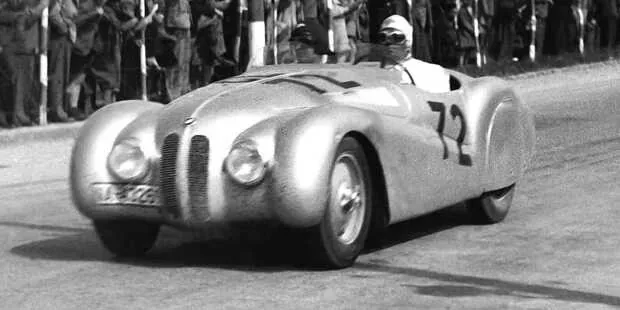
The Mille Miglia Myth
The name BMW 328 is inextricably linked with the Mille Miglia. For Le Mans 1939, BMW had a coupé manufactured by the Milanese coachbuilder Touring in the patented “Superleggera” (super-light) construction method. Here, extremely thin aluminum sheets are welded to a tubular space frame – a real high-tech construction at the time.
After a class victory at Le Mans, the ultimate triumph followed in 1940: Fritz Huschke von Hanstein and Walter Bäumer won the Mille Miglia in the Touring Coupé with a lead of 15 minutes over the significantly stronger competition. The rest of the team secured third, fifth, and sixth places with three special “Mille Miglia” roadsters. Only the experimental Kamm Coupé dropped out and was later scrapped – it was not until 2010 that BMW presented an elaborate reconstruction of this car.
The legacy after 1945
After the war, the 328 engine experienced a second heyday and became the lifesaver of German racing. It was almost the only competitive drive in Germany and fit perfectly into the new Formula 2. Brands like Veritas and AFM dominated the racing scene with BMW technology. Even in the GDR, in the former Eisenach plant, work continued on the 328 concept under the name EMW.
Internationally, the British Bristol Aeroplane Company secured the design documents and even the designer Fritz Fiedler. The BMW engine thus became the basis for all Bristol models until 1961 and powered racing cars from Lotus, Cooper, and AC.
The fact that the 328 remains unforgotten to this day is shown by the spectacular homage studies from 2006 and 2011. Based on the Z4 (E85), they reinterpret the spirit of the original with modern CFRP – even if the modern roadster descendant is a good 400 kilograms heavier than its ancestor from 1936. The BMW 328 remains exactly what it was back then: a car of the century. Congratulations on your 90th birthday!
- MotoGPFrom victory candidate to loser: The Bagnaia puzzle of Austin
- Formel 1Fernando Alonso: No Aston Martin progress in the coming months
- 24h Le MansGenesis GMR-001: This is how the new LMDh enters the race
- MotoGPMarc Marquez admits: “Can’t make a difference”
More from BMW history:
Time travel in the BMW 1500 from 1963: The old New Class
BMW M5 E34 (1991) driving report
Read more Porsche Cayenne Turbo Electric (2026): 850-kW rocket tested