
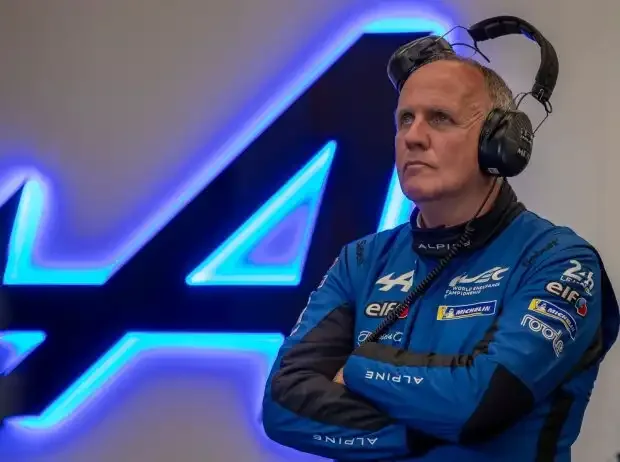
– The shockwave following the proverbial earthquake triggered by the confirmation of the imminent end of Alpine’s Hypercar program has only just subsided. The news was to be expected due to warning signs from the manufacturer and from Viry-Chatillon, but it is nonetheless of great significance – both for the World Endurance Championship (WEC) and for a French team with a long tradition.
Read more New “update” on Charles Leclerc’s Ferrari steering wheel causes excitement
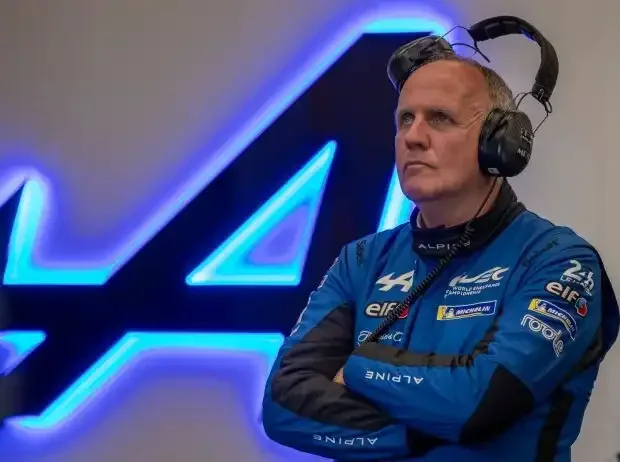
Philippe Sinault is one of its architects and embodies the roots of endurance racing at a time when the WEC is being reshaped by the Hypercar era. Behind the Alpine team stands the solid foundation of Signatech, which has supported the ambitions of a program that has set itself high goals. But after three years with the Alpine A424, the program will be discontinued at the end of the 2026 season.
After the shock comes the reaction that must carry the season and that Alpine must endure. At the presentation of the A424 for 2026 a few weeks ago in Paris, the focus was directly on the team’s hunger for victory, with smiles attempting to mask the blow to the gut.
In an interview for Motorsport.com France, a sister platform of Motorsport-Total.com in the Motorsport Network, Alpine team principal Philippe Sinault explains how he is driven by the desire to move forward with a united team – a team that wants to show it has even more to prove.
Question: “Philippe, how did you react to the news that Alpine’s parent company Renault is ending the Hypercar program? And how did you handle it internally with your team?”
Philippe Sinault: “This is, of course, difficult and complicated news. But when you are involved in top-level sport, you are conditioned to it in a way. We therefore very quickly focused 100 percent on the upcoming season. In fact, we had already done that before the announcement.”
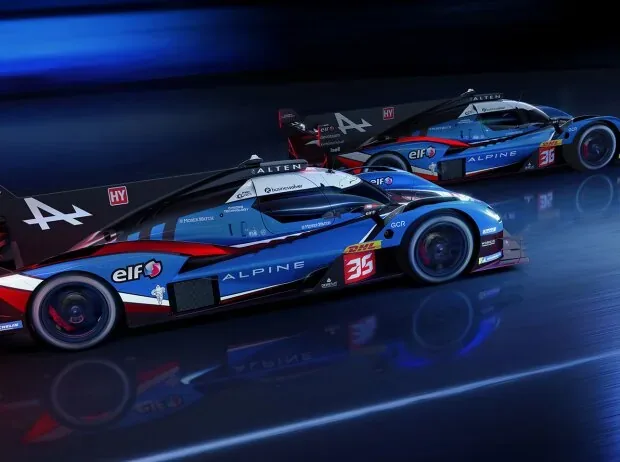
“Everything we said about our determination to perform this year and to continue the performance and improvements we showed at the end of 2025 makes even more sense now and is becoming an absolute priority.”
“So what did we do? We all gathered around the coffee machine in the factory and experienced this moment together. I announced this difficult news, but the team’s reaction was fantastic.”
“Without giving too much away: The team applauded – simply to show its determination and will to perform together. We are writing our future together, even more than before, whether individually, personally, or collectively.”
“So there is a basic premise: The program comes to an end at the end of the 2026 season. It makes no sense to try to understand the reasons for it, as that would only waste time and energy. We must focus on our goal, which was already clear anyway, but has now become even clearer and which we must write together.”
Question: “Does such news bring the team members closer together from a human perspective?”
Sinault: “From a human perspective, I do believe that something like this will bring us even closer together and create a dynamic. I’m not saying it’s good news. Of course it isn’t, but it creates an incredible desire in us that is even stronger than before.”
Question: “Could the car continue to run after the 2026 season, entered by a private team or a customer team?”
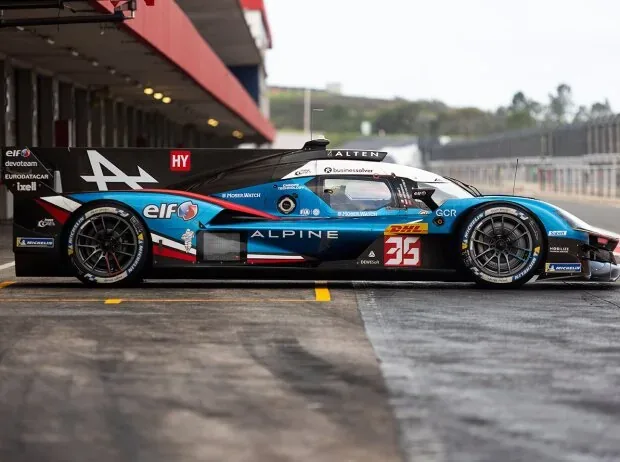
Sinault: “To be honest, it’s not up to me to provide an answer to that question. The car is homologated and approved until at least 2029. So yes, physically the car could run and potentially continue to participate in the World Endurance Championship and the 24 Hours of Le Mans.”
“But I am not the only one making this decision. There are many parameters and people who would have to come together to define the framework for how things proceed.”
“Even though I, as a company manager and team principal, have to think about the future, for me, the next races and Le Mans are the immediate future. In three months, we will be at Le Mans. It is therefore essential that we are ready and fully mobilized.”
Read more WRC Safari Rally 2026: Five-way lead for Toyota on Day 1
Question: “How is the team approaching the start of the season in this context? Do you feel that the drivers are motivated and focused despite everything? Have you managed to convey that to them?”
Sinault: “Yes, and I didn’t necessarily convey that to them. They also convey it to me. For me personally, my relationship [with the team members] is extremely important because they also challenge me. The news is in the past. I wouldn’t say it’s digested, but it has been announced. We are now fully focused on what we have to do.”
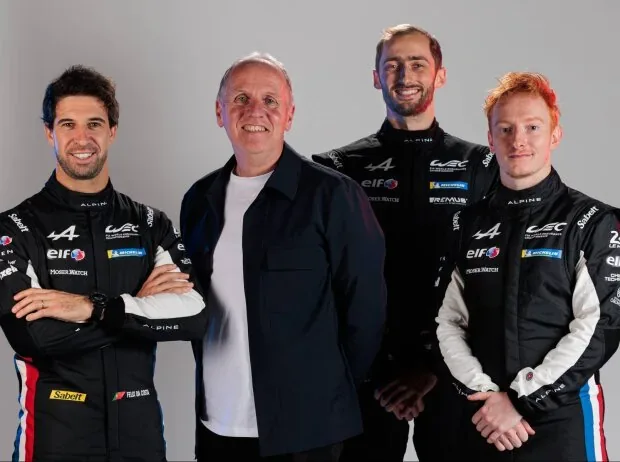
“The mistake we must avoid is overdoing things and overreacting. If I have a message for everyone, it is that I am convinced of their qualities and the talent of each individual. That’s why I tell them: Don’t overdo it.”
“Let’s stay on the same course we set at the beginning of the year, before the announcement. We have everything we need to do well. Let’s make the most of the existing ingredients and the work we’ve done to perform well this year and at Le Mans.”
Question: “At the team presentation, however, there was a feeling that between the lines there was a desire to prove, despite everything, that you are here to win. It almost felt like you wanted to say: ‘We’ll show them what we can do,’ didn’t it?”
Sinault: “Yes, you’re right. You felt that because we probably showed it. Deep down, it’s human to want to show even more. But we must not fall into extremes or exaggerations, because that could be counterproductive. That’s why I’m trying to dampen these heightened emotions by saying: Let’s stay on the course we set at the beginning of the year.”
Question: “How do you see the WEC today? Is the end of the Alpine program following Porsche’s exit a warning signal for the future of the Hypercar category?”
Sinault: “Those are certainly