





(Motorsport-Total.com/Motor1) – Sometimes automotive history writes very special anecdotes. When one thinks of the legendary former Chancellor Helmut Schmidt, associations such as Hanseatic nobility, the Hamburg terraced house in Langenhorn with its basement bar, a constantly present menthol cigarette, and razor-sharp political analyses immediately come to mind.
Read more Ralf Schumacher: Isack Hadjar is better than Verstappen would like
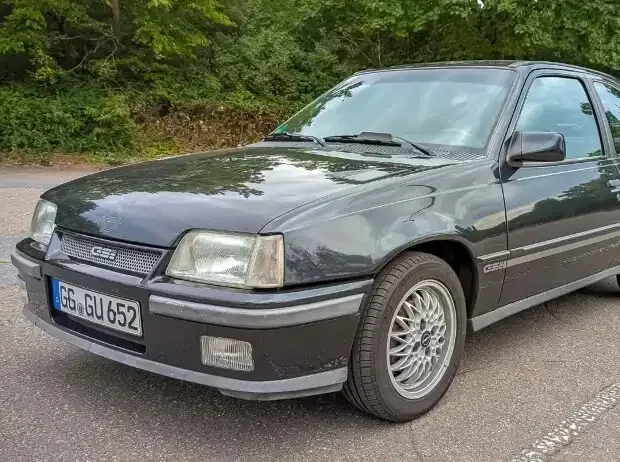
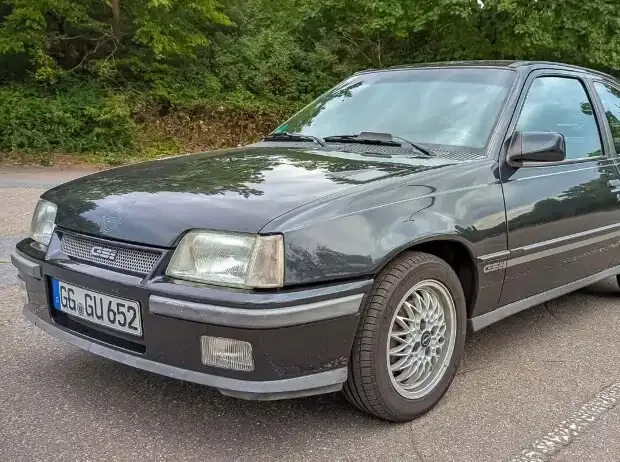
A dignified Omega, a Senator, or perhaps a classic Mercedes S-Class would fit perfectly into this picture. But far from it: Schmidt was indeed transported as Chancellor in a 350 SE and 450 SE. But privately, the SPD politician opted for Opel, close to the people. Mostly it was the Rekord. With one exception: The last private car of the great statesman is a genuine, impractical compact sports car from Rüsselsheim. A deep black Opel Kadett E GSi from 1991.
Terror of the Golf class with wind tunnel diploma
The last generation of the Kadett saw the light of day in early 1984. The Opel engineers pursued two extremely ambitious goals in the development of the E type: consistent lightweight construction and outstanding, aerodynamically favorable aerodynamics. After more than 1,200 hours of fine-tuning in the wind tunnel, the new compact car had a flowing, almost teardrop-shaped body, which simply did not exist in this aerodynamic quality in the compact car segment until then.
Even the modest basic model achieved a sensational drag coefficient (cW value) of 0.32, reaching areas previously reserved for purely futuristic concept studies. The sporty GSi topped it all: through targeted aerodynamic modifications such as special bumpers, sills, and a rear spoiler, it achieved a cW value of 0.30. The specialist press was enthusiastic, and an international jury of motoring journalists quite logically named the Kadett E “Car of the Year 1985”.
A Hamburg original on fast soles
What impulse exactly moved the then 72-year-old former Chancellor in the last Kadett E production year of 1991 to acquire precisely this sporty top model of the series remains a charming secret. Schmidt bought the black metallic model brand new in his hometown of Hamburg. It was the special “Champion” model, which came standard with stylish sports seats and high-end equipment. The price of a normal GSI at the time without extras: 27,235 Marks.
Photo gallery: Opel Kadett E GSi (1991) “Helmut Schmidt”
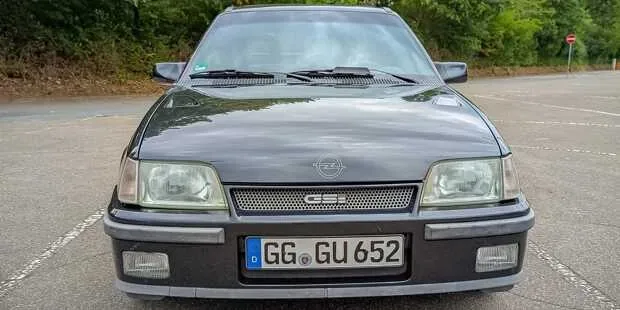
Under the hood of the Chancellor’s GSi works the proven in-line four-cylinder with 1,998 cubic centimeters of displacement. The engine produces 115 hp (85 kW) with a maximum torque of 170 Newton meters. What sounds rather modest today was still something in 1991. Since the Kadett GSi weighs only about 965 kilograms, the Rüsselsheim car sprints agilely forward. The top speed is a proud 200 km/h – those looking for even more power had to opt for the legendary GSi 16V with four-valve technology, which even reached 220 km/h.
Between Langenhorn and Brahmsee
Together with his wife Loki, Helmut Schmidt used the nimble compact car as a private daily companion for five full years. The two Hamburg residents primarily used the car for regular trips from their residence in Hamburg-Langenhorn to their beloved Schleswig-Holstein holiday home on Brahmsee. The Chancellor himself was usually at the wheel, stylishly wearing his traditional Elbe pilot’s cap, a burning cigarette in his hand, and Loki in the passenger seat.
Read more Haas asserts: We don’t take drivers just because of their nationality
The Kadett GSi perfectly matched the down-to-earth yet strong-willed demeanor of the couple. There was no need for a big executive car to glide stylishly and swiftly through the north. An agile, aerodynamic Opel would do just fine. Especially since the Schmidt-Opel maintained its agility over the years. After getting in, the digital cockpit immediately stands out, along with rather plush sports seats.
And the typical sound of the 2.0-liter engine. Its 170 Newton meters of maximum torque don’t sound like much in today’s turbo-electric show-off times. But they are available at just 2,600 revolutions. In fact, the exactly four-meter-long car really gets going when the digital bar of the tachometer reaches 3,000. Contemporary test values stated exactly nine seconds for the sprint from 0-100 km/h, which is still good enough to keep up today.
Terminus Rüsselsheim
In the Opel city of Rüsselsheim, the beautiful Kadett GSi caused a stir. At the traffic light, my neighbor proudly told me he had owned all versions of the E-GSi, including the 16V. He was clearly surprised that this car once belonged to Helmut Schmidt.
Today, this very special piece of contemporary history has been excellently restored and is a proud part of the Opel Classic collection. Occasionally, the black Chancellor’s Kadett leaves the hallowed halls for classic events and delights vintage car fans. Incidentally, anyone who takes a look at the interior will be astonished to find that, despite Schmidt’s unmistakable tobacco consumption, the interior today smells absolutely neutral and fresh. A true automotive monument to Hanseatic serenity.
- Formula 1Explained: Are F1 drivers really remotely controlled by AI in the car?
- IndyCarRLL reverts to two cars in 2027 – Mick Schumacher facing team change?
- MotoGPDucati CEO defends Spanish duo: “Don’t choose by passport”
- Formula 1Ralf Schumacher: Isack Hadjar is better than Verstappen would like
Opel old metal in the driving report:
Opel Manta B (1977): On the road between pop culture and reality
Time travel: Opel Corsa B (1993-2000) in the driving report
Read more Explained: Are F1 drivers really remotely controlled by AI in the car?