








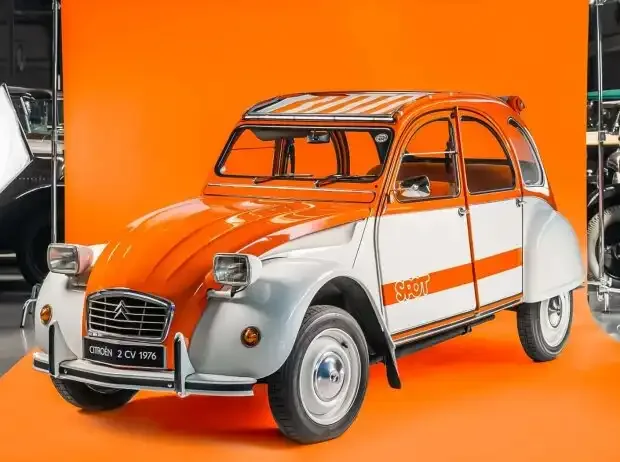
(Motorsport-Total.com/Motor1) – Sometimes a simple idea is enough to make a familiar car look completely new. That’s exactly what Citroën achieved in the mid-1970s with the Citroën 2CV Spot. The 2CV was by then well established, robust, affordable, and ubiquitous. But also already outdated. Yet with this limited series, it suddenly got a completely different appearance.
Read more Formula 1 in Germany? This is what drivers, experts and Nürburgring say
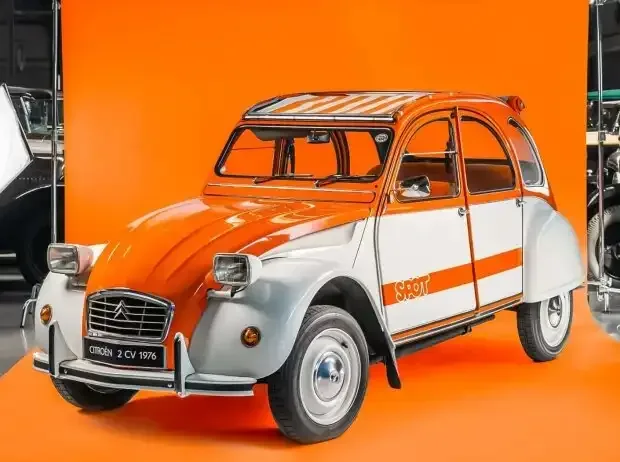
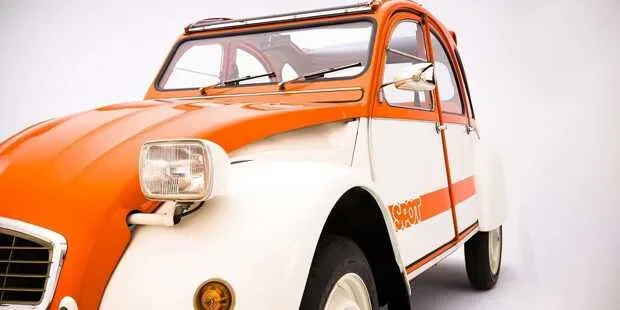
The impulse came as early as 1974 from the studio of Serge Gevin. Two designs were up for selection, and the bolder variant was chosen. “Orange Ténéré” meets “Blanc Meije,” plus a stripe pattern that resembles beach furniture more than commercial vehicles. The result looks light, almost playful – and that was exactly the appeal.
Some time passed before the market launch. In early 1976, a prototype was photographed on the coast of Normandy, staged rather casually. Shortly thereafter, production started at the Levallois plant. By the way, the name “Spot” was not the first choice but prevailed after “Transat” was unavailable due to trademark issues.
Technically, everything remained familiar. The base was the Citroën 2CV 4 with a 435 cubic centimeter two-cylinder engine. More than 100 km/h top speed and about 5.4 liters consumption were solid figures. The decisive factor was the appearance anyway: two-tone body, striped folding roof, matching door panels, and the striking interior in orange. Even details like the hubcaps – taken from the Dyane – fit into the overall picture. The price was 13,600 Francs, thus within the range expected for a 2CV.
The real surprise came at the market launch on April 10, 1976. Citroën made the introduction an event throughout the dealer network. And customers reacted immediately. The 1,800 units were sold within a few days, in many places even faster than dealers could respond. This struck a chord with the brand.
Read more Trainings WEC Imola 2026: Poller massacre and Ferrari mania
Photo series: 50th anniversary of the Citroen 2CV Spot
The success was not limited to France. The Spot was also well received in other European markets. Depending on the country, the technology varied slightly – for example, with the stronger engine of the Citroën 2CV 6 in the UK and Switzerland. But the basic concept remained unchanged: a familiar car with a clear, distinctive line.
Today, 50 years later, the 2CV Spot has secured its place in the classic car scene. In 2026, it will be the focus at several events. At the big 2CV meeting in Villiers-sur-Loir, thousands of vehicles are expected, including many special models. And the Spot also plays a prominent role at the Epoqu’auto show in Lyon – it even adorns the official poster.
Organizations like L’Aventure Citroën take care to keep such chapters of brand history visible. Because the 2CV Spot was more than just a color variant. It was the beginning of an idea: to use limited models deliberately as an emotional extension of a production car. Today this is standard. In 1976, it was a small break with routine – later famous “2CVs” like the Charleston would follow.
- Formula 1Frentzen advises Verstappen: Better to quit if motivation is lost!
- Formula 1Red Bull crisis: A promotion and a newcomer from Racing Bulls
- Formula 1“Unacceptable”: Bearman criticizes Colapinto and demands respect
- 24h NürburgringLivestream 24h Qualifiers Nürburgring: The races with Max Verstappen live!
More 2CV content:
Citroen TPV/2 CV A (1939): How radical the original 2CV was
Time travel: On the road in the Citroën 2CV
Read more Livestream 24h Qualifiers Nürburgring: The races with Max Verstappen live!