







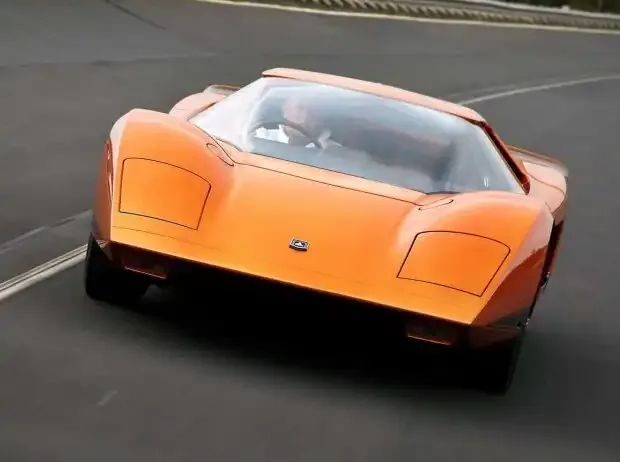
(Motorsport-Total.com/Motor1) – The future used to be better too: In 1969, Holden presented the Hurricane Concept, an extremely flat, futuristically designed prototype that carried the internal code name RD-001. This vehicle was created as a technical laboratory on wheels and is considered the very first concept car in the history of the Australian automobile brand.
Read more Fernando Alonso: No future announcement in Madrid
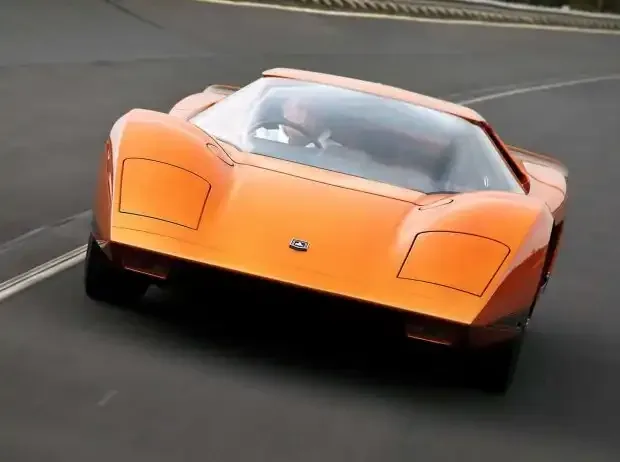
The Hurricane was developed to explore the car of tomorrow, which is why it went down in history as an extraordinary study of the late 1960s.
At the end of the 1960s, the management of the Australian General Motors subsidiary Holden decided to build an experimental vehicle that radically differed from all previous production models of the brand. Other GM brands such as Vauxhall or Opel were also allowed to experiment during this time, resulting in the Opel GT.
But back to Holden: The goal was not to build a production-ready super sports car, but to create an experimental platform to test new ideas in the areas of design, materials, electronics, and vehicle architecture. The ambitious project was entrusted to designer Ken Genest under the leadership of Don DaHarsh and celebrated its official world premiere in 1969.
Not even one meter high
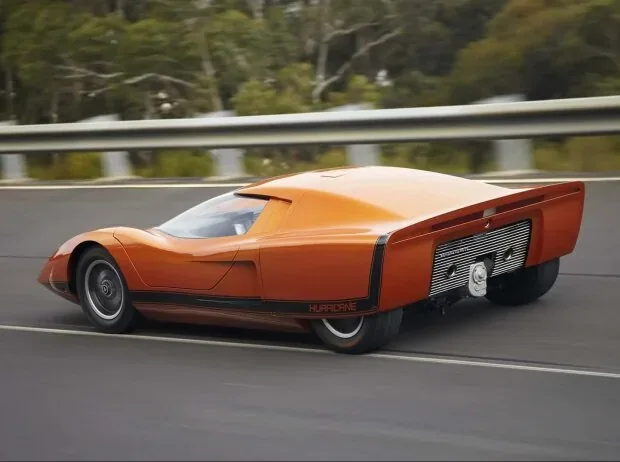
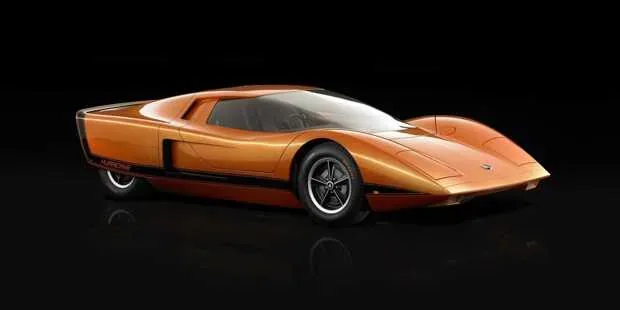
The visual appearance of the Holden Hurricane immediately attracted international attention. The fiberglass-reinforced plastic body rested on a steel tubular frame and featured an extremely low, wide wedge shape. This model anticipated a design language that became the trademark of legendary super sports cars in the 1970s.
With an overall height of only 99 centimeters and an overall length of about 4.11 meters, the Hurricane almost looked as if it were lying directly on the asphalt. Its proportions were deliberately extreme, characterized by a sharply inclined windshield, completely smooth exterior surfaces, and a sharply defined front end that conveyed dynamism even when stationary.
Many experts see the Hurricane as a pioneer of the wedge shape, inspiring later design icons such as the Lancia Stratos Zero, the Ferrari 512 S Berlinetta Speciale, or the Maserati Boomerang.
Photo series: Futuristic wedge shape from 1969: The Holden Hurricane Concept in pictures
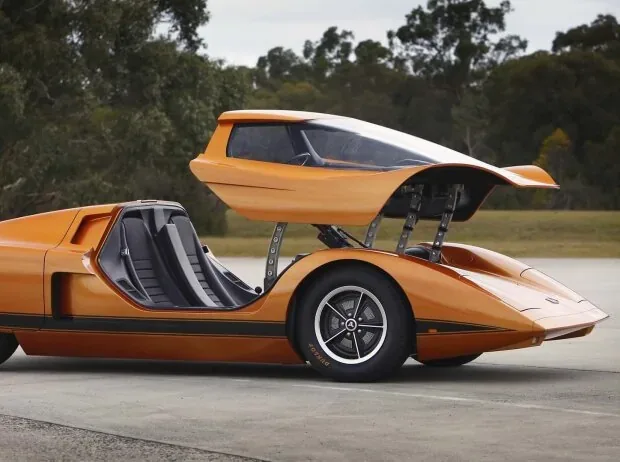
One of the most fascinating features of the Holden Hurricane was the access system to the interior. Instead of conventional doors, the designers used a large, electromechanically operated roof module. This glass dome lifted up at the push of a button and swung forward over the front wheels. At the same time, the two passengers rose on special seats and tilted slightly outward to facilitate getting in and out of the low cockpit.
Read more Lewis Hamilton vs. Charles Leclerc: A Rivalry Without a Grand Prix
Digital, but 66 years ago
In the cockpit, the Hurricane replaced the then usual analog gauges with a digital instrument display, which was a real rarity in 1969. One of the most forward-looking innovations was the so-called Pathfinder system. This early precursor of modern navigation systems used magnetic signals embedded in the road surface and arrow indicators on the dashboard to guide the driver on the right path.
Moreover, there was a rearview camera on board, whose image was transmitted to a black-and-white monitor in the center console, anticipating modern parking aids by many decades. An automatic climate control system called Comfortron kept the interior temperature constant, while a radio with automatic station search rounded off the comfort.
The technical heart was a 4.2-liter V8 engine with a four-barrel carburetor placed behind the seats, delivering its power to the rear wheels via a four-speed transaxle manual transmission. The 253-cubic-inch mid-engine produced about 193 kW (260 hp) and accelerated the study from 0 to 100 km/h in about five seconds.
This engine was one of the few components of the project that directly made its way into series production and was later installed in hundreds of thousands of Holden vehicles. The chassis also offered unusual detailed solutions, including oil-cooled disc brakes on the front axle, which were cooled by their own oil coolers to withstand extreme loads.
Despite the enormous development effort, the Holden Hurricane remained a one-off. Many of the installed technologies proved too expensive or too complex for mass production at the time. Nevertheless, the prototype fully fulfilled its purpose as a testbed for electronics and lightweight materials. In 2011, the unique one-off was completely restored to its original drivable condition after years of extensive restoration by Holden engineers.
More forgotten studies:
Bizzarrini Manta (1968): The Manta before Opel
Forgotten studies: VW Golf TDI Hybrid (2008)
Read more Seat before discontinuation: Manufacturer comments on model update and end of the brand