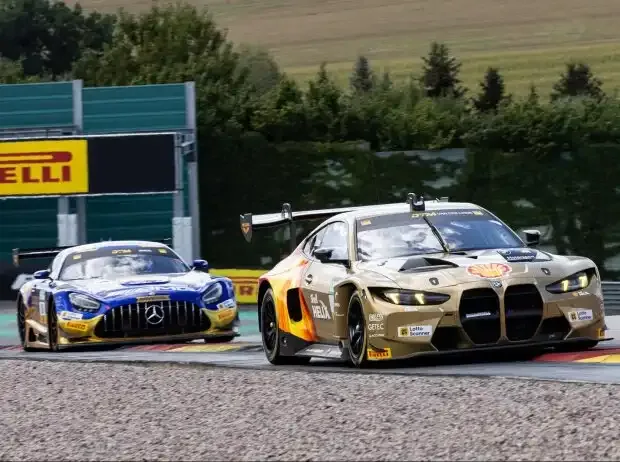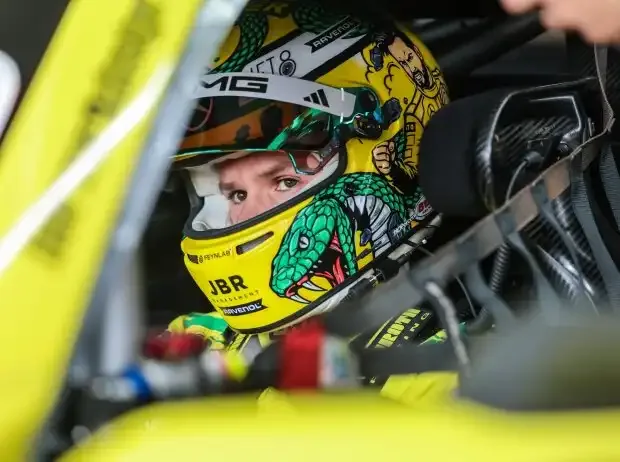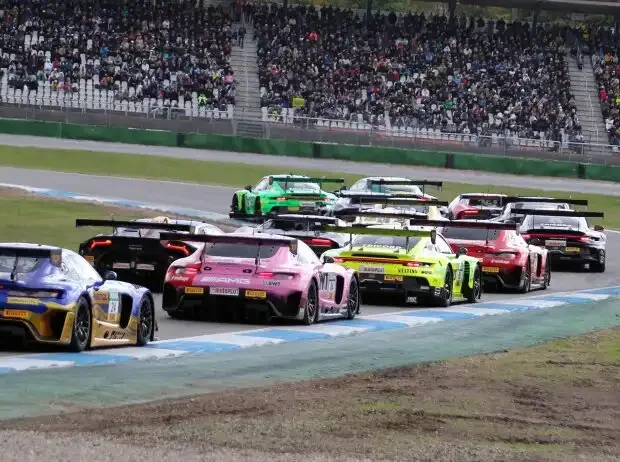

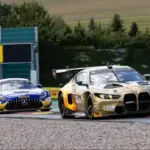

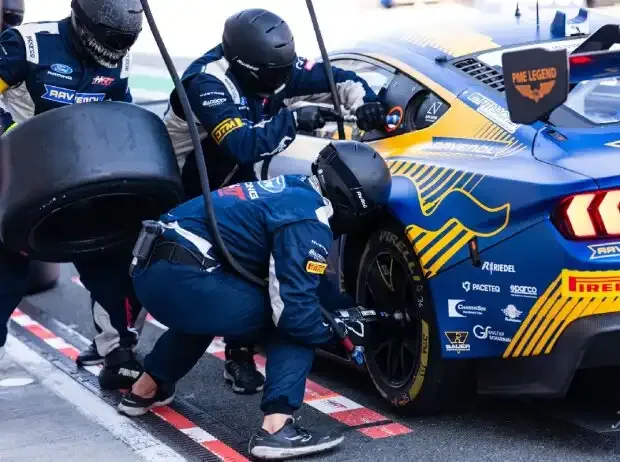
– HRT made an enormous step in pit stops during the past DTM weekend in Oschersleben: While the Ford Mustang team needed between 8.5 and 10.3 seconds for the podium places of Arjun Maini and Finn Wiebelhaus at the Norisring, HRT’s stop times in Oschersleben suddenly ranked among the best teams in the field, ranging from 6.1 to 6.6 seconds.
Read more Ambitious goal: Formula 1 cars are to become 80 kilos lighter
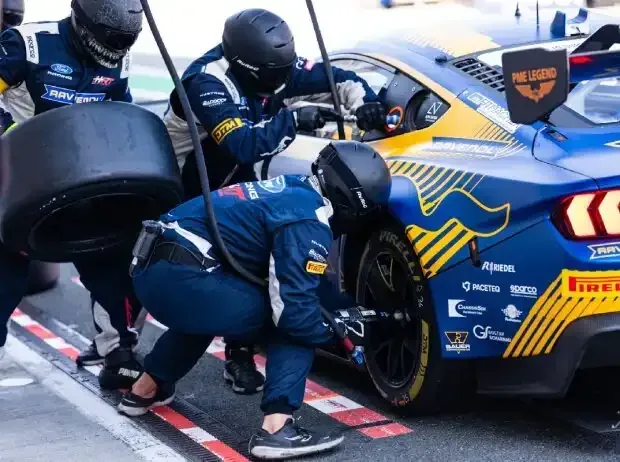
This also raised eyebrows among the competition, as until now in 2026, HRT’s stops were usually between seven and nine seconds. But how was this leap possible? “We restructured the pit stop topic, including responsibilities,” explains HRT team boss Ulrich Fritz, who is considering a larger restructuring of the team in winter.
Recently, the former DTM head at Mercedes-AMG has been relying on Andreas Riedl for pit stops: He is the former DTM race engineer of Ralf Schumacher, who supported the ex-Formula 1 driver from 2008 to 2012 at the then Mercedes works team HWA.
Former race engineer of Ralf Schumacher as pit stop specialist
“Andi was with me for years at HWA, was responsible for pit stops there – and he was now with another team,” says Fritz. “I said: I need someone who takes full responsibility for pit stops on short notice. And this opportunity arose.”
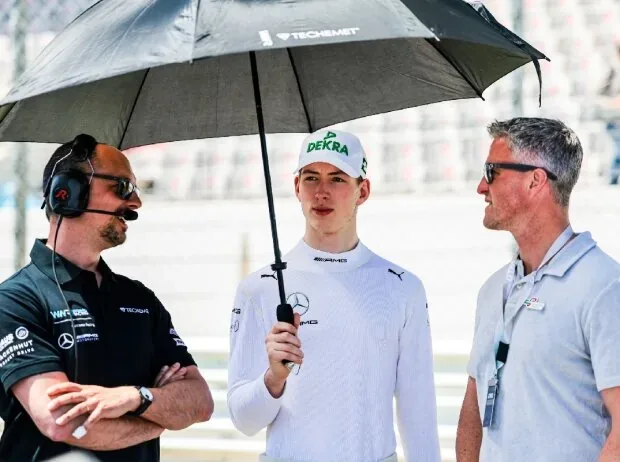
Riedl was instrumental over ten years ago in raising DTM pit stops to top level and acted as project manager for the Mercedes-AMG GT3 Evo at HWA from 2019 to 2022. In 2022 and 2023, he was race engineer for David Schumacher’s Winward Mercedes in the DTM – and followed him to HRT. After a short intermezzo as chief engineer of the Rowe racing team, Riedl recently returned to the Ford team.
Despite the great progress, Fritz currently speaks of a project until the end of the year. But how can the leap be explained? “I’m not saying it was bad before, but sometimes you have to set new impulses to get fresh energy,” explains Fritz. “In the end, it also has a lot to do with self-confidence when the car comes – and the whole crew stands in front of the car thinking: This will definitely go wrong again.”
Training method changed, experiments with the material
Therefore, a new approach was chosen and the training method was changed. “We no longer train so much in one day,” Fritz goes into detail. “We train less on many days to manage the workload for the team. And we have also revised one or two movement sequences.”
Besides that, it played a big role that the mechanic on the left impact wrench, who was injured and out at the Norisring weekend on short notice, was fit again in Oschersleben. “It also went wrong at the Norisring because this position was not doubly staffed,” reveals Fritz. “Then the gunner on the right jumps in – and that is a different movement sequence.”
Read more Ratel: “We have to rethink GT3, just like the WEC hypercars for 2030”
To be better prepared for such incidents in the future, the team now also lets the backup crew train pit stops intensively.
And the material was also refined in the details. “We experimented a lot – recently also with the socket you put into the impact wrench,” Fritz gives insights. “If you go to the wheel and don’t hit properly or cock it, you immediately lose one or two seconds.”
Through adjustments to the material, the wear, which HRT struggled with massively, could be reduced.
Ford Mustang: Deviation from FIA homologation due to DTM stops
In general, the Ford Mustang GT3 is not an easy car regarding pit stops: It not only has a long wheelbase, which increases the mechanics’ walking distances, but is also technically not optimally suited for performance stops in the DTM.
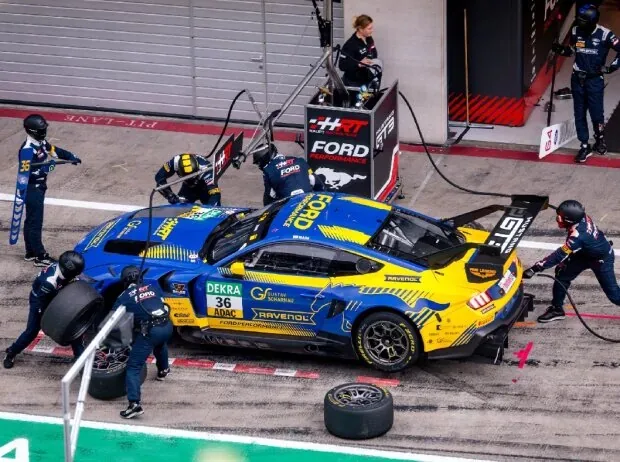
“I believe that BMW’s wheel locking system is the absolute benchmark,” says Fritz. “And I think we certainly have one or the other disadvantage. We have already compensated for a few disadvantages by changing the position of the air lance at the beginning of the year.”
“A one-hit wonder is not a total victory”
The attachment point of the air lance, which ensures that the vehicle is lifted during the stop, has not been at the rear of the car since 2026 in the DTM, but in front of the rear side window. The deviation from the FIA homologation was made possible through the DTM’s additional homologation. The Evo package with the new rims, which are no longer as sharp-edged as the previous model, also had a positive effect.
But is the HRT crew, which was sometimes the reference in the DTM field during AMG times, now as strong as in their best days? “A one-hit wonder is not a total victory,” warns Fritz and puts on the brakes. “It went very well now, but you know it: You have a new coach and everything flows – and three weeks later you struggle again with old problems that you might not even be able to influence.”