



(Motorsport-Total.com/Motor1) – In 1991, the world was undergoing political and social change – and a fresh breeze was also blowing through the automotive market. Increased environmental awareness and rising customer demands called for new concepts that emitted fewer pollutants while offering more comfort. Opel responded at the time with the Astra F, which celebrated its premiere in Germany exactly 35 years ago.
Read more McLaren puzzles before Grand Prix: Has Ferrari cracked the tire strategy?
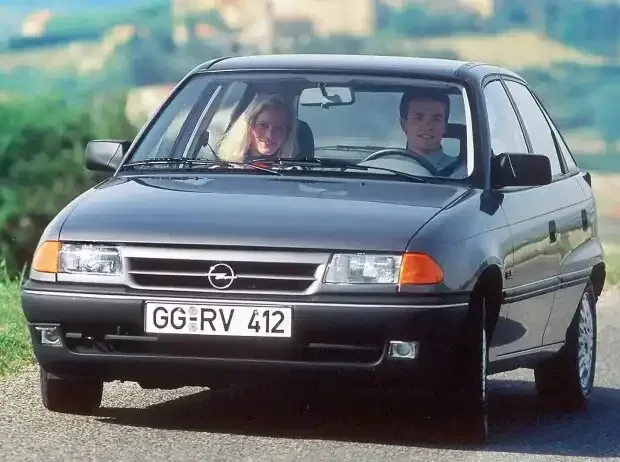
The seventh generation of the compact class said goodbye to the traditional Kadett name and adopted the designation of its British Vauxhall counterpart. The successful symbiosis of resource conservation, enormous space, and safety hit exactly the right note with customers: between 1991 and 1997, around 4.13 million units rolled off the production line, making the Astra F to this day the best-selling model from Rüsselsheim.
Opel offers model variety for every taste
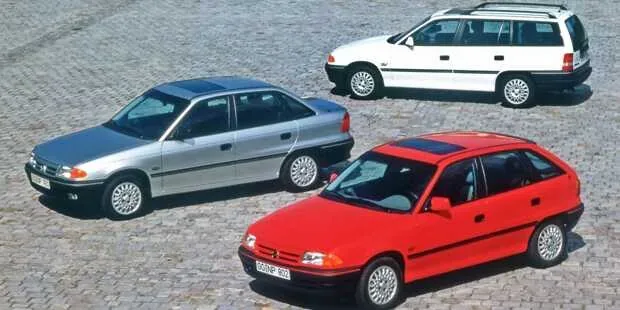
When the car rolled into dealerships in autumn 1991, Opel immediately offered a wide range of body variants. Interested buyers could choose between a five-door hatchback, the spacious five-door caravan, and the sporty three-door Astra GSi version. In spring 1992, a classic four-door sedan followed.
In 1993, a convertible manufactured by the Italian coachbuilder Bertone completed the model family. Under the hood, no wishes were left unfulfilled either, as customers could choose between petrol and diesel engines; all four-cylinder engines came with state-of-the-art exhaust aftertreatment systems for the time.
The petrol engines, with up to 150 hp and displacements between 1.4 and 2.0 liters, featured a three-way catalytic converter, while the 1.7-liter diesel with up to 82 hp was equipped with a specially developed diesel oxidation catalyst.
Opel Astra F with motorsport genes
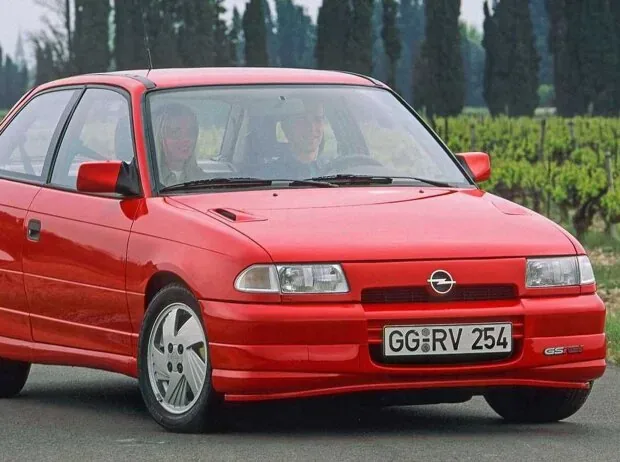
Particular attention was drawn to the top model Astra GSi, offered exclusively as a three-door, which boasted an outstanding drag coefficient (cW) of 0.30 at the time. The “sports device” was available either with a 115 hp two-liter engine or in the 150 hp version with 16 valves and two overhead camshafts.
Photo series: Opel Astra F (1991 to 1998)
The GSi 16V was also the first vehicle in the Astra segment to be equipped with electronic traction control. This advanced technology made the compact car a real force in European motorsport. In the very first season in 1993, Opel secured the manufacturers’ world championship title in the “FIA Cup for Touring Car Manufacturers (2 liters).” Another major success followed in 1997 when an Opel Astra GSi 16V won the Group N victory at the Veedol Endurance Cup at the Nürburgring.
Space miracle with exemplary safety
Besides dynamics, the developers focused heavily on occupant protection. With the “Opel Safety System,” the Astra F set new standards in the compact class. Double-tube reinforcements in the doors protected against the effects of side impacts, while integrated seat ramps prevented submarining under the belt in frontal collisions, and belt tensioners securely fixed the body.
In 1994, passive safety was significantly increased again by the standard introduction of full-size airbags for driver and passenger. The “full size” feeling in the interior was also to be taken literally: compared to the predecessor model Kadett E, the designers moved the windshield 74 millimeters forward. The result was a noticeable gain in space with almost identical exterior dimensions, increasing head and knee room by up to 50 millimeters.
Innovations in electronics and recycling
The Astra F impressed not only with plenty of space and safety but also served as a true innovation carrier in the field of onboard electronics. In the early 1990s, the new “Multi Info Display” at the top of the center console was the first worldwide to combine the displays of radio, onboard computer, and control indicators in a central field of view.
Read more Mick Schumacher on Washington race: «Huge opportunity for IndyCar»
Another novelty in the segment was the “Clean Air System,” which reliably protected passengers from pollen, dust, and dirt particles. To meet the increased responsibility for the environment, Opel developed a specially designed, resource-saving recycling process. Large parts of the instrument panel, center console, seats, and interior trim were made from recyclable polypropylene. Vehicle parts such as wheel arch trims and bumper carriers were also made from recycled material.
Opel Astra F as a pioneer of electromobility
A little-known chapter of the model history is that the Astra F also served as an important technology platform for alternative drives. Between 1993 and 1997, Opel launched the “Astra Impuls III,” the company’s first major electric car experiment. On the Baltic Sea island of Rügen, a fleet of ten vehicles completed a total of 350,000 test kilometers.
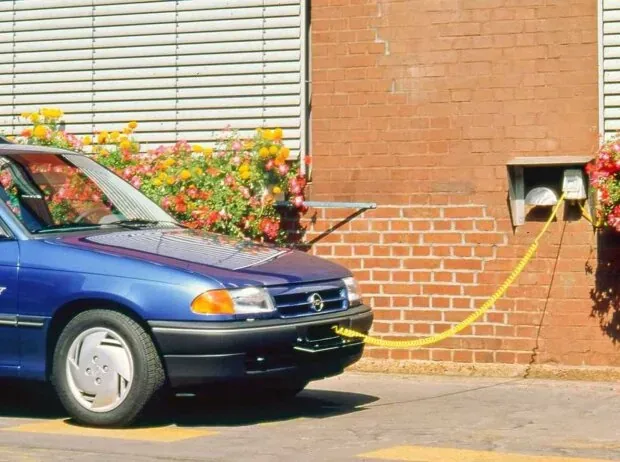
Powered by an asynchronous three-phase motor, five of these vehicles (61 hp) drew their energy from a powerful nickel-cadmium battery, while the remaining five (57 hp) were equipped with a sodium-nickel chloride high-energy battery. The electric cars reached speeds of 120 km/h and ranges of up to 150 kilometers. Due to the positive results, the large-scale test was finally extended between 1997 and 1999 to the cities of Aachen, Maastricht, and Liège.
The bridge to technological present
What began exactly 35 years ago with the Astra F finds its consistent continuation today in the latest generation designed and built at Opel’s headquarters in Rüsselsheim. The current Astra picks up the innovative spirit of its ancestor and transfers it into the modern age.
The fully electric Astra Electric now enables up to 454 kilometers of purely electric range (according to WLTP) without charging stops, with a combined energy consumption of 15.3 to 15.8 kWh per 100 kilometers and 0 g/km CO2. The further developed plug-in hybrids also allow locally emission-free driving in everyday life. Their weighted energy consumption amounts to 12.6 to 13.0 kWh of electricity plus 2.2 to 5.6 liters of petrol.
The drive program tailored for every application is completed by efficient hybrid and 1.5 diesel alternatives, each offering a fuel consumption of 4.9 to 5.1 liters. Beyond engine technology, the developers have also raised design and comfort to a new level.
Highlights include the first-ever illuminated Opel lightning bolt at the front, standard Intelli seats with ergonomic recess, and the adaptive, glare-free Intelli-Lux HD light of the latest generation with over 50,000 pixels as well as dynamic light animations.
At the same time, the engineers remain true to the sustainability idea of 1991 by processing numerous recycled fabrics in the interior of the new Astra Sports Tourer. Thus, the compact class bestseller shines brightly and fully up to date for customers even 35 years after its world premiere.
- Formula 1Formula 1 live ticker: The race in Zandvoort live!
- Formula 1“Will start whining soon”: Verstappen taunts Russell in vain
- Formula 1McLaren puzzles before Grand Prix: Has Ferrari cracked the tire strategy?
- Formula 1No Verstappen talks, but: Does Wolff still have hope for the alliance?
This might also interest Astra fans
Opel Astra Sports Tourer Hybrid (2026) in test: Totally normal
Opel Astra facelift (2026): Fresh compact lightning bolt in test
Read more «Wills start whining soon»: Verstappen pokes at Russell in vain