




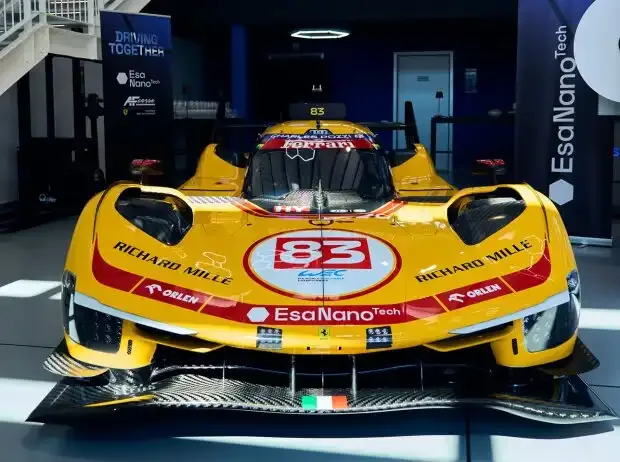
– April 7, 2026, was a significant day for AF Corse. In Milan (Italy) on Tuesday, not only was the Ferrari 499P presented, with which the private team will compete in the 2026 season of the World Endurance Championship (WEC). As part of the presentation, a collaboration between AF Corse and ESA NanoTech was also announced.
Read more “Revolving door in management”: Expert identifies Aston Martin’s problem
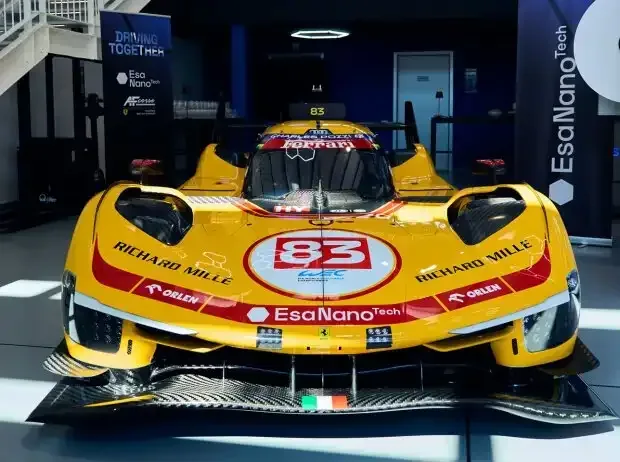
The yellow Ferrari with the starting number 83 was presented to the public exactly at the headquarters of the company founded by Leonardo Maria del Vecchio. The car will be driven by Robert Kubica, Yifei Ye, and Phil Hanson for the third year in a row.
In addition to the unveiling of the livery for 2026, the 499P of the AF Corse team led by Amato Ferrari also featured the new aerodynamics for the first time, which will be seen on the racetrack starting with the 6 Hours of Imola (April 17-19) this year.
Photos: Presentation AF Corse Ferrari 499P
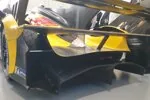
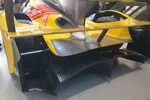
As is known, the FIA, ACO, and IMSA have agreed on a re-homologation of all LMH and LMDh prototypes competing in the Hypercar or GTP class this year. Therefore, manufacturers have worked on an aerodynamic recalibration over the winter.
Already during the presentation of the factory team, Ferdinando Cannizzo, head of the endurance department at Ferrari, had outlined Ferrari’s priorities. These go back, among other things, to the desire of the FIA, which aims for even more precise and detailed data with the new parameters to better define the Balance of Performance (BoP).
“The new homologation essentially comprises three aspects: the change of the wind tunnel from Sauber to Windshear, i.e., from Switzerland to the United States. A new data collection and analysis, including new measurement points in the wind tunnel. And a repositioning, a redefinition, of the performance window,” said Cannizzo.
“This required us to revise the setup of our car to meet the new performance window. We did this deliberately without using Evo jokers. Because we want to save those for the future. We therefore focused on detailed interventions,” explains the Ferrari engineer.
But what exactly does the change to the bodywork of the 499P and thus the change in aerodynamics mean? It can be noted that some aspects are not visible to the naked eye, as they are part of the flow management under the vehicle, while others have been slightly changed in shape and size without distorting the original design.
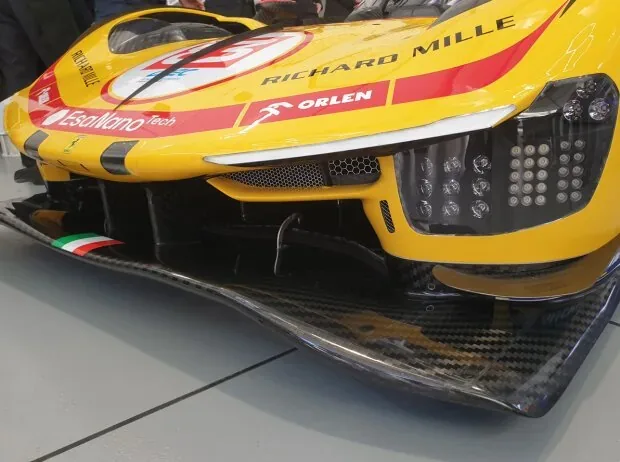
What is immediately noticeable when viewed from the front is the new design of the aerodynamic attachments mounted above the splitter on both sides – directly below the headlights. These two strips – known as “flicks” – are now shorter and more contoured.
Read more “Will be a culture shock”: Is HRT rookie Wiebelhaus facing an Ocon-like fate in DTM?
The “flicks” now lack the small support that had been present since their introduction in the summer of 2024, when the Italian manufacturer used the first (and at that time only) Evo joker. “We are still at the front and have worked on the underbody skirts and the air deflectors to optimize the balance of the car,” says Cannizzo.
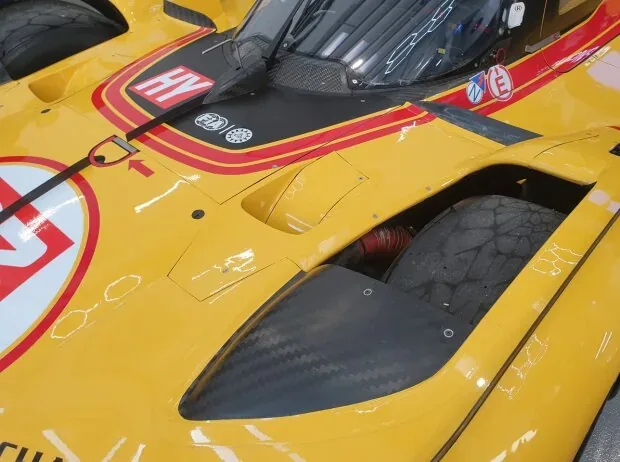
Further up, the way air flows around the wheel arches has changed. The two attachments that were fixed to the black carbon part in front of the fender opening were removed at the request of the FIA. This part of the car now forms a real aerodynamic surface, as Ferrari’s chief engineer explains. The two similar black skirts between the end of the wheel arch and the cockpit have also changed their shape.
Moving on to the middle section of the car, the air intakes on the sides have been slightly revised. But what the Ferrari engineers highlighted as particularly important is the new design of the engine cover, especially its rear part.
This area of the engine cover, between the diffuser and the rear wing, takes on a more concave shape and no longer has the two long attachments (similar to those on the front wheel arches), effectively generating more downforce at the rear.
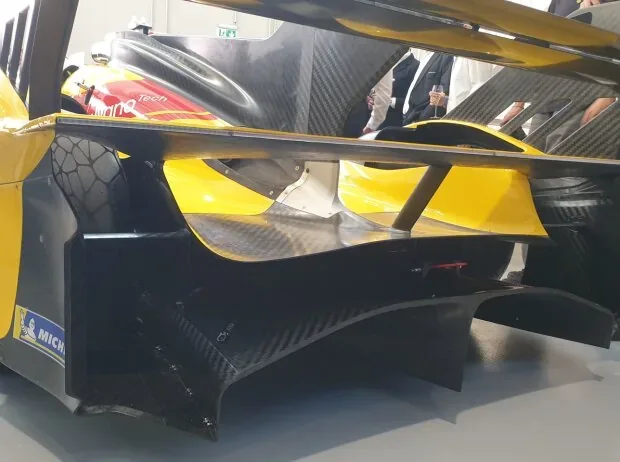
Looking at the ends of the rear wing with the larger strips, the supports now have significantly larger attachments next to the rear lights mounted in the upper part. Further down, the side panels behind the rear wheels have been redesigned and show a more curved shape. The airflow had to be optimized in this area of the car.
“These are the minimal but effective intervention possibilities that were available to us without changing the main surfaces of the car. This allowed us to continue positioning ourselves within the expected performance window,” said Cannizzo.
- MotoGPAfter summit meeting: No agreement for MotoGP “Concorde Agreement”
- Formel 1Career setback instead of top team: Blundell on his biggest wrong decision
- Formel 1“Revolving door in management”: Expert identifies Aston Martin’s problem
- Formel 1Red Bull instead of Mercedes: The risk Max Verstappen took with it
The new aero parts were tested last week during test drives in Imola. Further useful information will be collected during the Prologue in Imola (April 14), which serves as a warm-up for the first race weekend on the 2026 WEC calendar.
Read more The youngest …? Kimi Antonelli can still break these age records