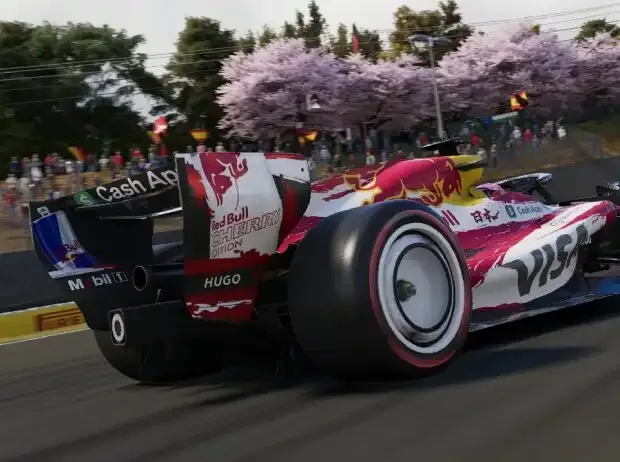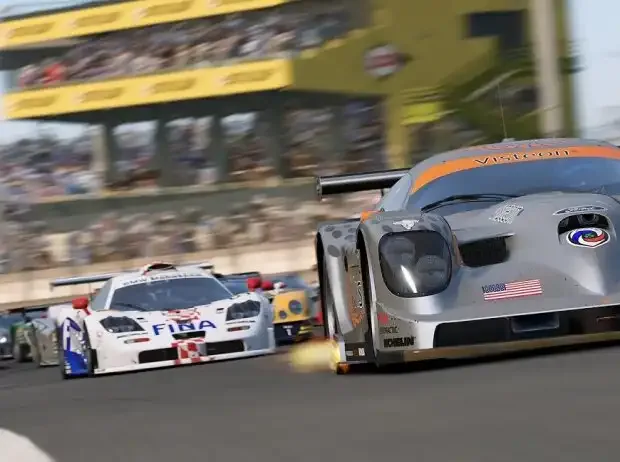






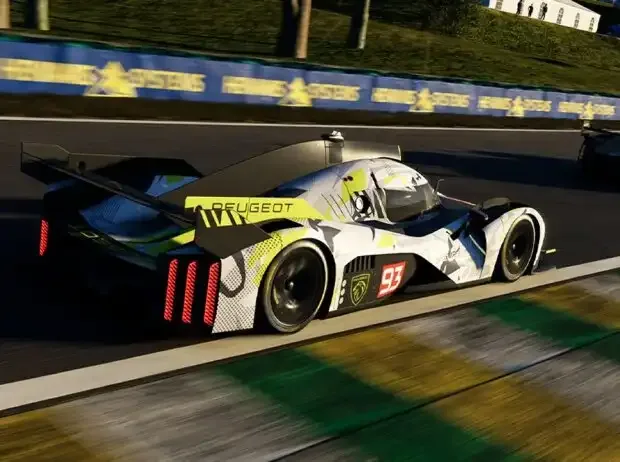
(MST/Speedmaniacs.de) – Three weeks after the release of version 2.1, Straight4 Studios made the update to version 2.2 available for Project Motor Racing on Wednesday afternoon, August 19, 2026.
Read more Opel Astra F (1991-1998): The best-selling Blitz turns 35 years old
With this, the British studio, whose active management founder Ian Bell has reportedly withdrawn from at the end of the first half of the year according to Companies House information, emphasizes that it continues to make great efforts to make the racing simulation more playable, stable, and credible in terms of driving behavior and visual representation.
The focus of the new version is on improving program stability as well as revisions with corrections and improvements spread across almost all areas. VR and triple-screen support leave alpha status with version 2.2 and can now be selected directly via the settings menu in beta status.
Driving behavior becomes more credible
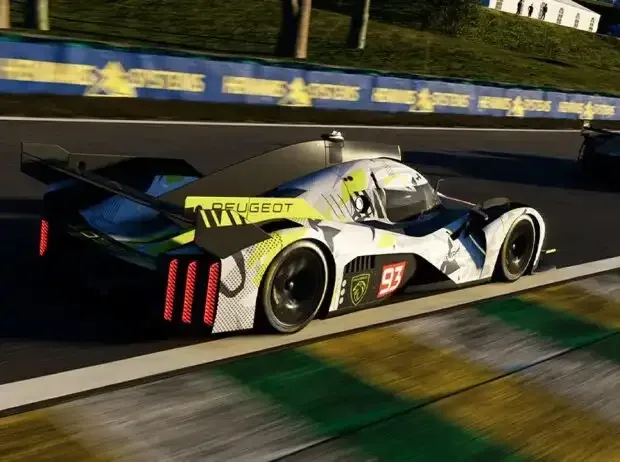
The main focus of the current version is the first comprehensive revision of the LMDh class. The changes made aim to significantly improve the driving behavior, responsiveness, and communication with the driver on the racetrack. These works include revisions to the internal combustion engine (ICE), the regeneration of the motor generator unit (MGU), brake-by-wire behavior, power delivery, aerodynamics, tires with a new tire model and 3 selectable tire compounds, suspension, chassis dynamics, and much more.
Simracers can expect a significant change in driving behavior with the LMDh vehicles. Although the revisions are very extensive overall, Straight4 Studios sees the current result more as “a first step rather than the final goal” and as a basis for future further vehicle-specific optimizations.
Read more McLaren puzzles before Grand Prix: Has Ferrari cracked the tire strategy?
Focus of further LMDh improvements already set
Specifically, a more precise power limitation of the internal combustion engine (ICE BoP) is planned here, with the goal of reducing or completely eliminating vibrations to an absolute minimum, improving turbo boost control and throttle control, as well as revisions regarding fuel consumption and overall energy management. The interaction and deployment strategy between the internal combustion engine and the MGU will also be further refined.
Work will also continue on the three tire compounds. In aerodynamic development, the focus will increasingly be on different, vehicle-specific aerodynamic models rather than pursuing a uniform solution for a broad vehicle class. The same is planned for the chassis and suspension systems, with individual models assigned and developed for each vehicle.
As can be seen from the notes in the changelog, a lot of fine-tuning has also been done in the GT3 class besides the LMDh. All details on the revisions and bug fixes in the respective areas can be viewed via the link.
Read more Mick Schumacher on Washington race: «Huge opportunity for IndyCar»