


(Motorsport-Total.com/Motor1) – Germans as well as Italians still like to remember the summer of 2006: The 2006 World Cup in Germany is legendary to this day as a “summer fairy tale”. The only cause for sadness is the lost semi-final against the eventual world champions Italy. At around the same time, Opel presents a car that will be successful in both countries.
Read more DTM 2026: Overview of the starting grid with drivers and teams
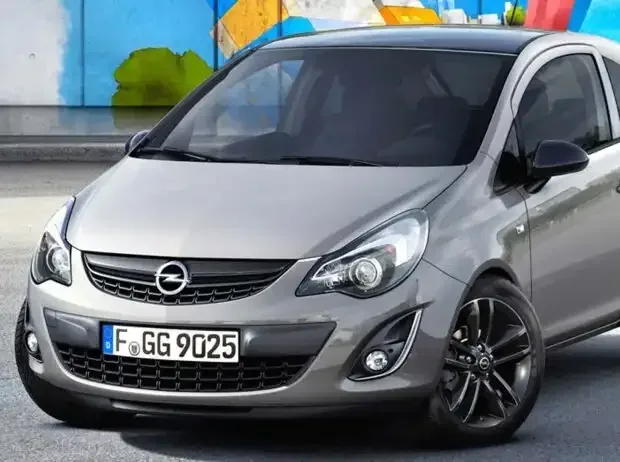
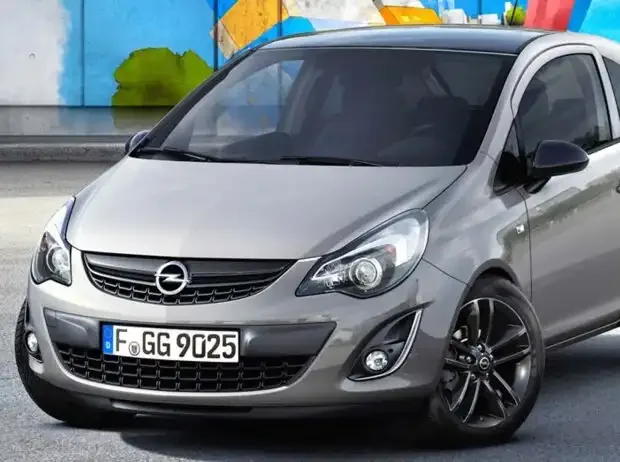
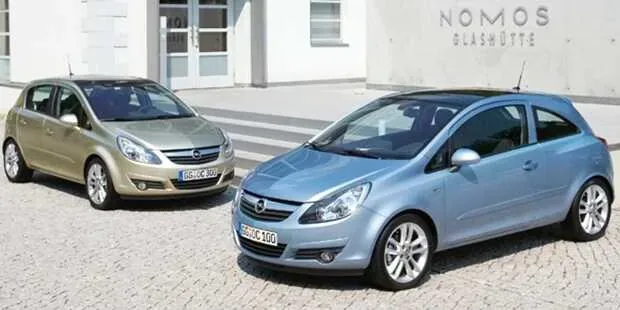
The Corsa D was first presented to the global public as the successor to the Corsa C at the British International Motor Show in London in July 2006. From October 2006, the small car was available at dealerships.
Compared to its predecessor, the Opel grew in all dimensions and was based on a platform developed jointly with Fiat, which was also used for the Grande Punto. The increase in length was particularly noticeable: at exactly 3,999 meters, the Corsa D scraped the four-meter mark, but was deliberately positioned just below it.
Three- and five-door models go their separate ways visually
As with the Corsa B, the three- and five-door models went their separate ways visually. The three-door model had a strong coupe-like design and was aimed at sport-oriented buyers, while the five-door model was designed as a spacious full-size car for everyday life and families. The increased space was particularly visible in the five-door variant. Depending on the body style, the curb weight was just over 1,1 tons. Despite the increased mass, fuel consumption remained at the level of its predecessor thanks to longer gear ratios.
At the start of sales, the engine range included several gasoline and diesel engines. The gasoline engines ranged from the 1,0-liter three-cylinder with 60 hp to 1,2- and 1,4-liter four-cylinders with up to 90 hp. For the diesels, there was a choice of two 1,3-liter CDTI units with 75 and 90 hp, as well as a 1,7-liter CDTI with 125 hp. Depending on the engine, five- or six-speed manual transmissions, an automated Easytronic gearbox, or a four-speed automatic were used.
Photo gallery: Opel Corsa D (2006-2014)
In addition, Opel offered variants for LPG operation, which enabled a greater total range thanks to an additional LPG tank. The 1.3 CDTI engine, jointly developed by GM and Fiat, was considered particularly efficient and had previously been named “Engine of the Year” in its displacement class.
Corsa OPC with 192 hp
At the same time, Opel expanded its sporty range. In 2007, the Corsa OPC followed with a 1,6-liter turbo engine and 192 hp, available exclusively as a three-door model. It accelerated to 100 km/h in just over seven seconds and reached up to 225 km/h. Also in 2007, the Corsa GSi joined the range. With 150 hp, a sporty chassis, and OPC influences, it was positioned between the standard models and the top version and was also available as a five-door model.
Read more One week before the start of the season: Ferrari star Charles Leclerc got married in Monaco
With the introduction of ecoFLEX technology, Opel also focused on efficiency. Start/stop systems and consumption-optimized drives significantly reduced fuel consumption and emissions. The 1.3 CDTI ecoFLEX was particularly economical, with a combined consumption of 3,3 liters of diesel per 100 kilometers and emitting only 88 g/km of CO2. A further developed version with even lower consumption values followed later.
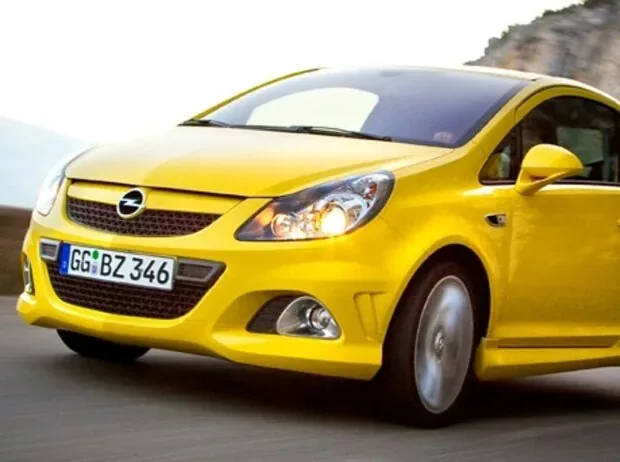
In 2010, the Corsa D received a technical overhaul. The engines were gradually converted to the Euro 5 emissions standard, the gasoline engine range was restructured, and the front end was visually adapted as part of a facelift. At the same time, the GSi was dropped from the range. From 2011, the OPC Nürburgring Edition formed the sporty spearhead.
It was sold over 2,9 million times
The uprated 1,6-liter turbo now developed 155 kW (210 hp), complemented by a mechanical limited-slip differential, revised chassis, stronger braking system, and specific detail changes. A short press on the accelerator was enough to accelerate the small car to up to 230 km/h.
Demand was strong from the start. Shortly after the market launch, orders significantly exceeded expectations, and in 2007, the Corsa temporarily led German new registrations in the small car segment ahead of the VW Polo. In total, the fourth generation was sold over 2,9 million times across all variants.
The three-door model was mainly produced at the Eisenach plant, while the five-door model came from Figueruelas in Spain; later, assembly also took place in Belarus. Production of the Corsa D ended in October 2014, and the next generation took over in early 2015.
- MotoGPWho slept worst last night: Maverick Vinales
- DTMEmil Frey Team delivers a huge surprise: Pink Ferrari in the DTM!
- Formula 1Formula 1 2026: These five drivers are under particular pressure
- MotoGPBent rim, broken rear tire: What caused the damage for Marquez
More about the Opel Corsa:
No fake: Opel really did build a notchback Corsa once
Time travel: Opel Corsa B (1993-2000) driving report
Read more Cupra Born (2026): First official teaser of the facelift